Top AI Digital Agents for Sales in 2026: 9 Best Picks


TL;DR
Between 50% and 70% of teams buying AI sales agents churn within the first year. The tools that survive scrutiny combine AI speed with human judgment. This guide covers nine top AI digital agents for sales, with real pricing, verified user feedback, and honest tradeoffs so you can pick the right one without wasting a quarter of budget on the wrong bet. If you want a quick answer: hybrid human-plus-AI models outperform fully autonomous agents by 41%, according to McKinsey’s January 2026 study.
What Are AI Digital Agents for Sales?
AI sales agents are software that runs sales tasks on its own. Unlike traditional automation that waits for your command, these agents decide who to email, when to follow up, and what to say based on data. They observe signals, make decisions, and take action independently.
But the category isn’t monolithic. It’s splitting into distinct types, and picking the wrong type is the main reason teams churn out within months.
Four categories worth understanding:
- Full Agentic GTM Platforms. Multi-agent orchestration across data, research, qualification, and outreach. Think Salesforce Agentforce or ZoomInfo Copilot.
- Autonomous AI SDR Tools. Single-agent “digital workers” that replace SDR headcount. Think 11x Alice, Artisan Ava, AiSDR.
- Data and Workflow Orchestration Platforms. Build-your-own with enrichment plus AI. Think Clay, Lindy, Relevance AI.
- Hybrid Human + AI Services. Human operators lead strategy while AI handles execution at speed. Think AgentWeb.
The distinction matters because 56% of salespeople now use AI daily, yet only 22% of sales teams have fully replaced SDRs with AI. Most teams that tried full replacement have reverted to hybrid models. For a deeper comparison of how these categories stack up, see this AI agents for GTM teams breakdown.
Quick-Glance Comparison Table
| Tool | Best For | Starting Price | Approach | G2 Rating | Key Limitation |
|---|---|---|---|---|---|
| AgentWeb (Emma) | Startups needing full GTM execution | $199/mo (self-serve); contact sales for done-for-you | Human-led + AI execution | N/A (early-stage) | Limited external reviews |
| 11x (Alice) | Enterprise SDR replacement | ~$5,000/mo (annual contract) | Fully autonomous | 4.4/5 (32 reviews) | Opaque pricing, deliverability risk |
| Artisan (Ava) | Mid-market all-in-one outbound | $280/mo (Intern); $660/mo (Employee) | Fully autonomous | 3.9/5 | Email quality; cancellation friction |
| AiSDR | HubSpot-native small teams | $900/mo (quarterly billing) | Autonomous with GTM engineer support | 4.7/5 (76 reviews) | Quarterly billing; tight credit limits |
| Clay (Claygent) | RevOps workflow builders | $185/mo (Launch) | DIY orchestration | 4.9/5 (200+ reviews) | Steep learning curve; not a sender |
| Salesforce Agentforce | Enterprise CRM-native teams | ~$500/seat + platform fees | CRM-embedded | Early reviews mixed | Requires existing Salesforce stack |
| Amplemarket Duo | Teams augmenting (not replacing) SDRs | $600 to $5,000/mo | Human-in-the-loop copilot | 4.6/5 (571 reviews) | Annual commitment; not fully autonomous |
| Lindy | No-code workflow builders | Custom pricing | Build-your-own agents | N/A | Requires assembly |
| Unify | Signal-first warm outbound | Custom pricing | Signal-triggered AI | N/A | Not for cold-first motions |
The 9 Best AI Digital Agents for Sales in 2026
1. AgentWeb (Emma)
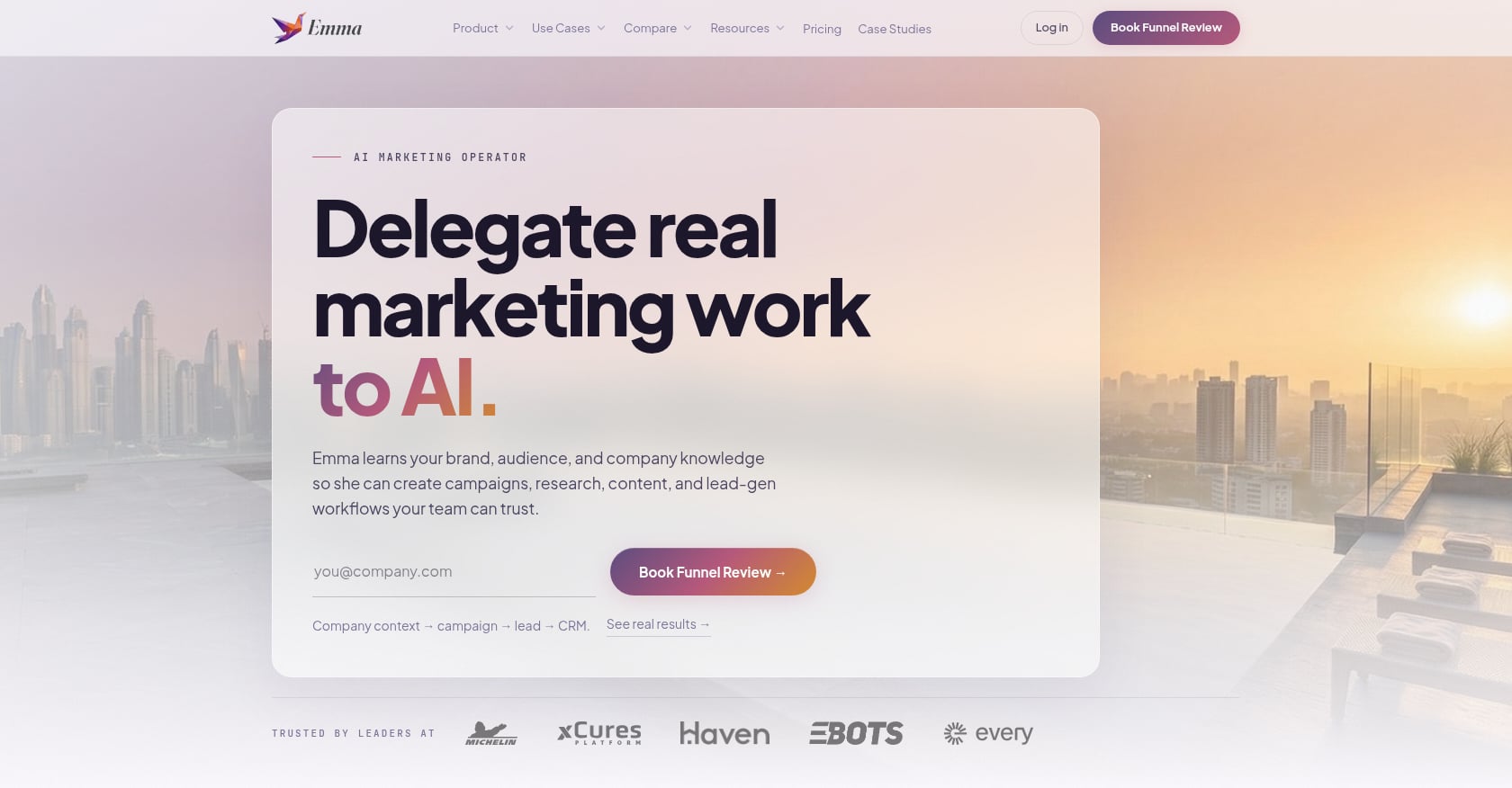
Best for: Pre-seed to Series A startups that need traction without hiring a full marketing or sales team.
AgentWeb is not a typical AI sales agent. It’s a hybrid service where senior human operators lead strategy while the AI agent “Emma” handles execution across Meta, Google, LinkedIn/X, email, and outbound. This matters because the data is now clear: hybrid teams outperform pure automation by 41%, according to McKinsey’s January 2026 research.
Pricing:
- Self-serve platform: 7-day free trial, then $199/month
- Done-for-you and custom workflow tiers: contact sales at founders@agentweb.pro
Key features:
- Week-0 diagnostic produces a concrete 90-day GTM plan mapped to ICP, channels, and bottlenecks
- Emma orchestrates research, planning, creative production, and reporting across channels
- Slack/Teams approval workflows keep founders in the loop without slowing execution
- AgentWeb Portal provides calendar views, dashboards, and optimization loops
- Founder-brand support including LinkedIn ghostwriting and exec comms
Proof points:
- Nailed It case study: 4,000+ leads, 328 add-to-carts in 3 months, 2.91% CTR (roughly 3.2x industry average), approximately $0.24 CPC. See the full case study.
- Cora case study: 13.19% CTR peak on a $300/month ad budget
Tradeoffs:
- Newer brand with limited external review coverage
- Best experience requires active Slack/Teams engagement (hands-off buyers may not be the right fit)
- Third-party review presence is still growing
Why it stands out among top AI digital agents for sales: Most tools on this list are software-only. AgentWeb combines senior operator judgment with agent-speed execution, which is exactly the model McKinsey’s data supports. The engagement starts with a human-led diagnostic, not a bot guessing at your ICP.
Explore AgentWeb’s pricing to see how it compares to the sticker-plus-hidden-costs of autonomous tools.
2. 11x (Alice)
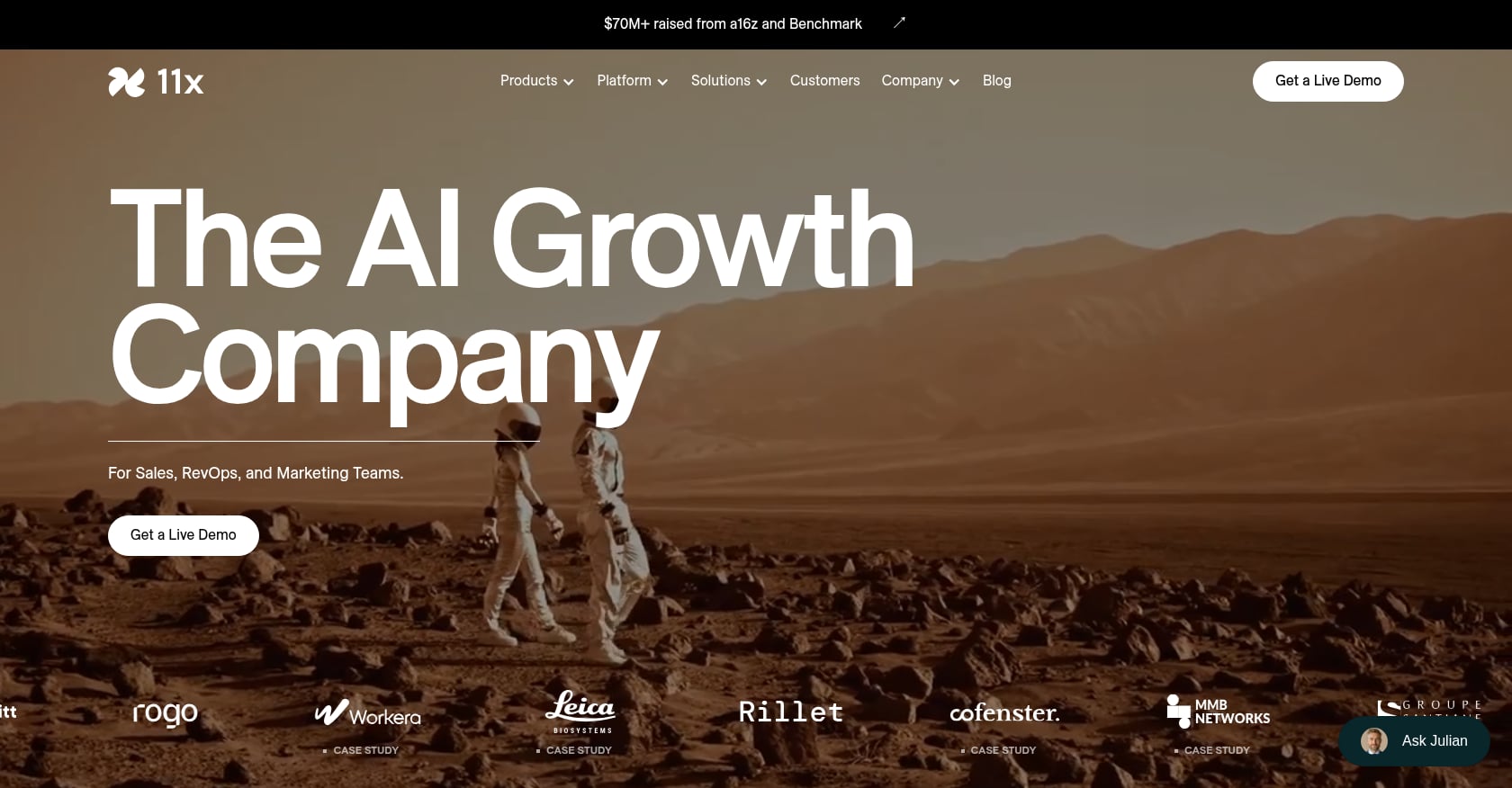
Best for: Enterprise teams with $50K+ ACV deals looking to replace SDR headcount.
Alice is an autonomous digital worker that handles complete outbound campaigns from prospecting to meeting booking. The platform also offers Julian, an AI phone agent, as a separate add-on.
Pricing:
- Approximately $5,000/month on an annual contract
- Minimum commitment: $50,000 to $60,000 for the first year
- Implementation fees often exceed $3,000
- Adding Julian increases the base fee significantly
Key features:
- End-to-end outbound campaign management
- Intelligent buyer targeting and adaptive messaging
- Multi-channel engagement (email, LinkedIn)
- Autonomous prospecting and meeting booking
Tradeoffs:
- Pricing is opaque until deep into the sales process
- No calling capabilities without Julian at additional cost
- Phone remains the highest-converting outbound channel, and it’s not included by default
User sentiment:
One 11x user on Reddit described Alice “adding irrelevant companies to their CRM, reaching out to existing customers, creating hundreds of duplicates, and producing nonsensical messaging.” They called it a “literal disaster.” A Trustpilot reviewer reported: “Out of 9,000 messages sent… we received no meeting requests.” G2 rating sits at 4.4/5 from 32 reviews, which suggests a wide spread between successful and unsuccessful deployments.
Bottom line: Alice replaces maybe 40% of an SDR’s job at 100% of the cost. It works best for organizations with large TAMs where volume compensates for lower per-message quality.
3. Artisan (Ava)
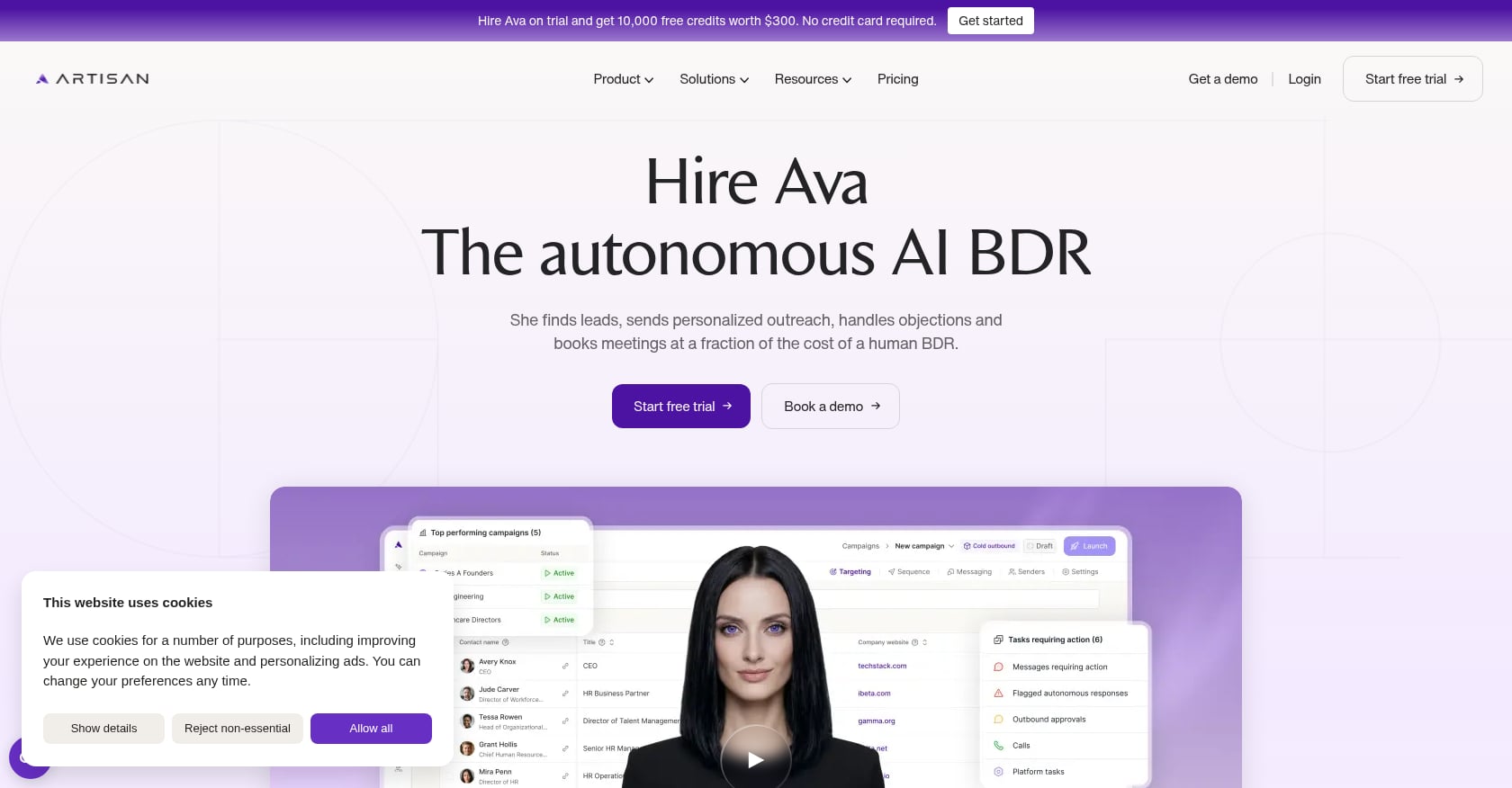
Best for: Mid-market teams wanting an all-in-one outbound tool with a lower entry price than 11x.
Ava handles outbound prospecting and email outreach by combining data enrichment with automated sequence execution. She researches prospects, finds contact information, and runs personalized email campaigns.
Pricing:
- Free plan: 300 credits/month for testing
- Intern Plan: $280/month
- Employee Plan: $660/month
- Enterprise (annual contracts): typically $30,000 to $60,000/year
Key features:
- Automated prospect research and contact discovery
- Personalized email sequence generation
- Built-in data enrichment
- Campaign performance tracking
Tradeoffs:
- Email quality is the persistent complaint. One Reddit user put it bluntly: “The emails read like ChatGPT wrote them for a generic audience. My prospects could spot them immediately.”
- Multiple users report sending 1,000 to 1,400+ emails with zero replies
- Cancellation friction flagged by several reviewers
- G2 rating of 3.9/5, with data inaccuracy repeatedly cited
User sentiment: The pattern across practitioner forums is consistent. Ava’s emails feel templated despite the “personalization” label. If your buyers can smell automation, this tool may damage more relationships than it builds. For tips on writing outbound that actually converts, this outbound email guide is worth reading alongside your evaluation.
4. AiSDR
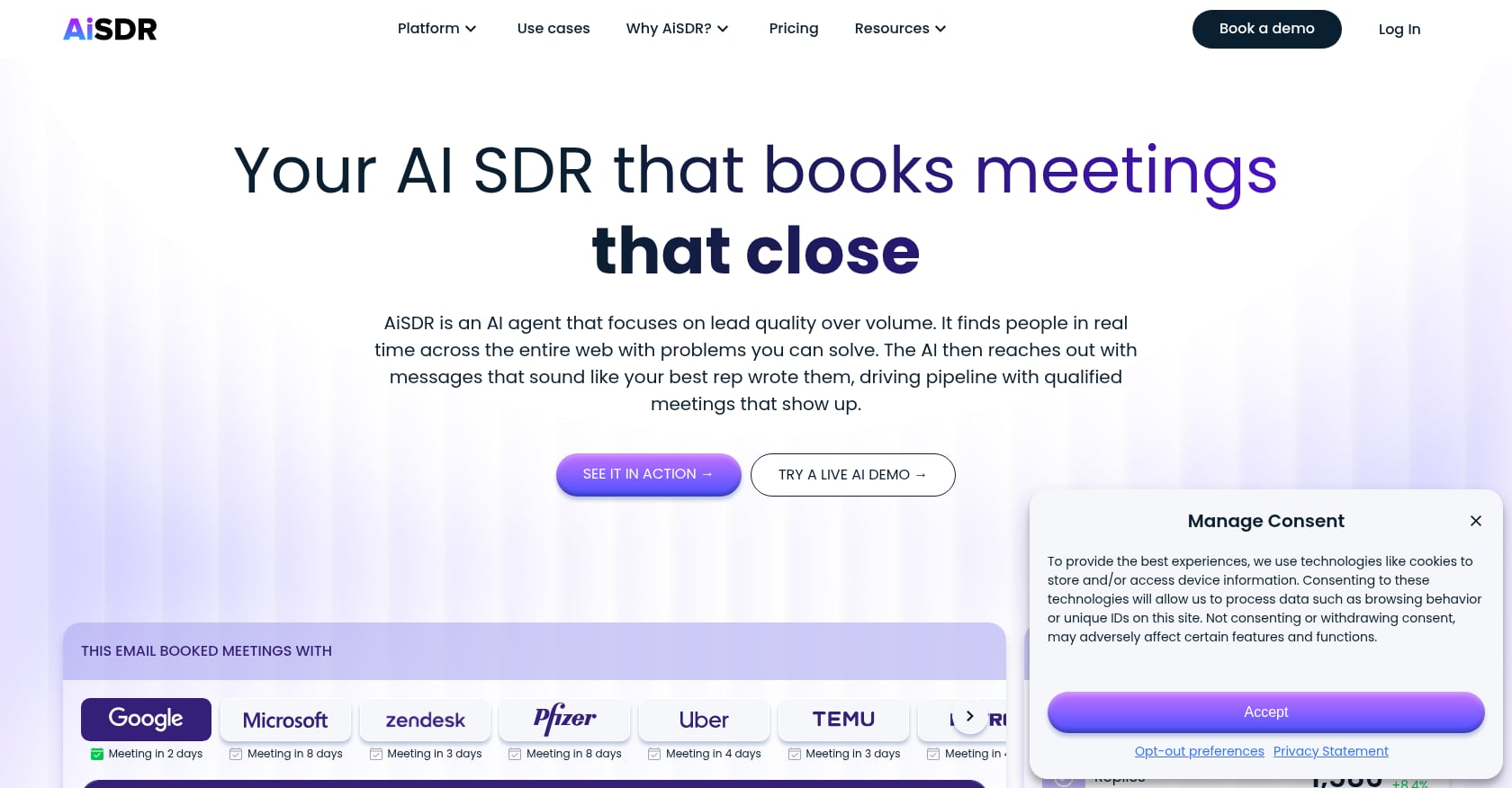
Best for: HubSpot-native small teams testing AI outreach on a moderate budget.
AiSDR finds leads, personalizes outreach, and books meetings across email, LinkedIn, and SMS. It integrates deeply with HubSpot, making it a natural fit for teams already in that ecosystem.
Pricing:
- Explore plan: $900/month (billed quarterly, so $2,700 upfront minimum)
- 1,200 AI messages/month on the Explore plan
- Grow and Enterprise tiers: $2,500 to $5,000/month
Key features:
- Signal-based targeting for niche audiences
- Multi-channel outreach (email, LinkedIn, SMS)
- HubSpot-native integration
- GTM engineer support included
Tradeoffs:
- The 1,200 messages/month figure is misleading. Follow-up emails in a sequence count against the limit, so you’re really reaching about 240 new prospects per month on the Explore plan.
- No way to test AiSDR without paying $900
- Quarterly billing locks you in before you have meaningful data
User sentiment: G2 reviewers (4.7/5 from 76 reviews) praise the signal-based targeting. One reviewer selling to developers noted: “With AiSDR we’ve been able to run campaigns targeting people actively engaging with specific tools… The messages don’t feel like cold emails.” The positive reviews skew toward teams with clearly defined, technical ICPs.
5. Clay (Claygent)
Best for: RevOps teams that want to build custom enrichment and research workflows from scratch.
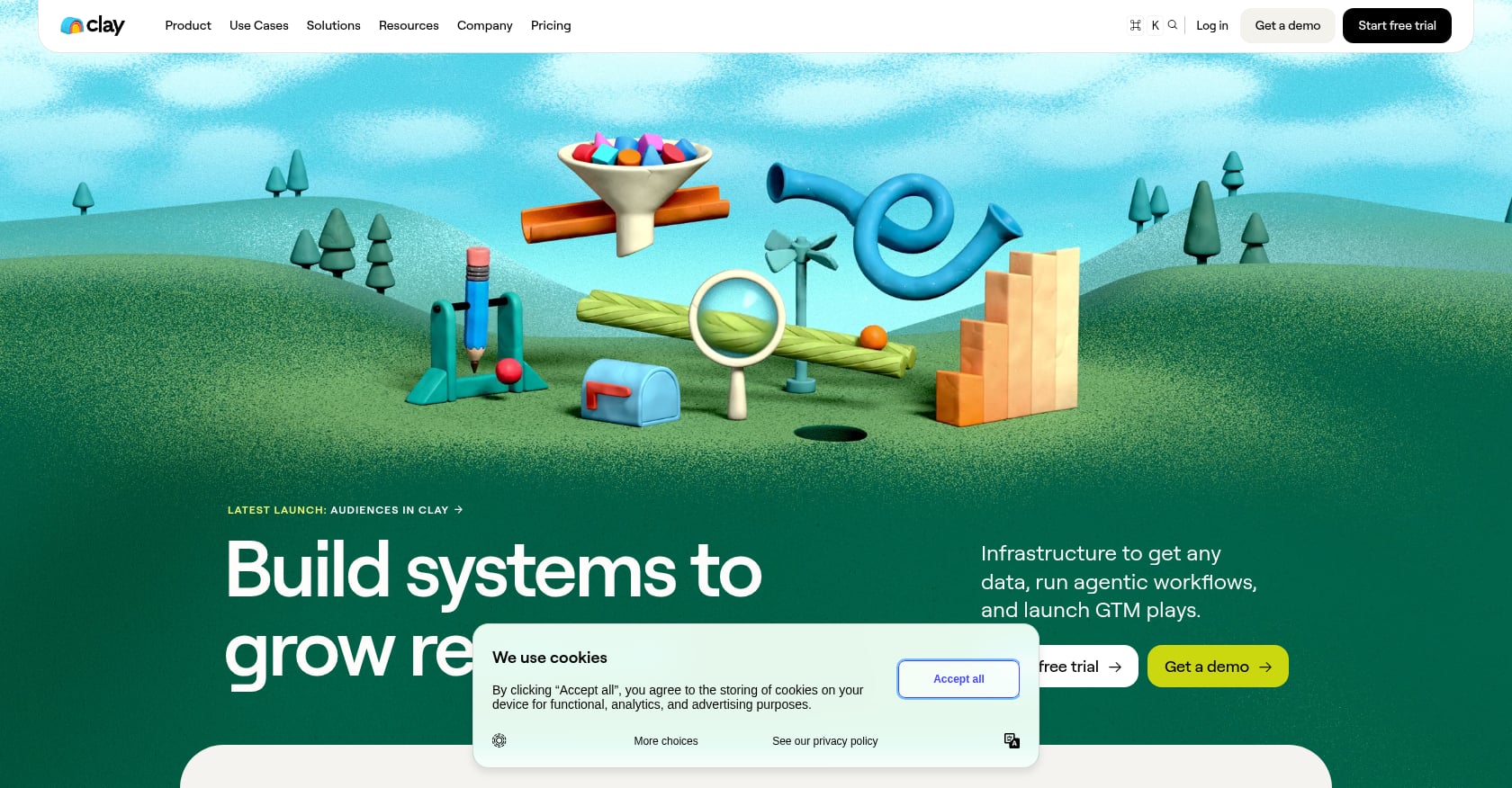
Clay isn’t a traditional AI sales agent. It’s a data orchestration platform. Its waterfall enrichment engine pulls data from 75+ providers, and its AI “Claygent” can research companies, score leads, and prepare personalized messaging. You still need a separate tool to actually send emails.
Pricing:
- Launch: $185/month (2,500 Data Credits, 15,000 Actions)
- Growth: $495/month (6,000 Data Credits, CRM sync, HTTP APIs, Web Intent)
Key features:
- Waterfall enrichment across 75+ data providers
- AI agent for company research and lead scoring
- Customizable workflow tables
- CRM sync and API integrations
Tradeoffs:
- Variable data credit costs make budgeting unpredictable. Users report costs escalating quickly at volume.
- Steep learning curve. Building and maintaining Clay tables requires technical capacity that not every sales team has.
- Clay doesn’t send messages. You need a separate sending tool, which adds cost and complexity.
User sentiment: G2 reviewers (4.9/5 from 200+ reviews) cite replacing multiple data provider subscriptions and reducing manual research time by 60% to 70%. The tool is genuinely powerful for teams with the technical chops to use it. For those weighing whether to build their own stack versus buying a managed solution, this comparison of AgentWeb vs. DIY AI breaks down the real tradeoffs.
6. Salesforce Agentforce
Best for: Enterprise teams already deep in the Salesforce ecosystem.
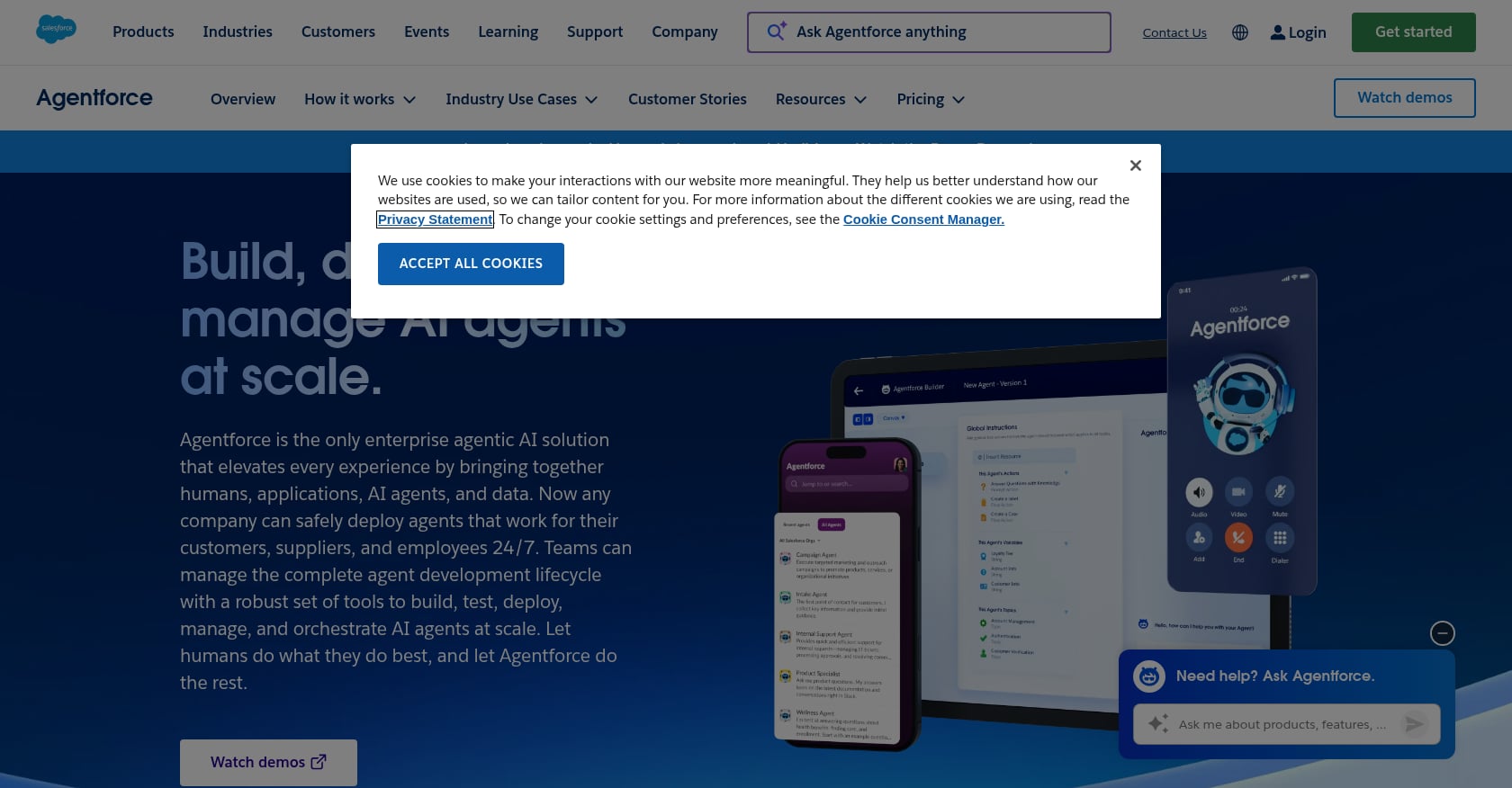
Agentforce lets admins build AI agents using topics, actions, and a prompt builder. The natural-language responses are polished, and customization options are broad. It’s already generated roughly $800 million in annual recurring revenue and is in use at over 23,000 companies.
Pricing:
- Per-action consumption at about $0.10/action, or $500 all-inclusive per seat
- Requires Service Cloud ($175+/user/month) before Agentforce is even available
- True cost for a small team: easily $700+/user/month
Key features:
- CRM-native agent building
- Natural-language prompt builder
- Broad customization via topics and actions
- Deep Salesforce data integration
Tradeoffs:
- Useless without an existing Salesforce stack, which means it’s not a standalone option
- Some customers report the AI produces wrong answers and struggles to pull in data from outside the Salesforce system
- Struggles with nuanced questions according to early adopters
- The per-action pricing model can spiral unpredictably for high-volume teams
7. Amplemarket Duo
Best for: Teams that want to augment their SDRs with AI, not replace them.
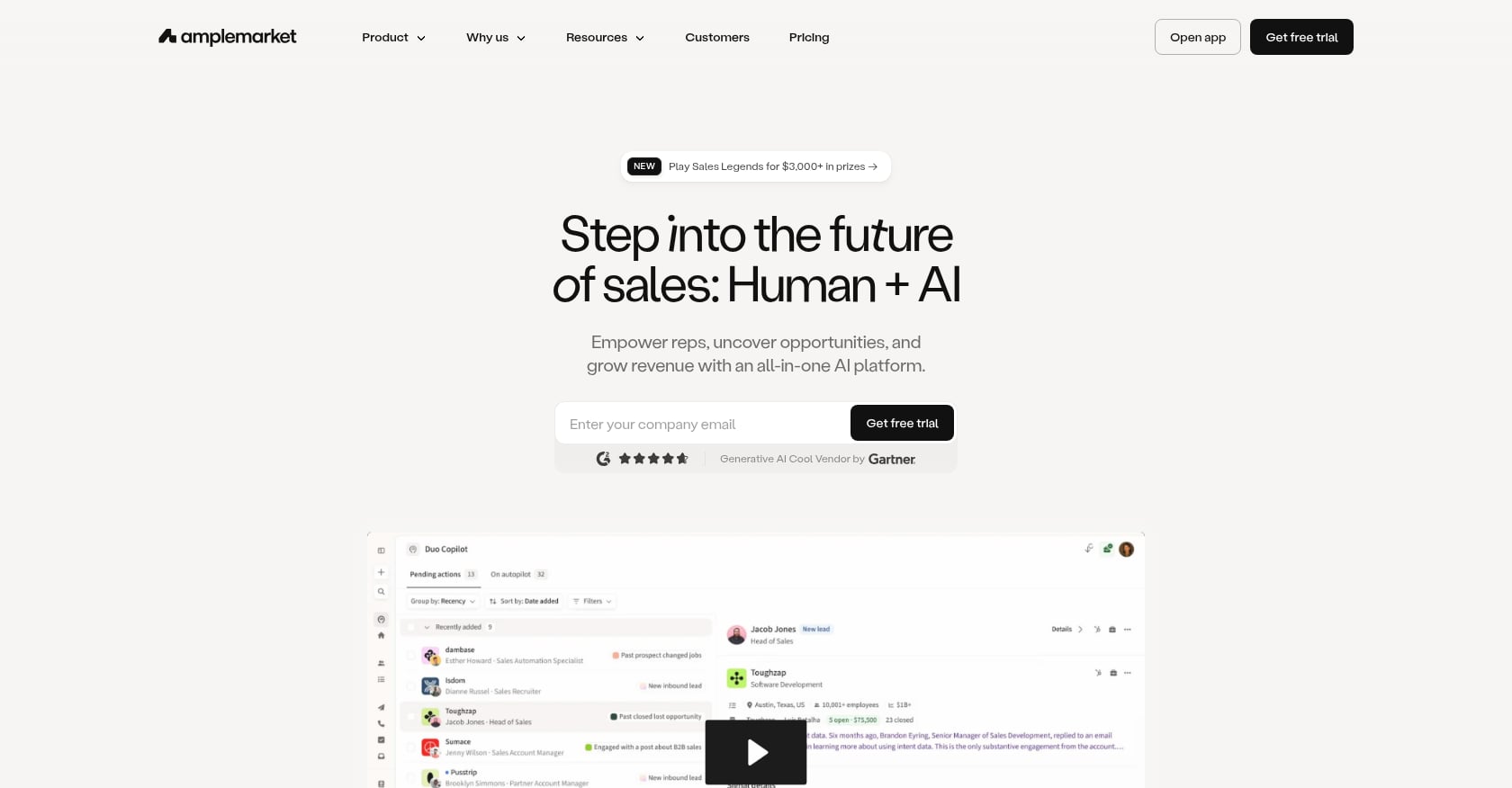
Duo runs three specialized agents in concert: Research, Sequence, and Outbound. The human stays in the loop by design. AI handles research, signal monitoring, and draft generation while reps retain final approval over everything that gets sent.
Pricing:
- $600 to $5,000/month depending on features and volume
- Annual commitment required
Key features:
- Three-agent system (Research, Sequence, Outbound) working in concert
- Human-in-the-loop approval process
- Signal monitoring and intent-based triggers
- Draft generation with rep oversight
Tradeoffs:
- Annual-only commitment with no monthly option
- Requires human involvement by design (teams seeking full automation won’t want this, but that’s the point)
- Pricing range is wide, making it hard to budget without a sales conversation
User sentiment: Rated 4.6/5 from 571+ reviews on G2, making it the most reviewed tool on this list. Users report productivity gains equivalent to 5x to 6x, where one rep with Duo produces the output of five or six reps without it. That’s a compelling number if your goal is amplification rather than replacement.
8. Lindy
Best for: No-code teams that want to build custom AI sales workflows from existing tools.
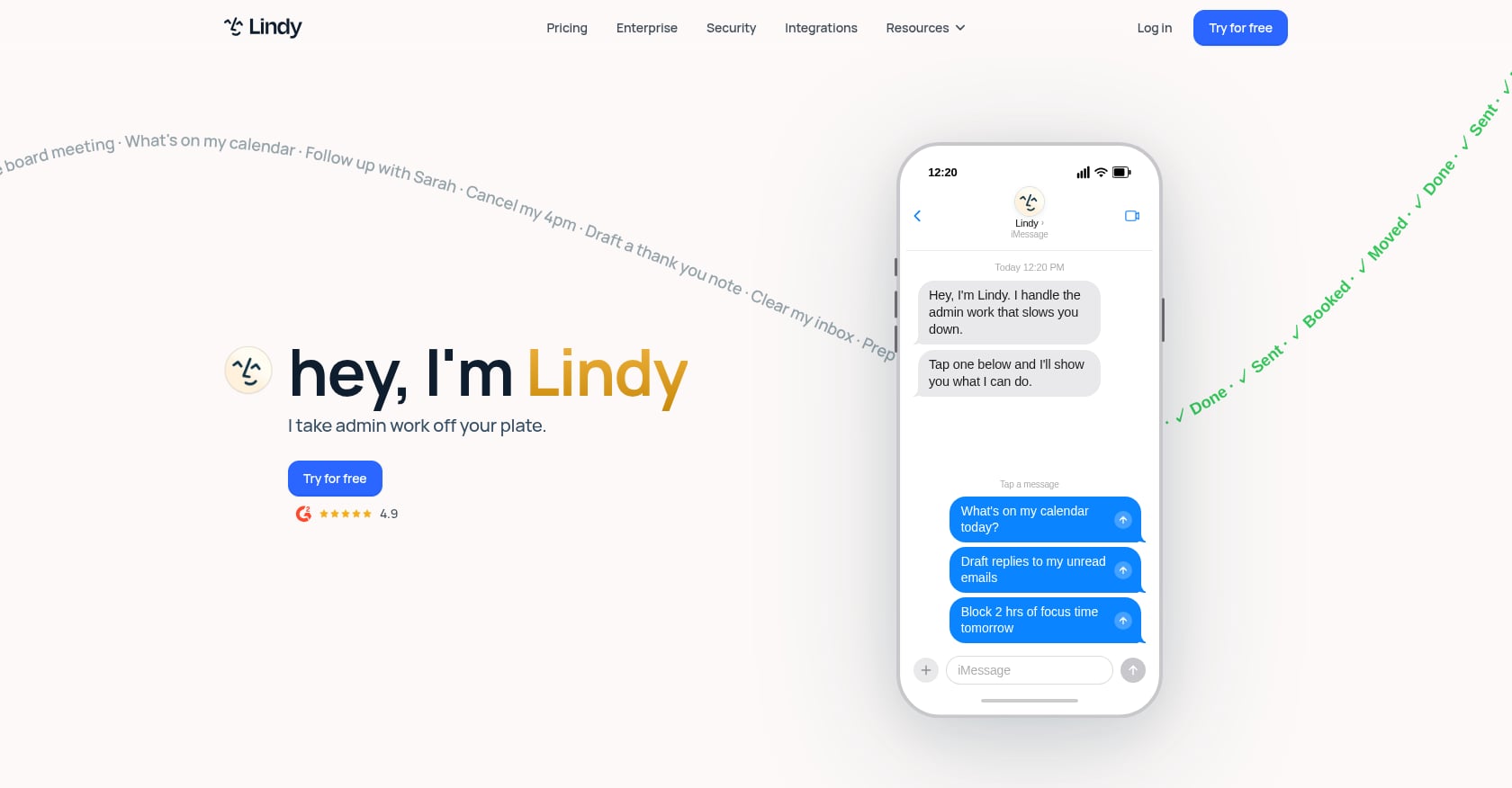
Lindy is a no-code platform for building AI agents that automate outbound sales. It connects with your inbox, CRM, and tools like Airtable to run logic-based workflows. You can automate emails, meeting scheduling, CRM updates, and follow-ups based on reply intent.
Pricing:
- Custom pricing (not publicly listed)
Key features:
- No-code agent builder
- Connects to inbox, CRM, Airtable, and other tools
- Logic-based workflow automation
- Reply intent detection for smart follow-ups
Tradeoffs:
- Requires significant assembly. You’re building agents, not deploying a ready-made SDR.
- No published pricing makes evaluation harder
- The platform is powerful but assumes you know what workflows you need. Teams without clear processes will struggle.
- Limited pre-built sales templates compared to purpose-built AI SDR tools
9. Unify
Best for: Teams that want to trigger outreach based on buying signals, not static lists.
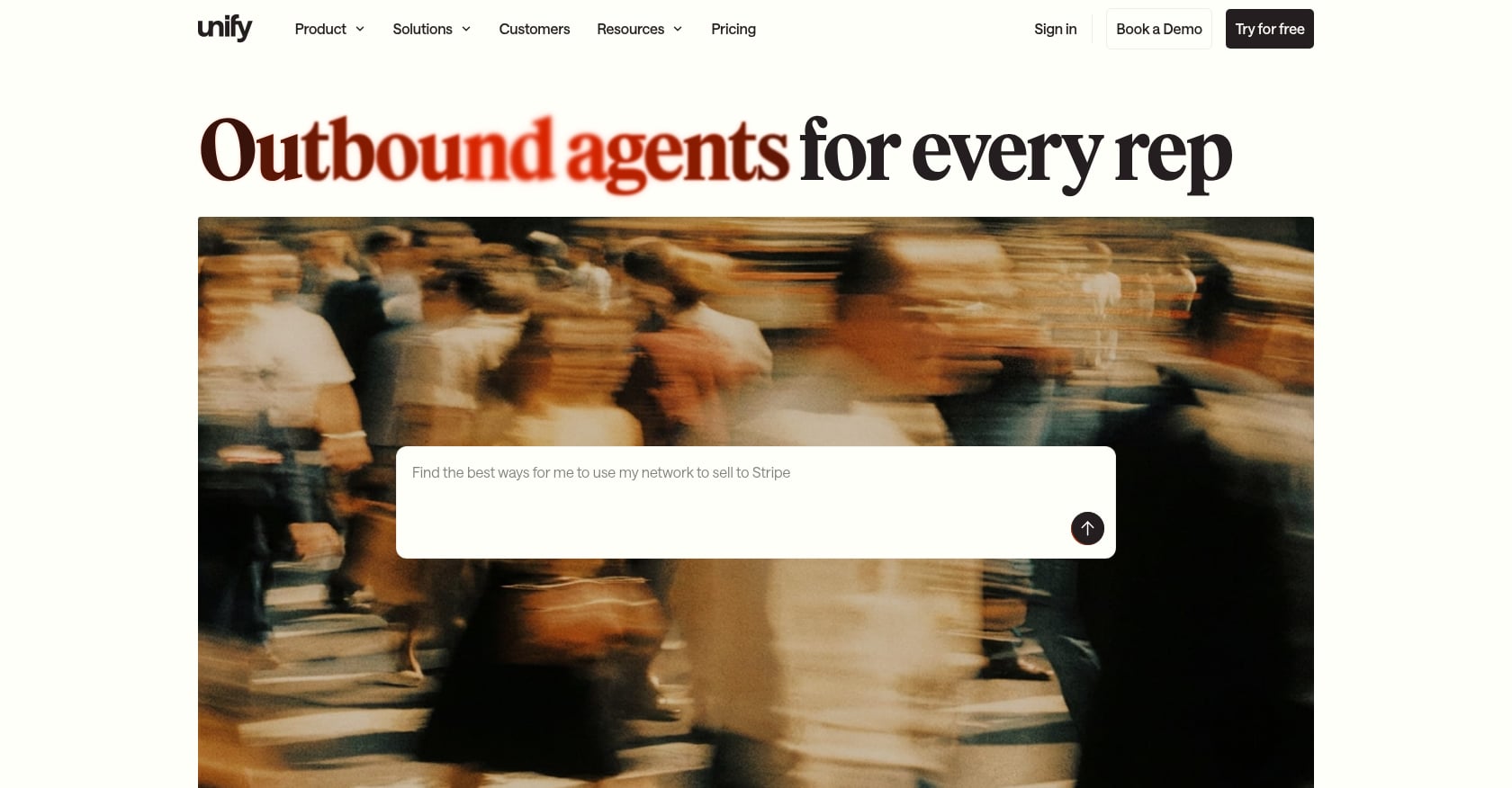
Unify pulls intent data from signals like site visits, job changes, and product usage, then routes high-intent prospects into AI-driven research, qualification, and personalized sequencing.
Pricing:
- Custom pricing (not publicly listed)
Key features:
- Signal-first architecture (site visits, job changes, product usage triggers)
- AI-driven prospect research and qualification
- Personalized sequence generation based on intent data
- Integration with existing outbound infrastructure
Tradeoffs:
- Not built for cold-first motions. If your strategy depends on cold outbound to large lists, Unify isn’t the right tool.
- Custom pricing means no way to evaluate cost without a sales conversation
- Requires enough signal volume to be useful. Very early-stage companies may not generate enough intent data.
The Real Cost of AI Sales Agents
Here’s what most comparison articles won’t tell you: plan to budget 1.5x to 2x the sticker price of any AI sales agent. A $900/month tool typically costs $1,400 to $1,900/month once you factor in sending domains, email warmup services, data enrichment add-ons, and monitoring.
The math gets worse at scale. A $5,000/month tool like 11x Alice is realistically $7,500+/month after implementation fees, Julian add-on costs, and the CRM cleanup time your team will spend fixing duplicate records.
A typical human SDR costs $65,000 to $85,000/year in base salary plus benefits, manages 50 to 100 accounts, and books 8 to 15 meetings per month. Entry-level AI outbound tools start around $900/month. Mid-tier platforms run $2,500 to $5,000/month. Enterprise tools can exceed $100,000/year.
But the most expensive option is churn. AI SDR tools churn at 50% to 70% annually. That means most teams buying these tools abandon them within a year, eating the sunk cost of onboarding, configuration, and burned prospect lists.
For a detailed cost comparison including show rates and ROI benchmarks, this AI SDR vs. SDR agency cost analysis breaks down the numbers by team size.
Why Hybrid Human + AI Outperforms Pure Automation
The fully autonomous AI SDR narrative peaked in 2024 and 2025. By early 2026, the data is in.
A McKinsey study published in January 2026 found that B2B companies deploying AI sales agents alongside human SDRs saw a 41% increase in pipeline generation compared to teams using either approach alone. Autonomous AI sales agents can reduce the cost of pipeline generation by 60% to 80% compared to human SDR teams, but cost reduction alone doesn’t equal pipeline quality.
Practitioners on Reddit explain why. One commenter summarized: “The more ‘perfect’ an AI agent becomes at mimicking human research, the more it falls into the ‘Uncanny Valley’ that triggers immediate rejection from buyers.” Another was blunter: “Pretty much all hype… The problem with all the AI SDR startups was that they tried to automate the entire workflow, which they did poorly.”
The market is also experiencing a backlash. Enterprise IT teams are now auto-blocking domains associated with AI sales agents. High-volume AI “personalization” is triggering spam filters at unprecedented rates. The anti-sales movement is real, and it penalizes teams that rely exclusively on autonomous outbound.
There’s a compliance dimension too. From August 2, 2026, the EU AI Act requires high-risk agents to maintain tamper-evident logs, human oversight, and AI disclosure at the start of any interaction. Teams selling into European markets need to factor this into their tool selection.
Sales reps still spend roughly 70% of their time on non-selling work. The opportunity isn’t to replace them entirely but to give them back that time. For a broader look at how AI and human teams can work together, see this AI marketing agent vs. agency comparison.
How to Choose the Right AI Sales Agent
Not every team needs the same tool. Here’s a decision framework based on three variables.
By budget:
- Under $500/month: AgentWeb self-serve ($199/month) or Artisan’s free tier for testing
- $500 to $2,000/month: AiSDR, Artisan Employee plan, or AgentWeb custom workflows
- $2,000 to $5,000/month: Amplemarket Duo, AiSDR Grow tier, or AgentWeb done-for-you
- $5,000+/month: 11x Alice, Salesforce Agentforce, or enterprise tiers
By team technical skill:
- Non-technical founders: AgentWeb (human operators handle complexity) or Artisan (plug-and-play)
- Moderate technical comfort: AiSDR, Amplemarket Duo, Unify
- Strong RevOps/engineering: Clay, Lindy (build-your-own approach)
By channel needs:
- Email-only outbound: AiSDR, Artisan
- Multi-channel (email + LinkedIn + paid): AgentWeb, Amplemarket Duo
- Full GTM (outbound + content + paid + SEO): AgentWeb done-for-you
- CRM-native automation: Salesforce Agentforce
For founders figuring out which channels to prioritize before selecting a tool, this channel prioritization guide is a useful starting point. And if you’re exploring cold outbound specifically, these B2B cold outreach strategies cover what’s working now.
The AI sales tools market is now a $3 billion industry with 13% yearly growth. More options will emerge every quarter. The framework above should hold regardless of which new tools launch, because the underlying question stays the same: how much human judgment does your sales motion require?
The Bottom Line
The top AI digital agents for sales in 2026 aren’t the ones with the slickest demos. They’re the ones that match your team’s actual capacity, budget, and sales motion.
If you’re an early-stage startup without a full marketing or sales team, the hybrid approach (human strategy plus AI execution) is the safest bet based on every data point available. If you’re an enterprise with established processes and a large TAM, autonomous tools like 11x or Salesforce Agentforce can work, but expect a longer, more expensive onboarding.
Whatever you choose, budget 1.5x to 2x the sticker price, run a 90-day pilot before committing annually, and keep a human in the loop for anything touching your highest-value accounts.
Start a 7-day free trial of AgentWeb to see how a hybrid human-plus-AI approach works in practice, or check pricing to compare against the tools above.
FAQ
What is an AI sales agent?
An AI sales agent is software that autonomously handles sales development tasks like prospecting, outreach, follow-ups, and meeting booking. Unlike traditional sales automation that follows pre-set rules, AI agents make decisions about who to contact, when to follow up, and what to say based on real-time data and signals.
How much do AI sales agents cost?
Entry-level tools start around $200 to $900/month. Mid-tier platforms run $2,500 to $5,000/month. Enterprise solutions can exceed $100,000/year. Budget 1.5x to 2x the listed price to account for email infrastructure, data enrichment, warmup tools, and integration costs.
Can AI fully replace SDRs?
The data says no, at least not yet. Only 22% of sales teams have fully replaced SDRs with AI, and AI SDR tools churn at 50% to 70% annually. McKinsey’s January 2026 research found that hybrid teams (AI plus human) outperform either approach alone by 41% in pipeline generation.
What’s the difference between an AI SDR and an agentic GTM platform?
An AI SDR is typically a single-purpose agent that handles outbound email or LinkedIn outreach. An agentic GTM platform is broader, orchestrating multiple agents across research, qualification, targeting, enrichment, and multi-channel execution. The right choice depends on whether you need a specialist tool or a system that covers your entire go-to-market motion.
Are AI sales agents worth it for startups?
They can be, but tool selection matters enormously. Startups with limited budgets should avoid enterprise-priced autonomous tools and instead look at hybrid models or self-serve platforms under $500/month. The biggest risk for startups is buying a tool they don’t have the bandwidth to configure and maintain.
What are the biggest risks of using AI sales agents?
Domain reputation damage from high-volume automated outreach, prospect fatigue from AI-generated emails that feel generic, wasted budget on tools that churn before delivering ROI, and emerging compliance requirements (the EU AI Act takes effect August 2, 2026). Enterprise IT teams are increasingly blocking domains associated with AI outbound tools.
How do I evaluate AI sales agents before buying?
Run a 90-day pilot, not a 14-day trial. Track cost per meeting booked (not just emails sent), monitor domain reputation and deliverability, measure response quality rather than response volume, and compare the tool’s output against what a human SDR produces at the same account tier. Ask vendors for case studies from companies similar to yours in size and industry.
Or get a free AI Readiness Roadmap to see where your GTM has gaps.
Ex-Meta, Google, LinkedIn. 10+ years in ML & data science for GTM. Expert in customer acquisition and growth activation.
Get a free Stack Review.
30 min with Harsha and Matt.
We audit your last 30 days, pinpoint the highest-impact fixes, and hand you the exact playbook we'd run. No deck. No pitch unless there's a fit.