9 Best AI Agents for GTM Teams in 2026 (Real Pricing)


TL;DR
The AI agents for GTM teams market is growing fast, but most tools hide pricing and oversell automation. This guide compares 9 platforms across price, architecture, and honest tradeoffs. The biggest decision isn’t which tool to pick but which architecture to adopt: monolithic platform, modular stack, or managed service with humans in the loop. For early-stage startups, the hybrid AI + human model consistently outperforms fully autonomous agents at generating pipeline.
Quick-Comparison Table
| Tool | Starting Price | Best For | Agent Type | Free Trial | Human-in-the-Loop | Technical Skill |
|---|---|---|---|---|---|---|
| AgentWeb (Emma) | $199/mo (self-serve) | Early-stage startups needing weekly shipped campaigns | AI + human hybrid | 7-day free trial | Yes, core to model | Low |
| HockeyStack | ~$2,200/mo | Mid-market B2B teams with $50K+/mo ad spend | Revenue intelligence | No | No | High |
| Clay | $185/mo | Technical RevOps teams building enrichment workflows | Data enrichment | Limited free tier | No | High |
| Copy.ai | $49/mo | Marketing teams needing high-volume content | Content & workflow | Free tier available | No | Low |
| Demandbase (Agentbase) | ~$45K/yr base | Enterprise ABM programs with $100K+ budgets | ABM & pipeline AI | No | No | Medium |
| Salesforce Agentforce | $2/conversation | Teams already in the Salesforce ecosystem | CRM-native agents | No | Optional | High |
| HubSpot Breeze | Bundled with HubSpot plans | SMB/mid-market HubSpot CRM users | CRM-native AI | With HubSpot trial | No | Low |
| Relevance AI | Credit-based | Non-technical teams building multi-agent workflows | No-code agent builder | Free tier available | Optional | Medium |
| Dhisana AI | Contact sales | Growth-stage teams wanting signal-based GTM | Signal-based agentic | No | No | Medium |
What Makes a Real GTM AI Agent (and What Doesn’t)
The term “AI agent” gets thrown around loosely. Practitioners on Reddit and LinkedIn consistently complain that most AI platforms are just ChatGPT wrappers slapped onto old software. So before evaluating any tool, it helps to understand what separates a genuine agent from rebranded automation.
A real AI agent can perceive context, reason about next steps, and take action across systems without being told exactly what to do at each step. A copilot suggests; an agent executes. Simple automation follows rigid rules; an agent adapts.
By 2026, the market has fragmented into seven distinct categories:
- Data enrichment orchestration (Clay, Apollo)
- Autonomous SDRs (AI-powered outbound reps)
- CRM-native AI (Salesforce Agentforce, HubSpot Breeze)
- Content and workflow automation (Copy.ai)
- Revenue intelligence (HockeyStack)
- ABM and pipeline AI (Demandbase)
- AI + human execution services (AgentWeb)
That seventh category is new, and no competing comparison article covers it. Yet the evidence increasingly supports it. For a deeper look at how these categories fit together, see our guide on building an agentic GTM engine.
The practical split most teams face is architectural: do you buy a monolithic platform that does everything, assemble a modular stack of best-in-breed tools, or hire a managed service where humans and AI work together? That decision matters more than any individual tool choice.
Assess your GTM readiness before committing to any platform.
The Market Reality: Big Promises, Mixed Results
The numbers are staggering. The AI for sales and marketing market is projected to grow from $58 billion in 2025 to over $240 billion by 2030. Gartner predicts 40% of enterprise applications will embed AI agents by 2026, up from under 5% in 2025.
But the productivity gap between promise and reality is wide. Salesforce’s own research shows sales reps waste 66% of their time on administrative tasks instead of selling. AI agents should fix that, right? According to The Wall Street Journal, average AI investments are generating savings of under 10% and revenue lift of under 5%.
Here’s the number that should sober everyone up: of 249 YC GTM startups from 2023 to Spring 2026, only 5 (just 2%) actually pitch full SDR replacement. The rest position as augmentation tools. Companies announce they’ve replaced SDRs with agents, LinkedIn celebrates, and months later, reps are quietly rehired and agents are deprioritized.
Average email reply rates have fallen from 8.5% in 2019 to 3.4% in 2026. HockeyStack’s research found it now takes an average of 266 touchpoints to close a B2B opportunity, a 20% increase since 2023. More automation isn’t automatically better when it floods channels with low-quality outreach.
The market has settled into a hybrid model: AI handling research, sequencing, routing, and scheduling while humans handle conversations. That’s not a failure of AI. It’s the realistic operating model for AI agents for GTM teams in 2026.
The 9 Best AI Agents for GTM Teams
1. AgentWeb (Emma)
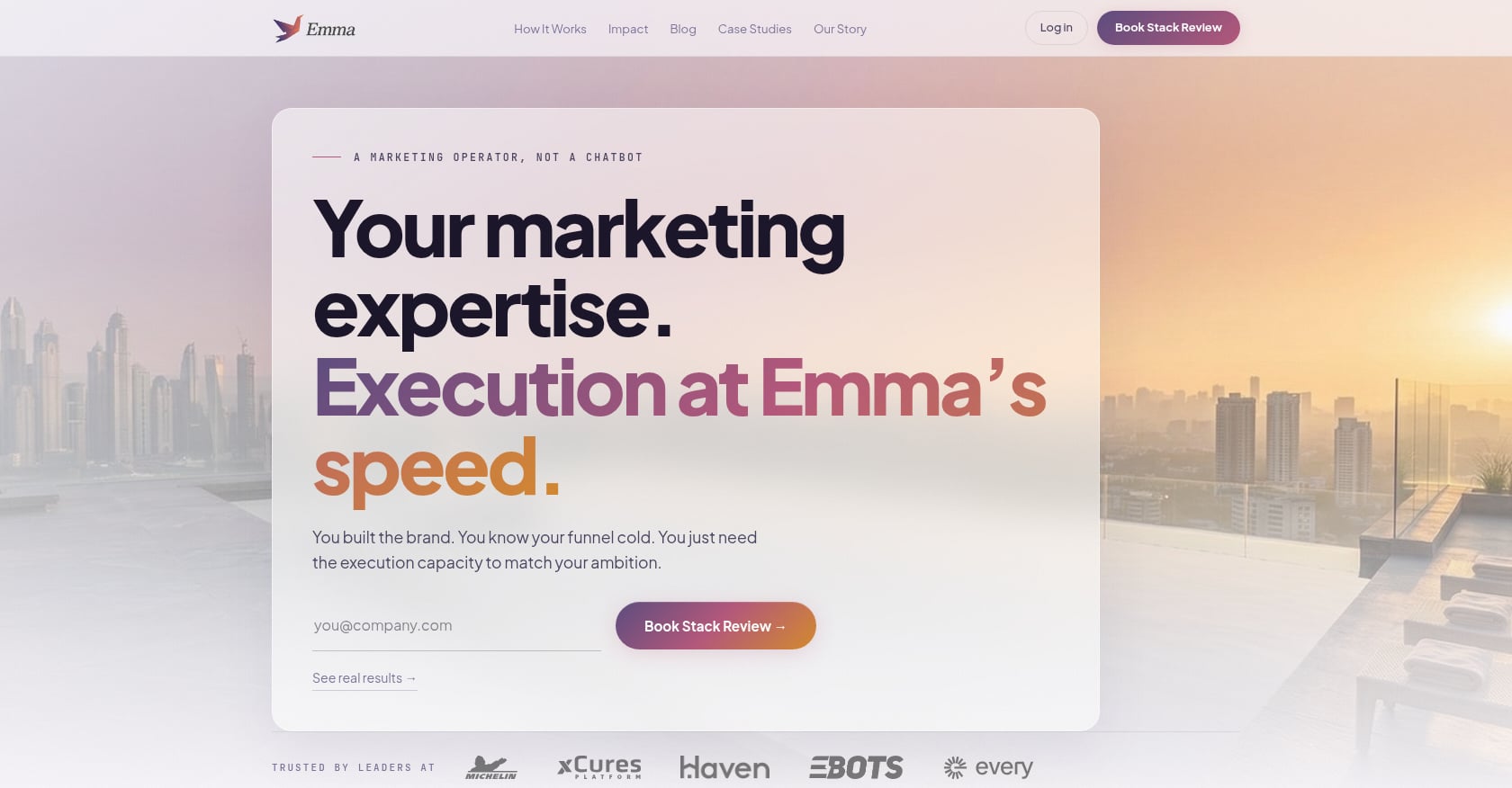
Best for: Early-stage startups (pre-seed to Series A) that need weekly shipped campaigns without hiring a full marketing team.
Pricing:
- Self-serve platform: $199/month with a 7-day free trial
- Done-for-you and custom workflows: seasonal pricing (contact sales)
Key features:
- 90-day GTM diagnostic and growth plan mapped to ICP, channels, and bottlenecks
- Agentic AI marketer “Emma” executes across Meta, Google, LinkedIn/X, email, and outbound
- Slack/Teams approval workflows for one-click creative and messaging review
- AgentWeb Portal with calendars, dashboards, and optimization loops
- Founder-brand support including LinkedIn ghostwriting and executive comms
- Up to ~20 content assets per month (social posts, short-form video, blogs, ads)
- Weekly performance reviews and iteration cycles
What sets it apart:
AgentWeb is the only platform on this list that pairs AI execution with senior human operators running strategy. The model works in 3-month sprints: the team validates channels, then optionally transitions to self-serve with proven templates and workflows still running.
Proof:
- Nailed It (consumer beauty AI): 4,000+ leads and 328 add-to-carts in 3 months, 2.91% CTR at ~$0.24 CPC, outperformed a competing agency in a head-to-head test
- Cora (digital health): 13.19% CTR on just a $300/month ad budget, 435+ qualified clicks in a single month
Tradeoffs:
- Newer brand with limited third-party reviews compared to established platforms
- Best experience requires weekly Slack/Teams engagement (hands-off buyers may see less fit)
- Paid media and outbound are more clearly part of the full-service offer; self-serve users should confirm channel coverage
Who should skip it: Teams that want a purely self-service, fully autonomous system with zero human interaction.
Start a free 7-day trial or book a GTM audit to see the 90-day plan.
2. HockeyStack
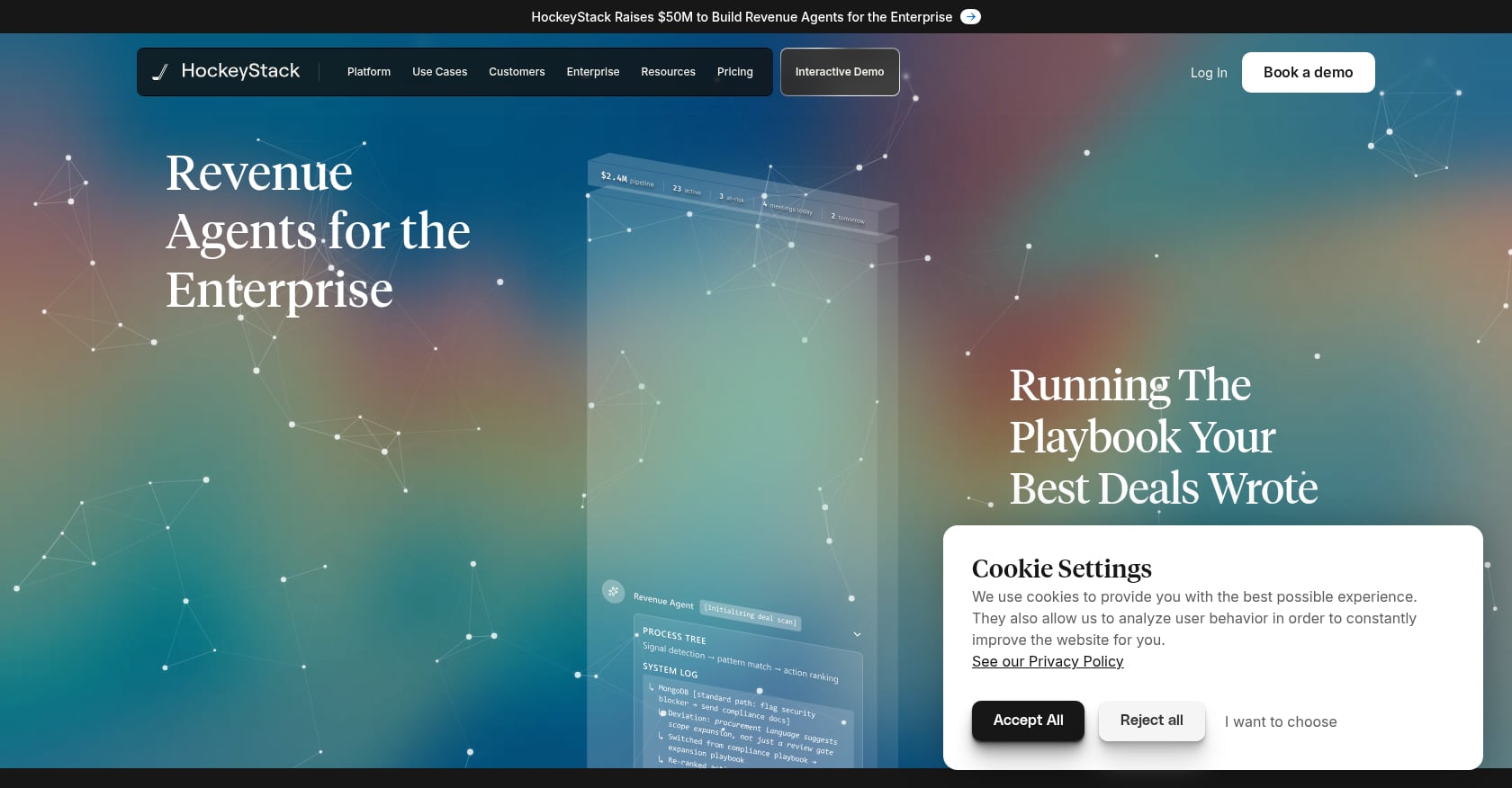
Best for: Mid-market to enterprise B2B teams spending $50K+/month on paid channels who need multi-touch attribution and revenue intelligence.
Pricing:
- Core Platform plan starts around $2,200/month
- Additional add-ons for ABM, sales intelligence, and data warehouse sync
- Median annual contract value: approximately $28,000/year based on G2 data
Key features:
- Two core AI agents: Odin (AI analyst for data queries) and Nova (AI sales assistant)
- Unified GTM data layer connecting marketing, sales, and product touchpoints
- Multi-touch attribution across the full buyer journey
- Account-level engagement scoring
Tradeoffs:
- The single most-cited negative on G2 is learning curve, with 11 explicit mentions and 8 specifically calling it “steep”
- Does not currently offer an API for raw data export, per G2 reviewer disclosures
- Pricing is a poor fit for small businesses or early-stage startups with limited budgets
- Setup is time-consuming, making it a mismatch for teams without a dedicated analytics resource
User perspective: HockeyStack carries a 4.6/5 on G2 from 78 reviews, with 80% five-star ratings. The high satisfaction scores come mostly from teams with the resources to handle the onboarding curve.
3. Clay
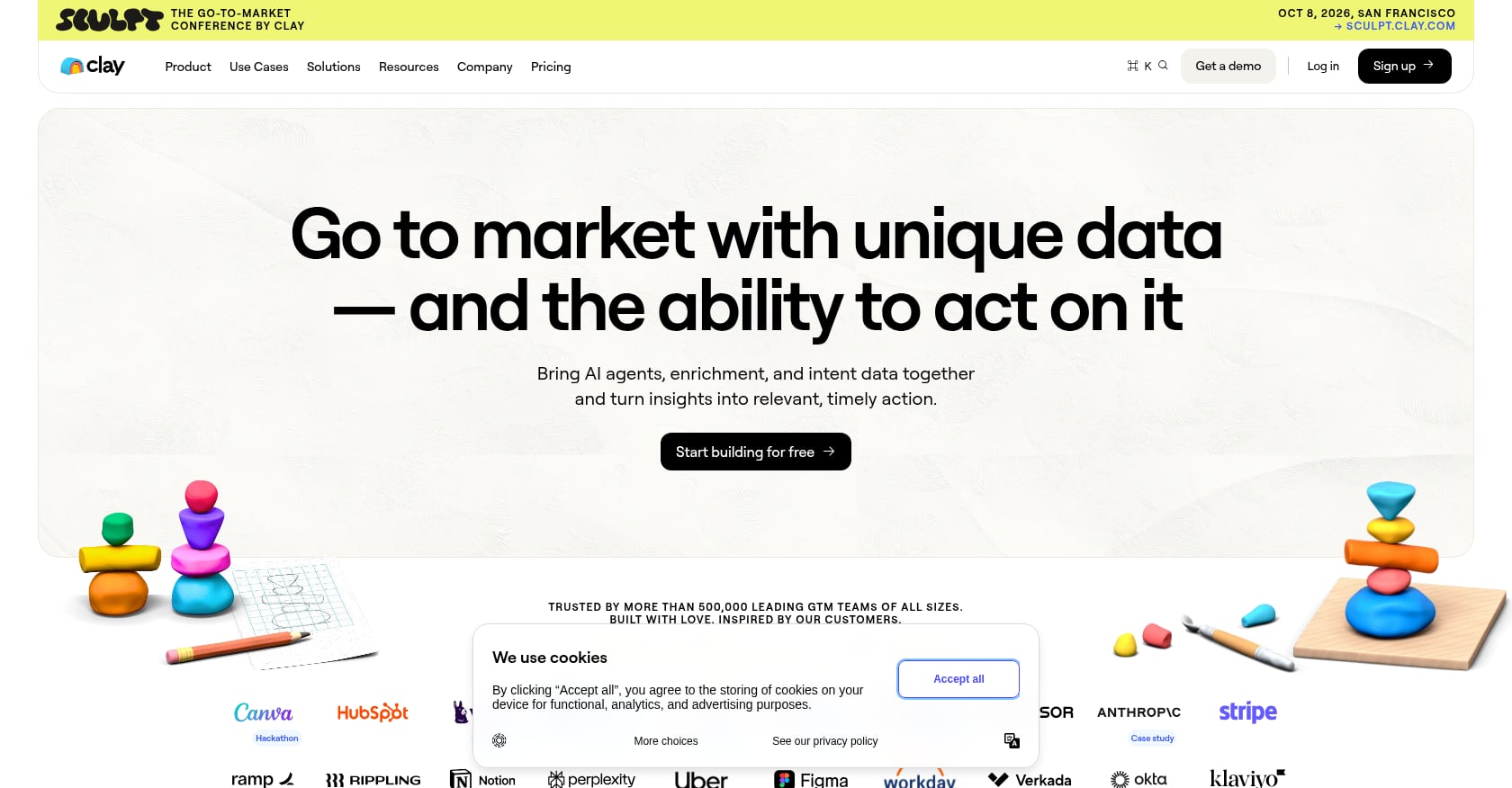
Best for: Technical RevOps teams who need maximum enrichment flexibility across 100+ data providers.
Pricing:
- Launch: $185/month
- Growth: $495/month (required for CRM integration with Salesforce or HubSpot)
- Credit-based usage on top of subscription
Key features:
- 150+ data provider integrations for enrichment
- Claygent AI research agent for automated prospect research
- Workflow builder for chaining enrichment, filtering, and action steps
- AI agents, enrichment, and intent data together in one orchestration layer
Tradeoffs:
- Steep learning curve: expect 2-4 weeks to build effective workflows
- Clay does not send cold emails, warm up mailboxes, or manage sender reputation
- No native email verification
- CRM integration locked behind the $495/month Growth plan
- Credit costs can escalate unpredictably at scale
User perspective: Clay’s 4.7/5 G2 rating is real, but pricing is the most common friction point even among fans. One expert who has trained 900+ GTM engineers on Clay noted that the March 2026 pricing overhaul is a net positive for serious operators, though it raised costs for casual users. If you’re exploring AI lead enrichment tools, Clay belongs on the shortlist, but only if your team has the technical chops.
4. Copy.ai
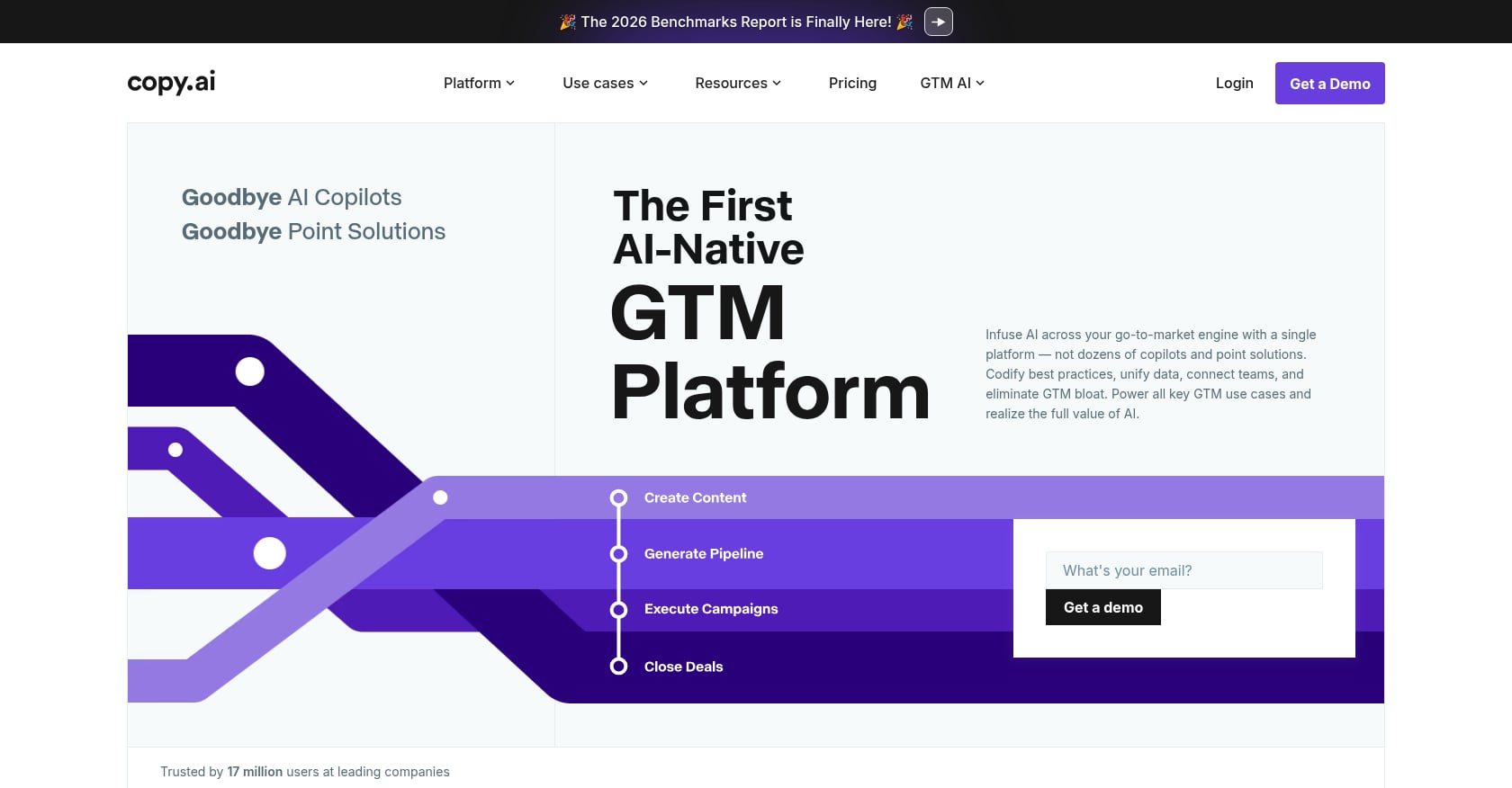
Best for: Marketing teams needing high-volume content production with no-code workflow automation.
Pricing:
- Pro: $49/month (unlimited words, up to 5 seats)
- Team: $249/month (~$186/month annually)
- Enterprise: custom pricing
Key features:
- No-code workflow builder for multi-step processes (research a company, find contacts, write outreach, run at scale)
- 90+ content templates for ads, blogs, emails, and social
- Brand voice configuration
- Bulk content generation
Tradeoffs:
- Writes content but doesn’t post it, so you still need a separate social scheduling tool
- No built-in SEO tools or image generation
- Lag in large and complex content generation
- Sometimes produces hallucinated or awkward output, requiring human review
- Workflows are content-focused, not full GTM execution
User perspective: Of 24 reviews providing substantive commentary on Copy.ai’s pricing, 75% mention it positively. The tool delivers strong value at the Pro tier for teams that mainly need content volume rather than campaign orchestration.
5. Demandbase (Agentbase)
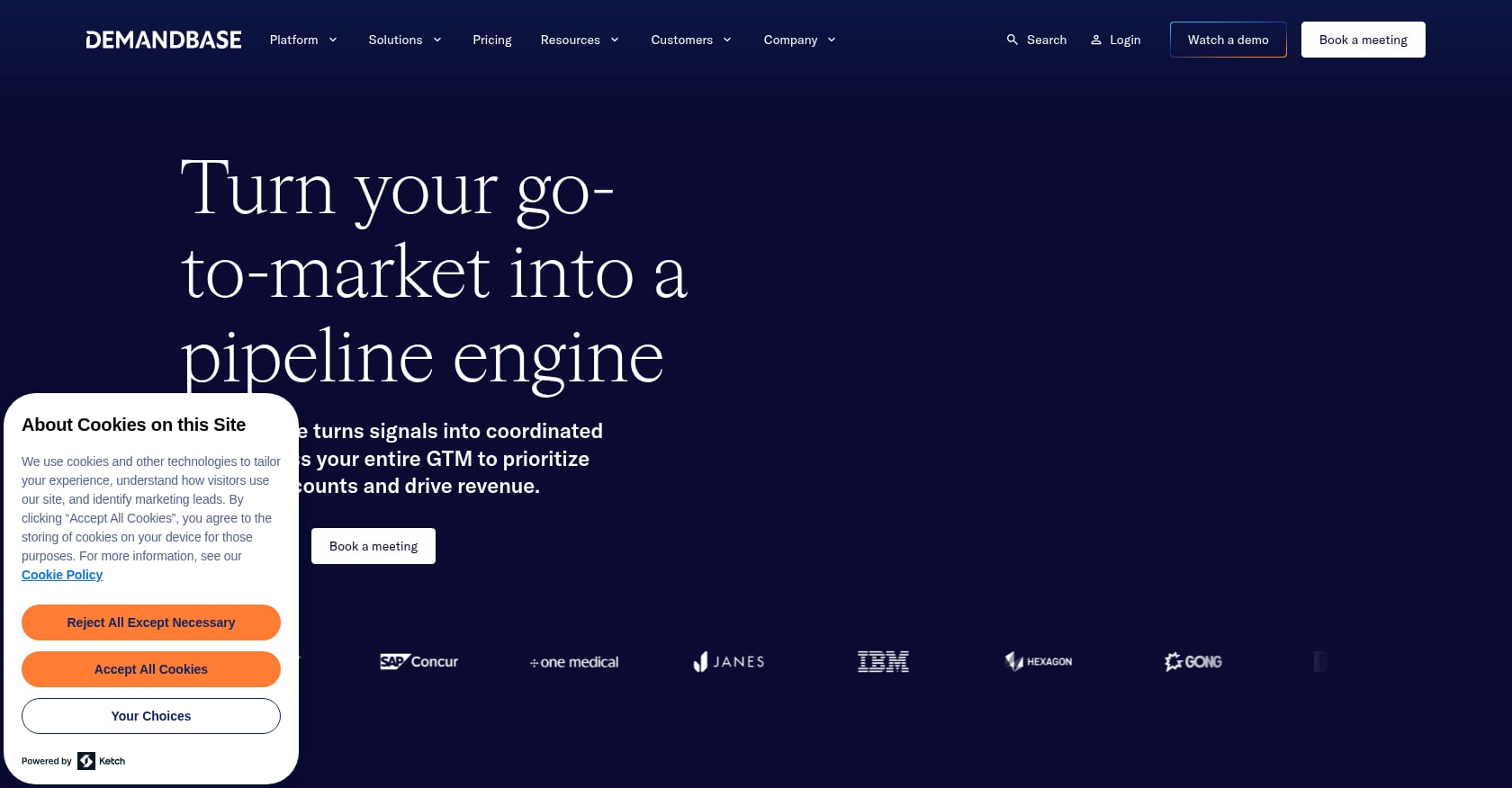
Best for: Mid-market and enterprise teams running sophisticated ABM programs with $100K+ annual budgets.
Pricing:
- Base platform starts at $45K/year
- All-in cost typically runs $100K-$250K annually
- Median annual contract value: $68,001
- Annual contracts with onboarding fees that can exceed $29,000
Key features:
- Agentbase includes four connected agents: Campaign Outcomes Agent, Account Engagement Agent, Filter Agent, and Action Agent
- Intent data and account identification across the web
- Advertising orchestration for display and LinkedIn
- Deep Salesforce and HubSpot integrations
Tradeoffs:
- No free trial or self-serve option
- Onboarding fees can exceed $29,000 before your team runs a single campaign
- Minimum viable investment puts it out of reach for startups and most mid-market teams
- Long sales cycle just to get started
User perspective: G2 reviewers praise the depth of account intelligence but consistently flag the price barrier. One reviewer from a Demandbase comparison article noted that real G2 quotes were the most useful signal, because the vendor’s own marketing smooths over the complexity.
6. Salesforce Agentforce
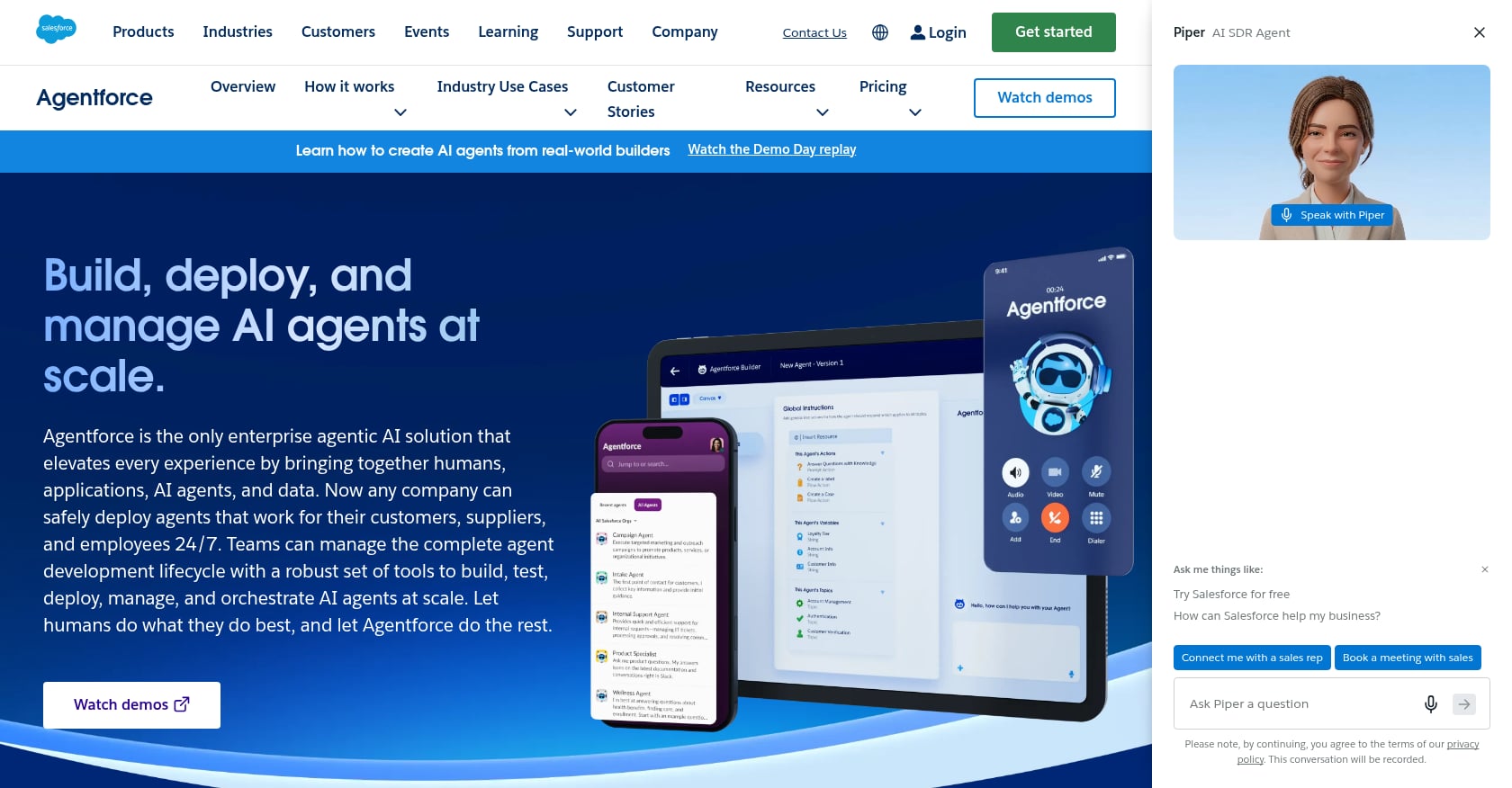
Best for: Teams already locked into the Salesforce ecosystem who want native AI without adding another vendor.
Pricing:
- $2 per conversation
- Flex Credits at $500 per 100,000 credits
- Add-ons from $125/user/month
- Total implementation: $20,000-$100,000 depending on use cases and complexity
Key features:
- Pre-built agents for sales coaching, service case resolution, and lead qualification
- Native access to Salesforce CRM data
- Customizable agent behaviors through Salesforce Flow
- Einstein AI layer for predictions and recommendations
Tradeoffs:
- Per-conversation pricing makes costs hard to predict at scale
- Implementation is expensive and time-intensive
- The value is inseparable from the Salesforce ecosystem; outside of it, other AI agent platforms serve you better and cost less
- Far too early to be going all in, according to one G2 reviewer, who noted it’s “taking away resources which should be focused on core functionality”
User perspective: G2 reviews are mixed. Teams that already spend heavily on Salesforce find marginal value in adding Agentforce. Teams evaluating fresh see better options elsewhere. If you’re considering AI-native CRM tools, weigh the total Salesforce ecosystem cost before committing.
7. HubSpot Breeze Intelligence
Best for: SMB and mid-market teams already using HubSpot CRM who want AI capabilities without adding separate tools.
Pricing:
- Bundled with existing HubSpot plans
- Monthly credit allocations range from 500 credits on Starter to 5,000 on Enterprise
- Additional credit packs at $10 per 1,000 credits
- Credits expire monthly
Key features:
- AI-powered data enrichment for contacts and companies
- Buyer intent signals based on website activity
- Form shortening (auto-fills known data)
- Integrated with HubSpot’s marketing, sales, and service hubs
Tradeoffs:
- HubSpot’s core remains a traditional CRM, not an AI-native GTM platform
- Credits expire monthly, and the default overage setting auto-upgrades you to the next tier (watch your billing settings)
- AI features are incremental additions, not a rethinking of workflows
- Limited compared to purpose-built agent platforms
User perspective: Practitioners on LinkedIn note that Breeze is convenient if you’re already paying for HubSpot, but it won’t replace dedicated GTM agent tools. Think of it as AI frosting on a CRM cake, not a standalone solution.
8. Relevance AI
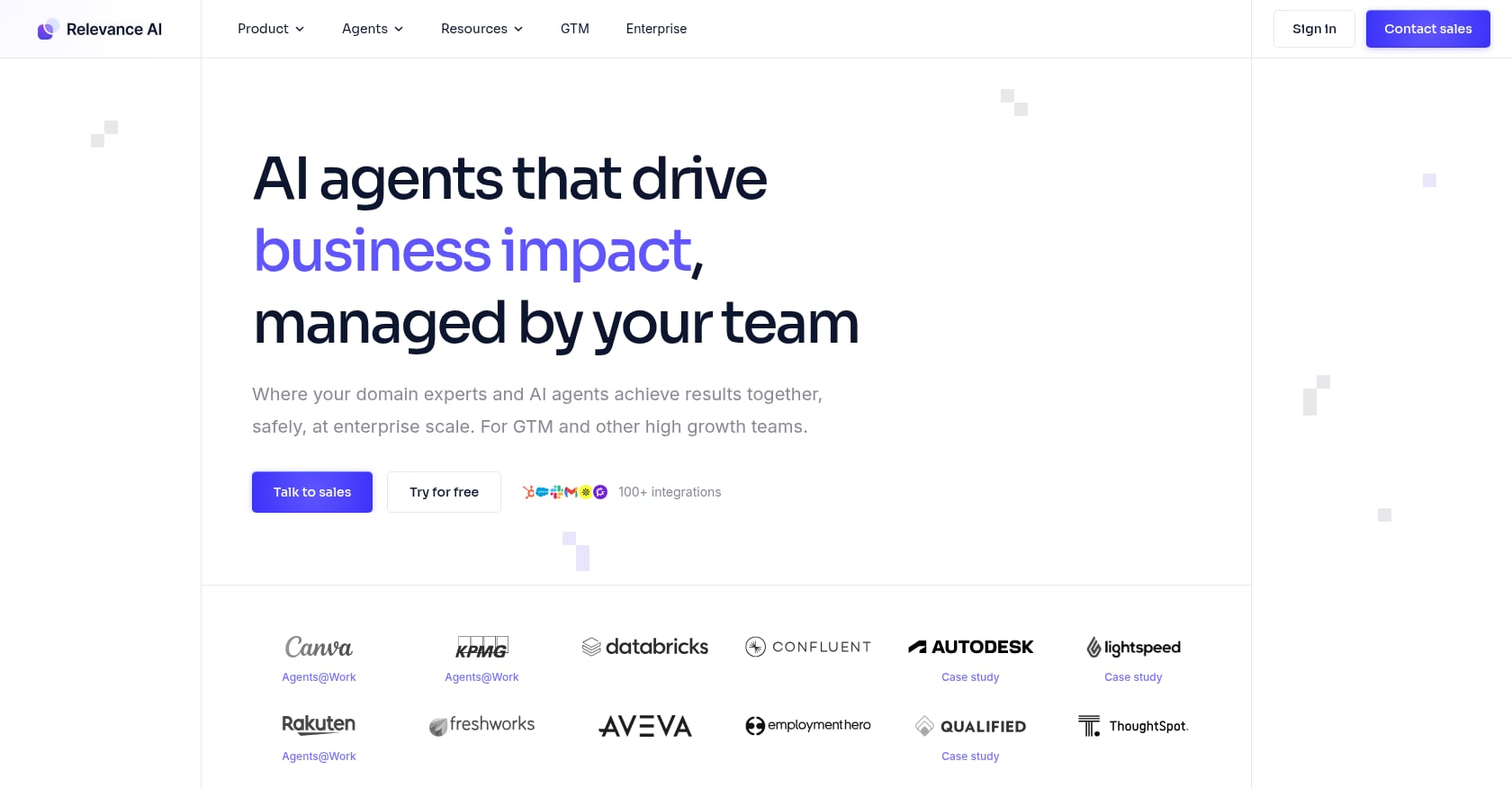
Best for: Non-technical GTM teams who want to build and deploy multi-agent outbound workflows without writing code.
Pricing:
- Free tier available with limited credits
- Credit-based pricing that scales with usage
- Enterprise plans available
Key features:
- Visual interface for building multi-agent workflows: prospecting agent, research agent, outreach agent connected into a single automated pipeline
- Each agent gets its own tools, memory, and instructions
- No-code configuration
- Pre-built agent templates for common GTM workflows
Tradeoffs:
- Requires significant setup time to build effective workflows despite the no-code interface
- Credit-based pricing can be unpredictable at scale
- Less established than larger platforms
- Multi-agent orchestration is powerful but can produce inconsistent results without careful tuning
User perspective: One reviewer from GTM Engineer Club spent months testing agentic AI tools for GTM workflows and burned through credits on over a dozen platforms. Relevance AI made the shortlist for its flexibility, but the reviewer emphasized that building effective agent chains takes real investment in prompt engineering and workflow design.
9. Dhisana AI
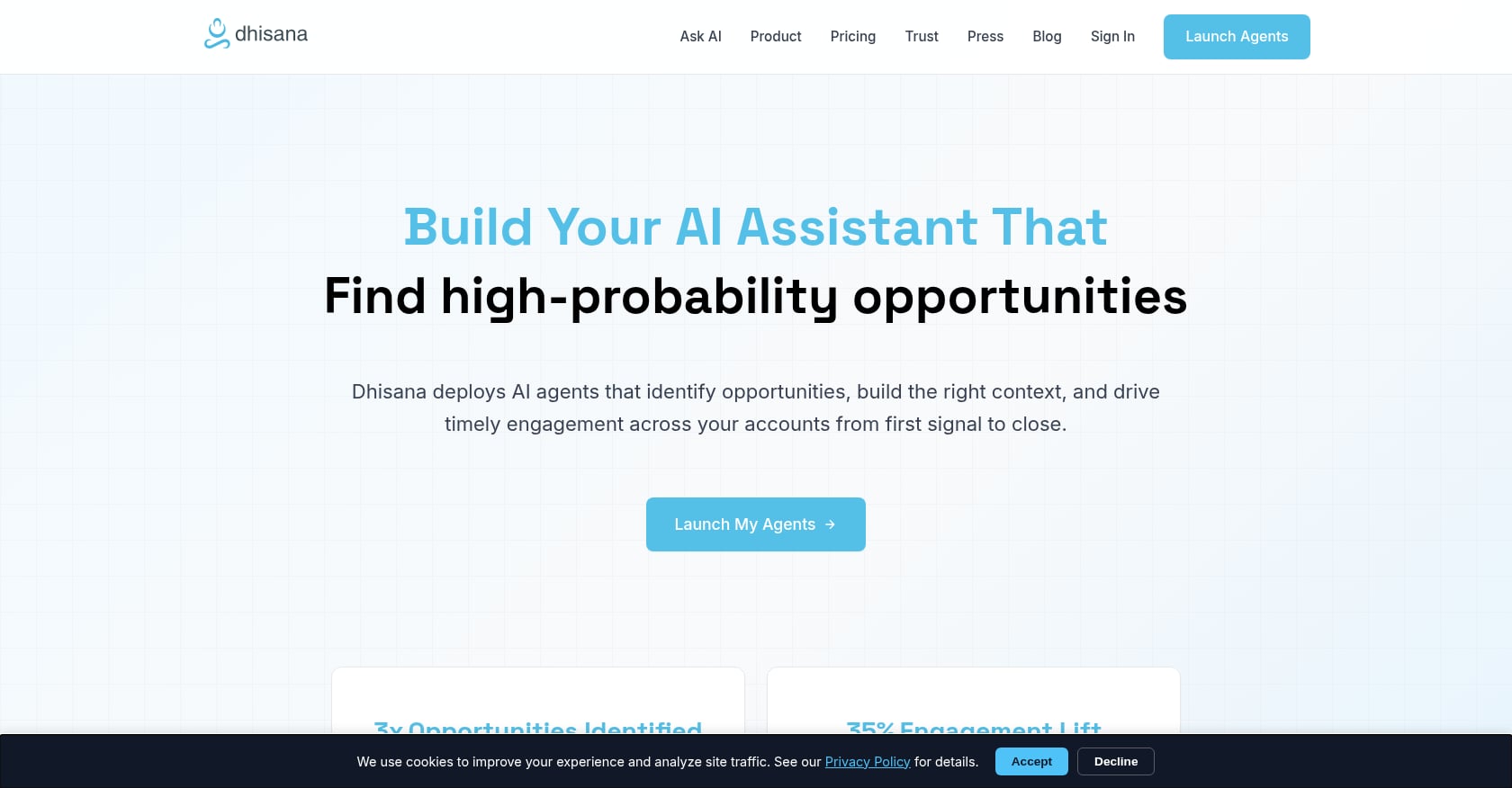
Best for: Early-stage to growth-stage teams that want signal-based GTM without enterprise complexity or cost.
Pricing:
- Contact sales (pricing not publicly available)
Key features:
- Signal-based agentic GTM flows designed to mirror how the business actually sells
- Instead of chaining disconnected tools, teams design end-to-end workflows in one system
- Intent and signal detection built into the agent logic
- Focused on pipeline generation rather than just content or enrichment
Tradeoffs:
- Newer entrant with limited independent reviews
- Marketing-heavy positioning makes it hard to separate real capabilities from aspiration
- Pricing opacity (ironic for a startup-focused tool)
- Vendor-authored content ranks in search results but provides limited honest assessment
User perspective: Independent reviews of Dhisana are scarce. The tool shows promise in demo environments, but teams evaluating it should push for a trial or pilot before committing budget.
How to Choose: A Decision Framework for AI Agents for GTM Teams
Picking from a list of nine tools is still overwhelming. Here’s a simpler framework.
Step 1: Assess your budget tier.
- Under $500/month: Copy.ai, AgentWeb self-serve, Clay Launch
- $500-$2,500/month: AgentWeb done-for-you, Clay Growth, Relevance AI
- $2,500-$10,000/month: HockeyStack, Dhisana, AgentWeb custom workflows
- $10,000+/month: Demandbase, Salesforce Agentforce
Step 2: Assess your team’s technical capacity.
If you have a RevOps engineer who can build workflows and debug integrations, Clay and Relevance AI unlock serious power. If your team is a founder and maybe one marketer, you need something that ships work for you, not a platform that requires weeks of configuration.
Step 3: Match to your GTM motion.
- PLG with self-serve signups: CRM-native tools (HubSpot Breeze, Agentforce) plus content automation (Copy.ai)
- Outbound-heavy B2B: Clay for enrichment + a sending tool + human follow-up
- ABM/enterprise sales: Demandbase or HockeyStack
- Early-stage validation: AgentWeb’s hybrid model or Copy.ai for content experiments
Step 4: Decide your architecture.
This is the decision most teams skip but matters most. As one practitioner put it, the category has split into four functional layers: data layers that supply enrichment, agent runtimes that orchestrate logic, sending tools that handle deliverability, and CRMs that store pipeline state. You can buy a monolithic platform that covers multiple layers, assemble modular best-in-breed tools, or hire a managed service. For a detailed comparison of these models, see our breakdown of AI vs. marketing agency costs.
Step 5: Check your readiness.
Before picking any tool, assess data cleanliness, CRM hygiene, and workflow clarity. Replacing people without redesigning workflow creates chaos. The agent inherits unclear criteria, broken handoffs, and messy CRM data. It just executes dysfunction faster.
The Human + AI Hybrid Reality
The most compelling evidence against fully autonomous GTM agents comes from practitioners who built them.
One practitioner spent 400+ hours building AI SDR agents for cold email prospecting. That effort moved reply rates from 1% to 2%, a meaningful relative improvement but still tiny in absolute terms. But a 5x increase in outbound-sourced pipeline came from getting human SDRs connected with prospects on the phone. The AI did the research and sequencing. Humans closed.
This pattern repeats across the industry. A 70% increase in lead conversion rates has been reported by businesses implementing agentic GTM tools, according to the Agentic AI In-Depth Report 2025. But the biggest wins come from augmentation, not replacement.
The lesson is straightforward: AI agents for GTM teams work best when they handle the high-volume, repetitive work (research, data enrichment, content drafting, campaign scheduling) while humans handle the high-judgment work (strategy, relationship building, deal negotiation, creative direction). For more on how to make this combination work in practice, see our guide on combining human and AI tools for faster content production.
This is exactly why the hybrid model exists. Not because AI isn’t good enough, but because the best results require both.
Ready to Ship Your GTM?
Most teams don’t need another tool to configure. They need campaigns running this week.
Book a free GTM audit to get a 90-day growth plan mapped to your ICP, channels, and biggest bottlenecks. Or start a 7-day free trial of the self-serve platform and run your first campaigns today.
FAQ
What is an AI agent for GTM teams?
An AI agent for GTM (go-to-market) teams is software that can autonomously perceive data, reason about next steps, and execute marketing or sales tasks across channels. Unlike simple automation that follows rigid rules, a real AI agent adapts its behavior based on context. Examples include agents that research prospects, write personalized outreach, optimize ad campaigns, or route leads to the right rep.
How much do AI agents for GTM teams cost?
Prices range from $49/month (Copy.ai Pro) to $100K-$250K/year (Demandbase all-in). Self-serve platforms like AgentWeb start at $199/month. Mid-market tools like HockeyStack run approximately $2,200/month. CRM-native options like Salesforce Agentforce charge $2 per conversation plus implementation costs of $20K-$100K. Hidden costs include onboarding fees, credit overages, and the engineering time needed to configure complex tools.
Can AI agents fully replace SDRs?
The data says no, at least not yet. Of 249 YC GTM startups from 2023 to Spring 2026, only 2% pitch full SDR replacement. Practitioners who’ve built AI SDR agents report that the biggest pipeline gains come from combining AI research and sequencing with human phone conversations. The market consensus in 2026 is augmentation, not replacement.
What’s the difference between a monolithic GTM platform and a modular stack?
A monolithic platform (like Demandbase or HockeyStack) bundles multiple capabilities, including data, agents, attribution, and campaign execution, into one product. A modular stack uses best-in-breed tools for each layer (Clay for enrichment, a separate tool for sending, your CRM for pipeline). Monolithic is simpler to manage but locks you in. Modular gives flexibility but requires integration work. A third option is a managed service where a team handles tool selection and execution for you.
Which AI agent is best for early-stage startups?
For startups with limited budget and no dedicated marketing team, the key criteria are low starting price, minimal setup time, and actual campaign output (not just a dashboard). AgentWeb’s hybrid model, Copy.ai for content volume, and Clay’s Launch plan for enrichment are the strongest options under $500/month. Avoid enterprise tools like Demandbase or HockeyStack until you’re spending $50K+ monthly on paid channels.
How long does it take to set up AI agents for GTM?
Setup time varies wildly. Copy.ai and HubSpot Breeze can be producing output within hours. Clay workflows typically take 2-4 weeks to build effectively. HockeyStack has a steep onboarding curve that multiple G2 reviewers flag. Salesforce Agentforce implementations run weeks to months. AgentWeb’s done-for-you model starts with a Week 0 diagnostic and begins shipping campaigns in the first week of engagement.
Are AI agents for GTM teams worth the investment?
It depends on what you’re measuring. Businesses report a 70% increase in lead conversion rates after implementing agentic GTM tools. But average AI investments across industries are generating savings of under 10% and revenue lift of under 5%. The difference is implementation quality. Teams that redesign workflows around AI capabilities see strong returns. Teams that bolt agents onto broken processes just accelerate their existing problems.
Or get a free AI Readiness Roadmap to see where your GTM has gaps.
Ex-Meta, Google, LinkedIn. 10+ years in ML & data science for GTM. Expert in customer acquisition and growth activation.
Get a free Stack Review.
30 min with Harsha and Matt.
We audit your last 30 days, pinpoint the highest-impact fixes, and hand you the exact playbook we'd run. No deck. No pitch unless there's a fit.