12 Best Outbound Prospecting Tools for Startups (2026)


TL;DR
The average outbound prospecting stack costs $300 to $500 per month before you send a single email, and most founders don’t realize that until they’re already paying. This guide covers 12 tools across data, enrichment, sequencing, managed execution, and AI SDR categories with realistic pricing (not just headline numbers), practitioner feedback from Reddit and G2, and a decision framework by team size. If you’d rather skip the tool assembly entirely, we also cover when outsourcing the whole motion makes more sense.
What Outbound Prospecting Tools Actually Do
Before picking tools, it helps to understand what you’re assembling. Outbound prospecting tools fall into five layers, and most teams need exactly one tool per layer:
- Data — Where you find contacts and companies (Apollo, ZoomInfo)
- Enrichment/Verification — Where you clean, validate, and add context to that data (Clay, Clearbit)
- Sending — Where emails and LinkedIn messages actually go out (Instantly, Lemlist, Smartlead)
- CRM — Where you track conversations and deals (HubSpot, Salesforce, or built-in options)
- Intent/Signals — Where you identify who’s ready to buy right now (Bombora, G2 Buyer Intent, ZoomInfo)
This five-layer model (popularized by Prospeo and widely adopted in practitioner communities) is the clearest framework for thinking about your stack. Most founders need one tool per layer, never more than five total.
The problem? A Gartner study found that 49% of salespeople feel overwhelmed by the number of tools they’re expected to use. And that’s sales teams with dedicated ops support. For a founder wearing six hats, tool sprawl is a real threat.
For a deeper breakdown of how these categories overlap, check out our sales prospecting buyer’s guide.
At-a-Glance Comparison Table
| Tool | Best For | Starting Price | Realistic Monthly Cost | Key Strength | Key Weakness | G2 Rating |
|---|---|---|---|---|---|---|
| AgentWeb | Managed multi-channel GTM execution | $199/mo (DIY) | $199–custom | AI + human execution across all channels; no stack assembly | Not a single-point tool; built for full GTM | N/A |
| Apollo.io | All-in-one for startups | Free / $49/mo | $49–$119/mo | 275M contacts + sequencer | Deliverability issues; data decay | 4.7/5 |
| Clay | Enrichment workflows | Free / $185/mo | $185–$495/mo | 150+ data providers | No database; steep learning curve | ~4.5/5 |
| LinkedIn Sales Nav | Relationship selling | $90/mo (annual) | $90–$150/mo + enrichment tools | Warm paths; 1M+ subscribers | No emails or phone numbers | N/A |
| Instantly | High-volume cold email | $30/mo | $94–$194/mo (with modules) | Unlimited accounts + warmup | Hidden modular costs; support issues | ~4.0/5 |
| Lemlist | Multichannel personalized | $55/mo (annual) | $69–$109/mo + credits | Email + LinkedIn + calls in one | Per-seat pricing scales badly | 4.6/5 |
| Smartlead | Agencies | $39/mo | $39–$174/mo | White-label; unlimited accounts | Less polished UI | ~4.4/5 |
| ZoomInfo | Enterprise data | ~$15K/yr | $1,250+/mo | Deepest org charts + intent | Expensive; overkill for startups | 4.4/5 |
| Outreach | Enterprise engagement | ~$100/user/mo | $130–$150/user/mo + fees | Best-in-class sequencing | Complex, needs admin | 4.3/5 |
| Salesloft | Mid-market engagement | ~$75/user/mo | $75–$165/user/mo | Better UX; coaching tools | No contact database | 4.5/5 |
| AiSDR | Budget AI SDR | ~$250/mo | $250–$900/mo | Transparent pricing; fast setup | Email/LinkedIn only; no phone | ~4.2/5 |
| Artisan | All-in-one AI SDR | Quote-based | ~$280–$2,000/mo | Built-in data; inbound + outbound | Annual contracts; churn concerns | ~4.0/5 |
Now, the honest breakdown of each.
1. AgentWeb
Best for: Founders and lean teams who want outbound running without assembling a multi-tool stack
AgentWeb is an AI plus human go-to-market execution service and platform. Instead of buying four or five tools, learning each one, and stitching them together, AgentWeb’s agentic AI marketer (“Emma”) and a senior operator team run your outbound (and broader GTM) as a managed system. The platform covers outbound email, LinkedIn, paid ads, content, and SEO, shipping campaigns weekly from a single engagement rather than a patchwork of subscriptions.
The core logic is simple: most founders spend 5 to 10 hours per week managing outbound tools instead of selling. AgentWeb absorbs that operational burden. A Week 0 diagnostic produces a concrete 90-day growth plan mapped to your ICP, channels, and bottlenecks, and then Emma executes across channels while your team approves via Slack or Teams.
Pricing:
- DIY (Self-Serve Engine): $199/month after a 7-day free trial
- Custom Workflows (AI-Led Co-Pilot): Contact sales (founders@agentweb.pro)
- Done-For-You (Human-Led Growth Ops): Contact sales, 3-month sprint engagements
Key features:
- 90-day GTM diagnostic and plan before execution starts
- Multi-channel execution across email, LinkedIn/X, Meta, Google, and outbound
- Slack/Teams approval workflows for creative and messaging
- AgentWeb Portal with calendar, dashboards, and optimization loops
- Founder-brand support including LinkedIn ghostwriting and exec comms
- Self-serve AI campaign templates (market research, competitive analysis, audience insights)
- Integrations with existing ad platforms and CRMs
- Transition path from full-service to self-serve so the system keeps running after the engagement
Proof:
- Nailed It (consumer beauty AI): 4,000+ leads and 328 add-to-carts in 3 months, 2.91% CTR at roughly $0.24 CPC. AgentWeb outperformed a competing agency running in parallel during a head-to-head test.
- Cora (digital health): 13.19% peak CTR on a $300/month ad budget, $0.74 CPC, 435+ qualified clicks in one month.
- Founding team with backgrounds at Microsoft, Google, Meta, and LinkedIn, with YC experience.
Tradeoffs:
- Not a point solution. If you only need a contact database or a sending tool, a standalone option is cheaper.
- Full-service pricing isn’t published on-site (you need to contact sales for the done-for-you and co-pilot tiers).
- Best fit assumes teams will engage weekly via Slack/Teams for approvals and iteration. Hands-off buyers who won’t review or approve may see less value.
- As a newer entrant, there are fewer third-party reviews compared to established platforms.
Verdict: AgentWeb makes the most sense when the total cost of assembling your own stack ($300 to $500/month in tools plus 5 to 10 hours/week of founder time plus the risk of burned domains) exceeds the cost of having someone run the whole motion. The self-serve tier at $199/month gives you AI-powered templates and workflows. The done-for-you tier replaces not just tools but the operational overhead of managing them. Start with the free GTM Discovery Report to see what a structured plan looks like before committing.
2. Apollo.io
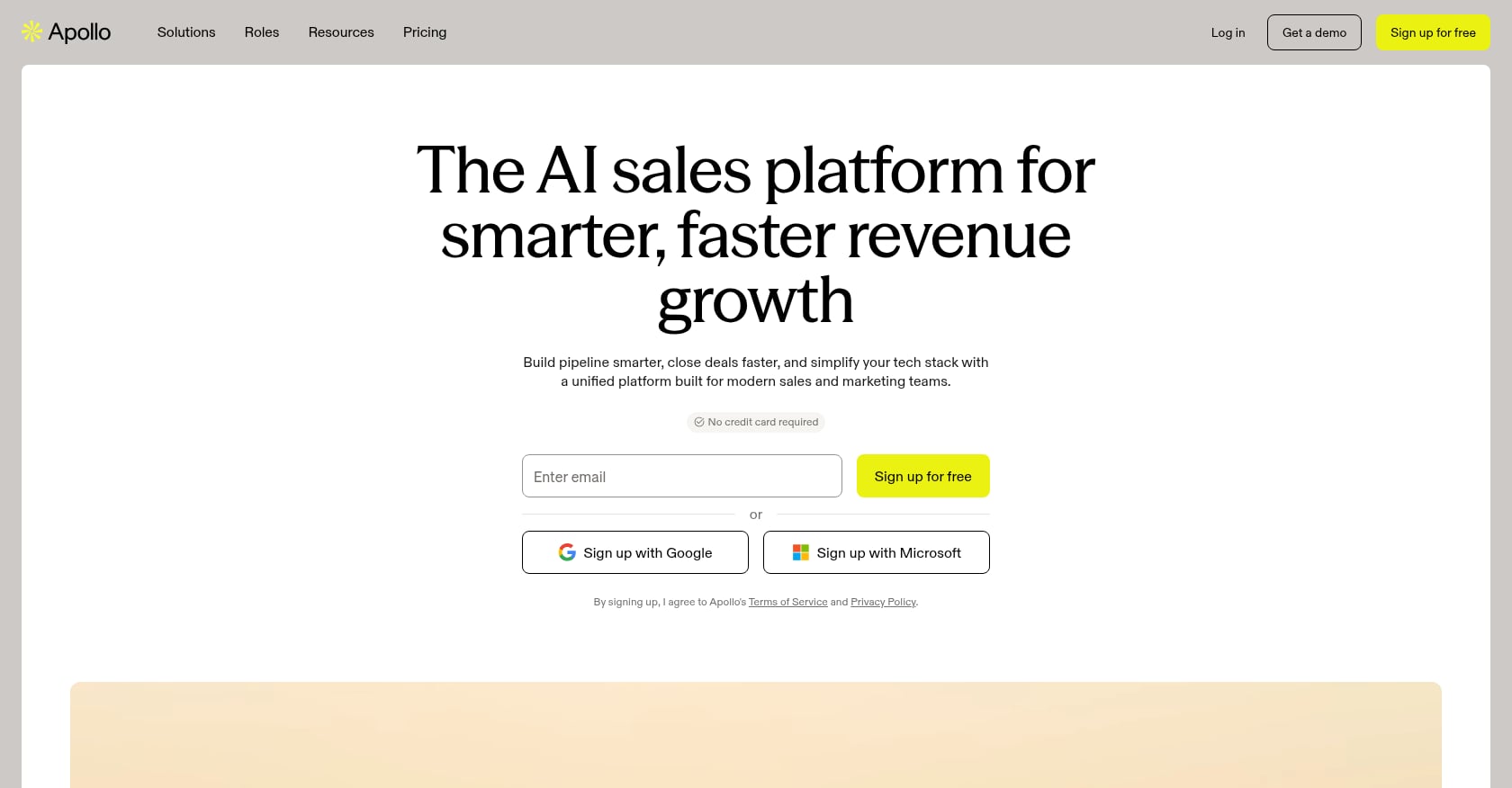
Best for: Startups that want prospecting, data, and sequencing in one platform
Apollo.io combines a 275-million-contact database with email sequencing, workflow automation, and a basic CRM. It’s the closest thing to a single-tool outbound stack.
Pricing:
- Free tier: 60 credits/month
- Basic: $49/month
- Professional: $79/month
- Organization: $119/month (minimum 3 seats)
- All paid plans billed annually
Key features:
- Contact and company search across 275M+ records
- Built-in email sequences with A/B testing
- Workflow automation and lead scoring
- Chrome extension for LinkedIn prospecting
- Basic CRM functionality included
What real users say:
Practitioners on Reddit’s r/coldemail community are direct about Apollo’s main weakness: its built-in sequencer adds tracking signatures that flag emails, leading to noticeably worse deliverability compared to dedicated senders like Instantly or Smartlead. On G2, “Inaccurate Data” appears 503 times in cons tags, and “Missing Features” shows up 597 times. Users on r/coldemail report bounce rates of 32 to 38% on Apollo-sourced lists without additional verification.
Tradeoffs:
- Deliverability suffers when using Apollo’s native sequencer for cold outreach
- Data accuracy degrades without a verification layer
- The CRM is functional but shallow compared to HubSpot or Salesforce
Verdict: Apollo is the best B2B database for cold email prospecting. It’s not the best tool for sending cold emails. Most serious practitioners use Apollo for data, then route contacts through a separate sender. If you only buy one outbound prospecting tool, this is the one, but plan to add a sender soon.
3. Clay
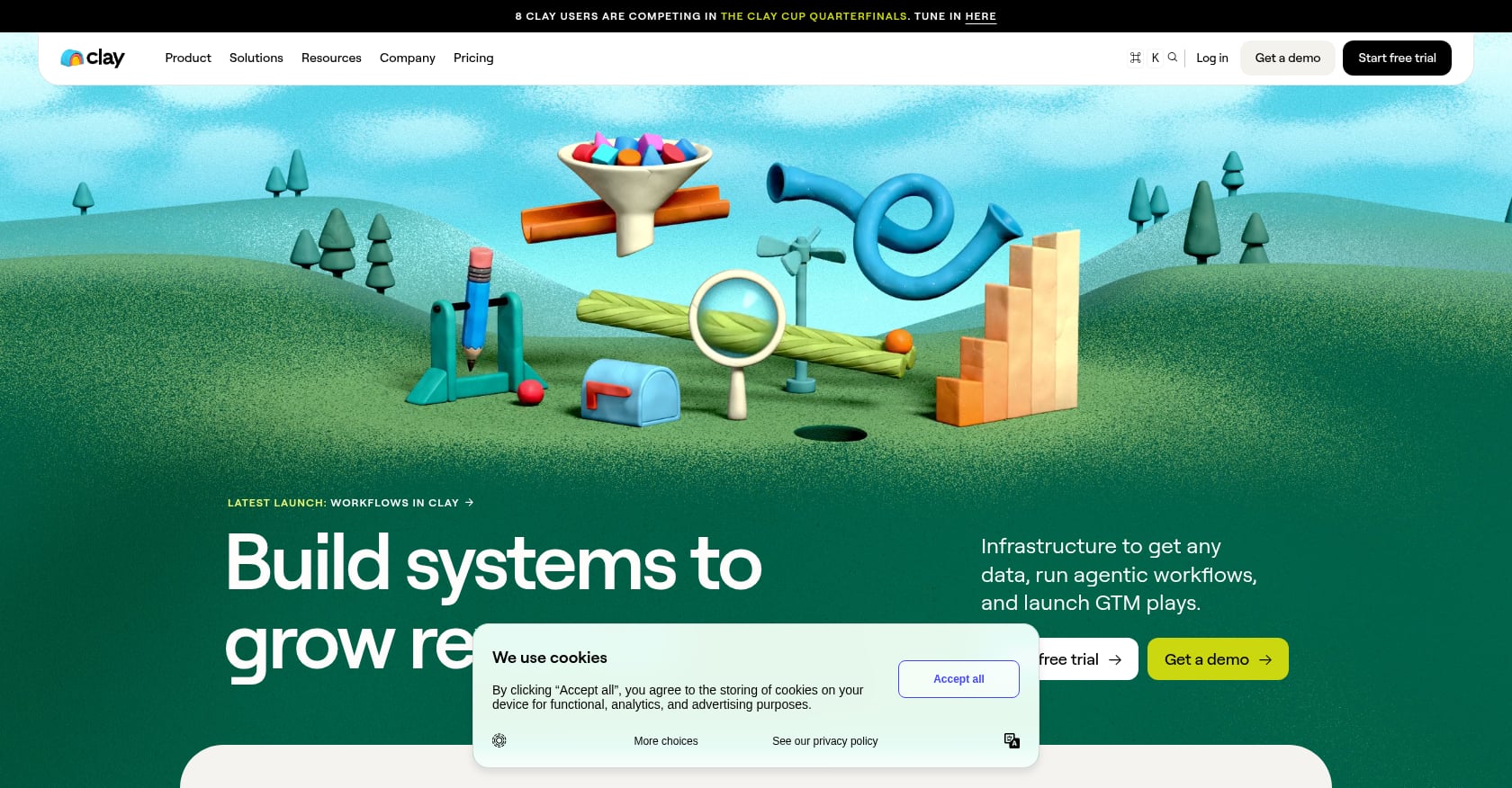
Best for: Teams building custom enrichment and workflow pipelines
Clay is a workflow orchestration layer that aggregates data from 150+ providers and automates enrichment. Think of it as a spreadsheet that can call APIs, run waterfall enrichment logic, and pipe results into your sequencing tool.
Pricing:
- Free plan available
- Launch: $185/month
- Growth: $495/month
- Pricing updated March 2026
Key features:
- Waterfall enrichment across 150+ data sources
- AI research agents that pull company-specific context
- Custom workflow builder (no code required, but technical thinking helps)
- Integrations with most CRMs and sequencing tools
- Signal-based triggers for timely outreach
What real users say:
Reddit users consistently flag Clay as “hard to navigate” with “lots of hidden logic.” The power is real, but so is the learning curve. Pricing stacks up fast once you start consuming credits at scale.
Tradeoffs:
- No prospecting database. Clay enriches data but doesn’t source it.
- Requires genuine technical understanding to unlock its value
- Credit costs can surprise teams running high-volume enrichment
Verdict: Clay is the most powerful enrichment tool in the outbound stack, but it’s a middle layer, not a starting point. Pair it with Apollo for data and Instantly for sending. Teams using Clay for personalized outreach at scale see dramatically better reply rates because every email carries real context.
4. LinkedIn Sales Navigator
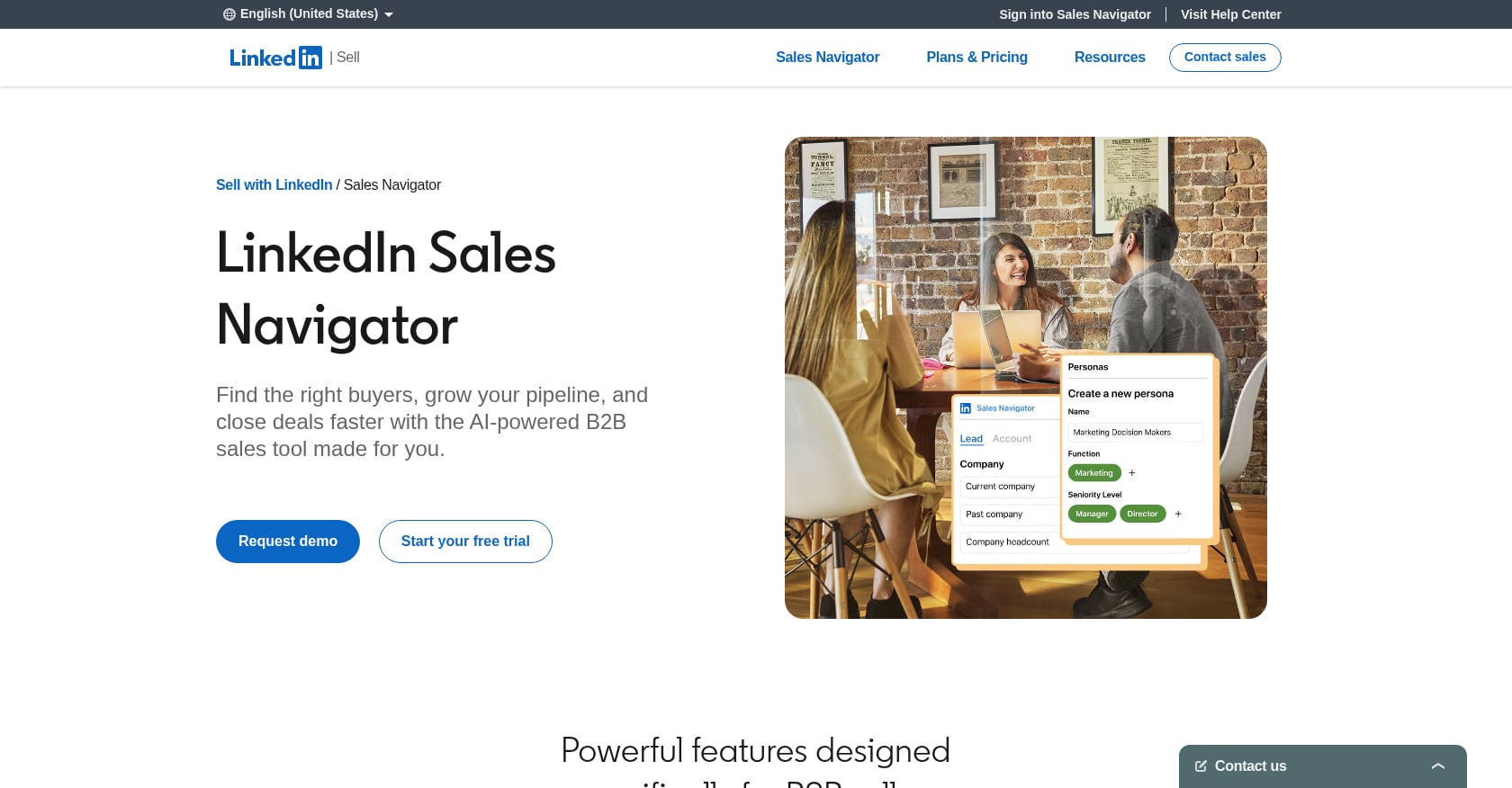
Best for: Account-based, relationship-driven prospecting
With over one million subscribers as of early 2026, LinkedIn Sales Navigator is the most-used B2B prospecting tool on the planet. Its strength is finding warm paths into accounts through shared connections, company insights, and advanced search filters.
Pricing:
- Core: $119.99/seat/month ($89.99 billed annually)
- Advanced: $159.99/seat/month ($149.99 billed annually)
- Advanced Plus: quote-based
- All tiers include 50 InMail credits/month
Key features:
- Advanced search with 30+ filters
- Lead and account tracking with alerts
- TeamLink for finding warm introductions through colleagues
- Buyer intent signals (Advanced and above)
- CRM sync (Advanced Plus)
LinkedIn’s own data suggests that sellers with four or more connections at target accounts are 16% more likely to close.
Tradeoffs:
- Gives you zero email addresses and zero phone numbers. You need a separate enrichment tool for actual outreach.
- The real annual cost is closer to $3,000 to $5,000 once you add the enrichment and automation tools Sales Navigator depends on.
- InMail response rates have declined as the channel gets noisier.
Verdict: Essential for complex B2B sales where relationships matter. Not a standalone outbound prospecting tool. Budget for the ecosystem around it.
5. Instantly
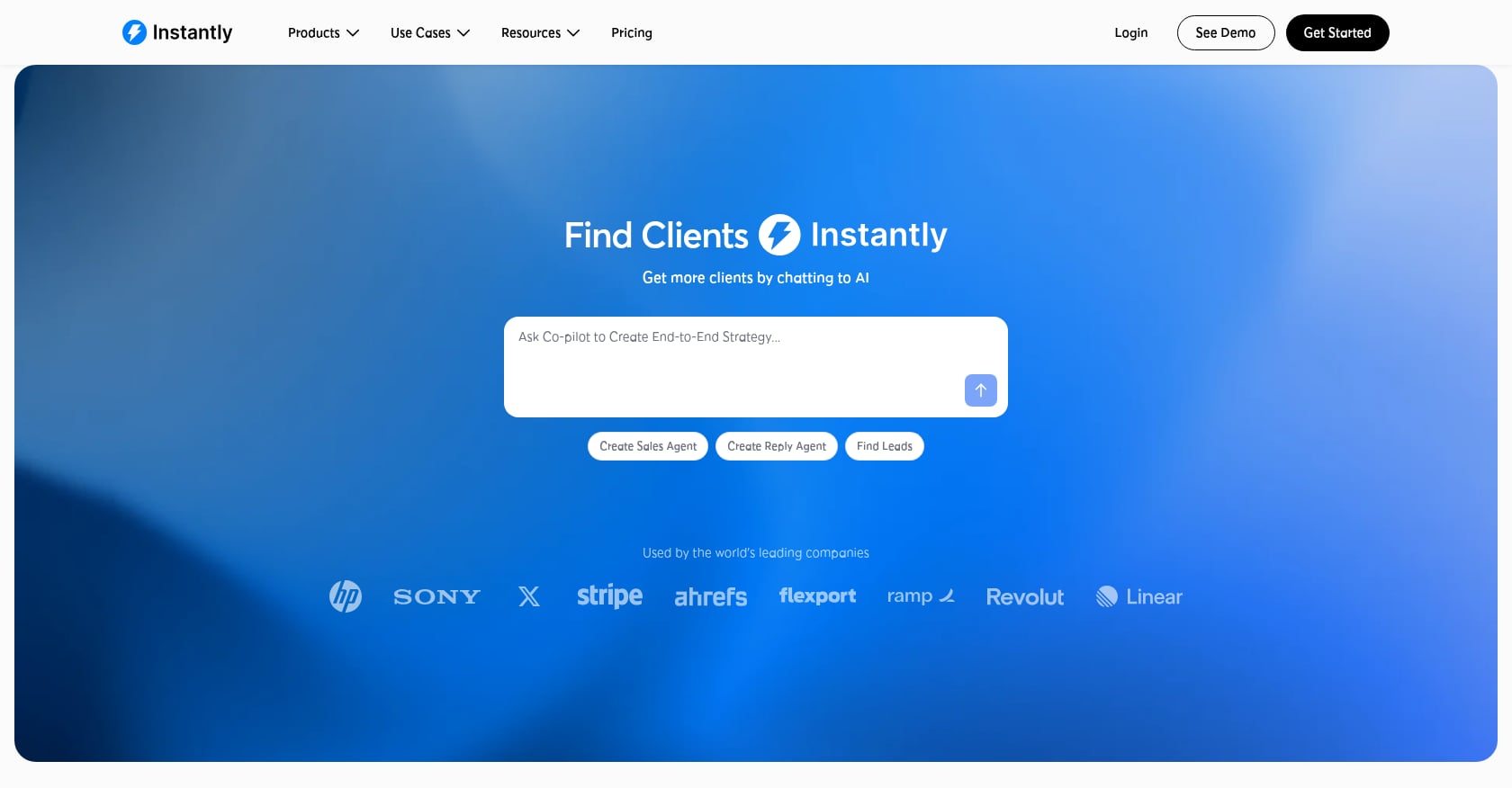
Best for: High-volume cold email at scale
Instantly is the leading cold email platform for volume-first outbound. It offers unlimited email accounts, built-in warmup across 200,000+ real accounts, and inbox rotation on all paid plans.
Pricing (headline):
- Growth: $30/month (1,000 active leads, 5,000 emails)
- Hypergrowth: $77.60/month (25,000 leads, 125,000 emails)
- Light Speed: $286.30/month (100,000 leads, 500,000 emails)
Pricing (reality):
The main costs beyond the base include the Credits module for prospect sourcing ($42.30 to $169.90/month), the CRM module ($37.90 to $94.90/month), inbox placement testing, and pre-warmed accounts. Practitioners on Reddit describe this as a “bait-and-switch feeling” where the advertised $30/month Growth plan turns into $100 to $150/month after adding the modules an outbound team actually needs.
Key features:
- Unlimited email accounts and warmup on all plans
- Inbox rotation for deliverability
- A/B testing and analytics
- Unibox for unified inbox management
- Lead finder (via Credits module)
What real users say:
User reports across G2, Capterra, and sales communities flag deliverability as a recurring concern at higher sending volumes. Several users describe campaigns marked as healthy within Instantly’s dashboard while simultaneously landing in spam folders. Support quality is the most consistently flagged issue across review platforms.
For best practices on structuring your sequences within any sender, see our guide on outbound email sequence best practices.
Tradeoffs:
- No native LinkedIn step. Multichannel requires a second tool.
- Hidden modular pricing doubles or triples the actual cost
- Support response times frustrate users dealing with deliverability issues
Verdict: The best pure email sender for teams that already have data from Apollo or another source. Just budget 2 to 3x the headline price for a functional setup, and understand that you’ll need to learn email deliverability fundamentals to get results.
6. Lemlist
Best for: Small teams running personalized multichannel sequences
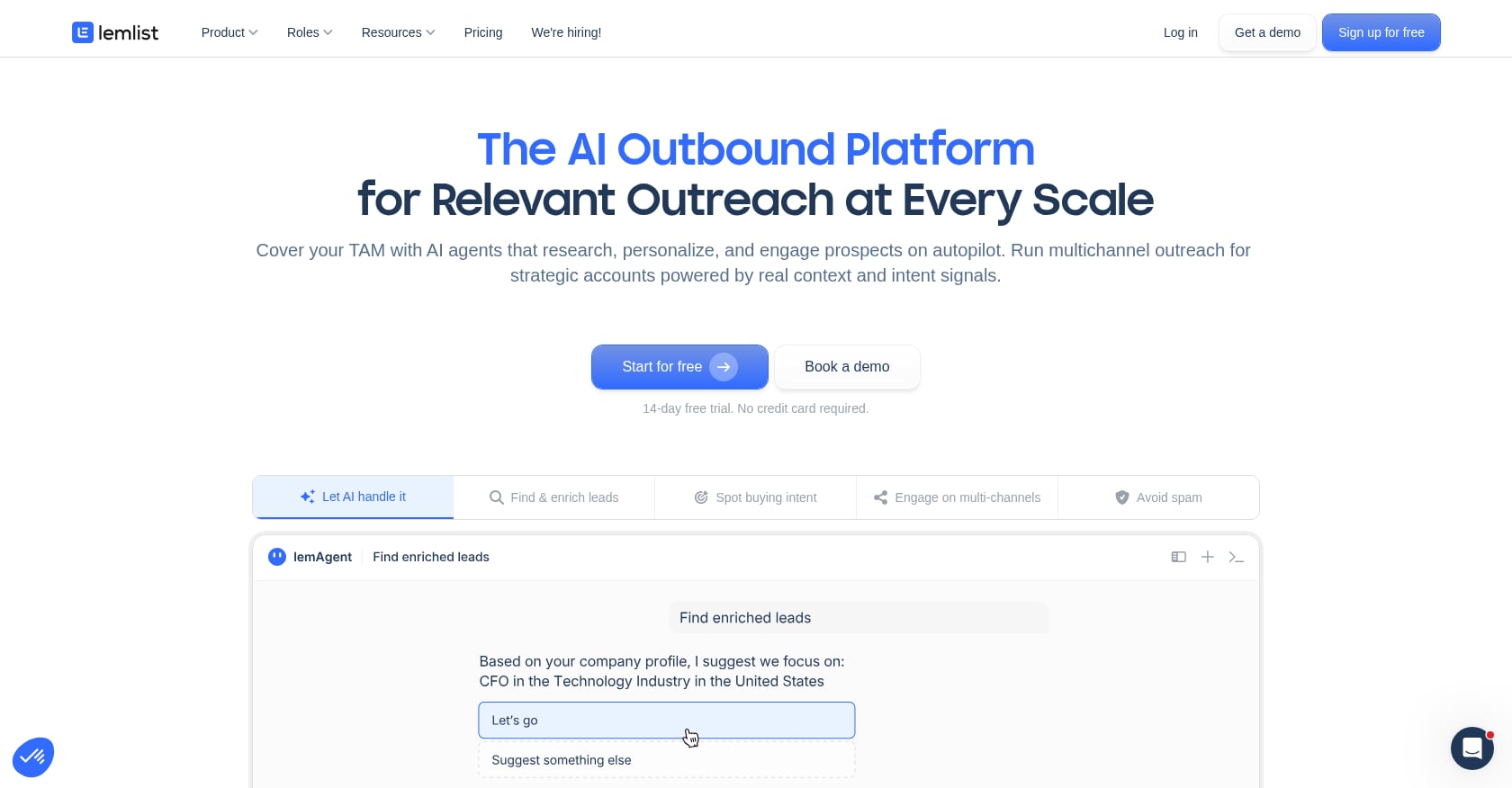
Lemlist is a sales engagement tool that automates outreach across email, LinkedIn, WhatsApp, and calls from a single platform. Its multichannel orchestration is genuinely good, especially for teams of two to five reps.
Pricing (July 2026):
- Email plan: $69/month (unlimited users, 50,000 emails/month)
- Multichannel: $109/user/month
- Annual billing: $55 and $87 respectively
Key features:
- Multichannel sequences (email, LinkedIn, WhatsApp, calls)
- Personalized image and video embeds in emails
- Visual sequence builder
- Built-in lead database and verification
- Landing page builder for campaign-specific offers
What real users say:
Lemlist holds approximately 4.6/5 on G2 based on 600+ reviews. Positive reviews highlight the personalized image feature, deliverability, and visual sequence builder. The most-cited reason on Reddit for switching away from Lemlist? Per-seat pricing past three users.
Tradeoffs:
- Per-seat pricing makes it expensive for teams beyond five reps
- LinkedIn automation runs via Chrome extension (browser-level, not server-side), which means it only works when your browser is open
- The Email plan at $69/month is competitive, but multichannel at $109/user/month adds up fast
Verdict: The best outbound prospecting tool for small, named-sender teams that want email and LinkedIn in one workflow. Just watch the per-seat math carefully as you grow.
7. Smartlead
Best for: Agencies managing outbound for multiple clients
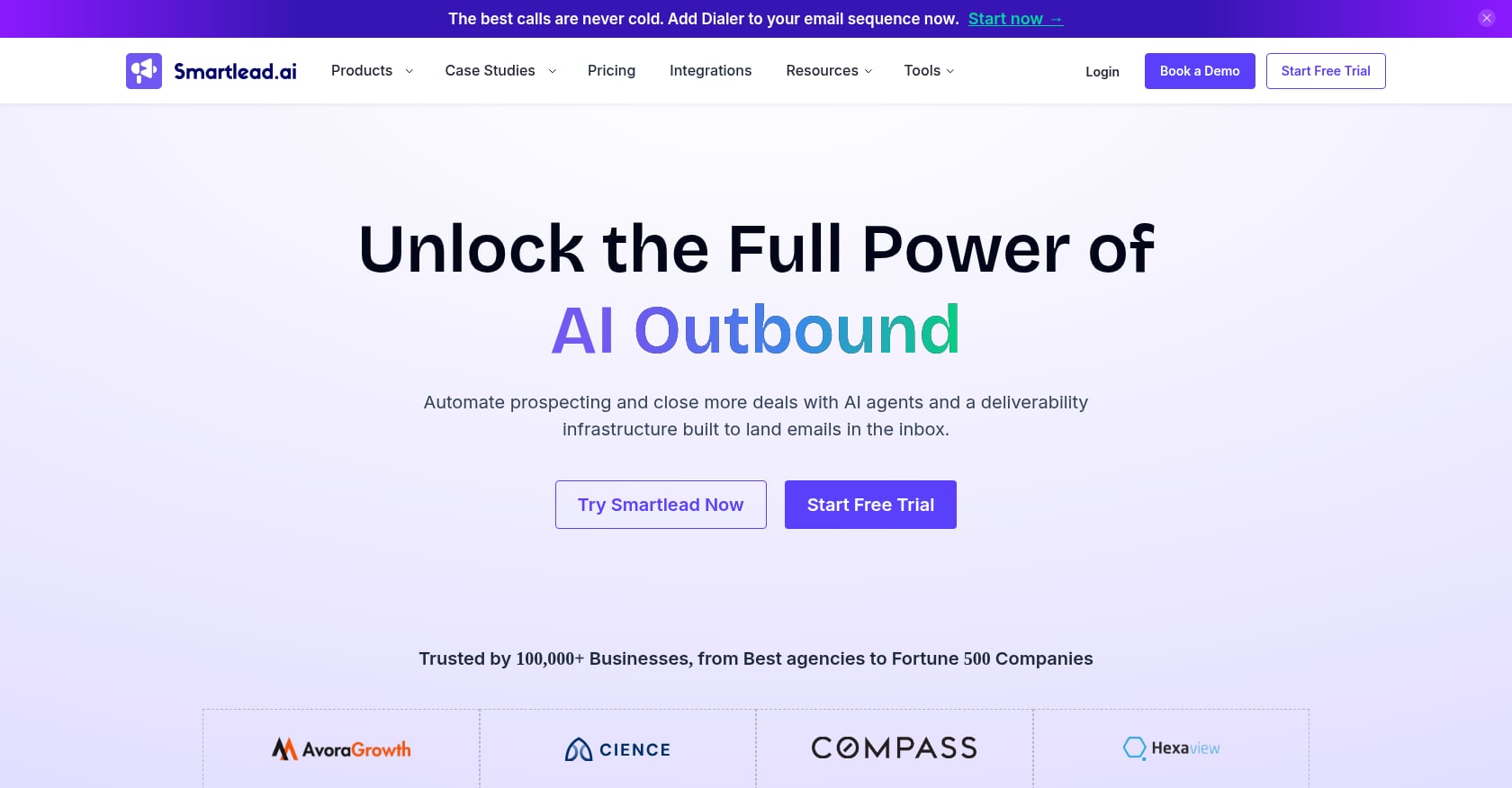
Smartlead includes unlimited email accounts on all plans and offers a white-label agency dashboard. For agencies running client outbound at scale, it’s often better value than Instantly.
Pricing:
- Basic: $39/month (2,000 active leads, 6,000 emails)
- Pro: $94/month (30,000 active leads)
- Custom: $174/month (unlimited clients)
Key features:
- Unlimited email accounts on all plans
- White-label client dashboard
- Inbox rotation and warmup
- Master inbox for managing replies across accounts
- API and webhook integrations
Tradeoffs:
- Less polished UI compared to Instantly
- Fewer integrations out of the box
- Smaller community, so fewer third-party tutorials and resources
Verdict: If you’re an agency or managing outbound for multiple brands, Smartlead’s $174/month plan with unlimited clients is the obvious choice. For individual teams, Instantly has a slight edge in UX and ecosystem.
8. ZoomInfo
Best for: Enterprise teams needing deep company intelligence
ZoomInfo has the deepest company intelligence of any data provider. Org charts show reporting structures, intent data reveals which companies are researching your category, and technographic data shows which tools a prospect’s company uses.
Pricing:
- Typically requires $15,000 to $18,000+ annual commitment
- Quote-only through sales reps
- No self-serve option
Key features:
- Org charts and reporting structure mapping
- Buyer intent signals
- Technographic data (technology stack identification)
- Advanced company search with 100+ filters
- Native integrations with Salesforce, HubSpot, Outreach, Salesloft
Tradeoffs:
- Expensive and overkill for early-stage startups
- Annual contracts with limited flexibility
- Data accuracy outside the US can be inconsistent
- Requires rev ops support to fully utilize
Verdict: ZoomInfo wins on depth and enterprise features. But if you’re a startup founder evaluating outbound prospecting tools, this isn’t where you start. Choose ZoomInfo if you have budget, rev ops support, and a mature GTM team.
9. Outreach
Best for: Large outbound teams (50+ reps) needing enterprise-grade engagement
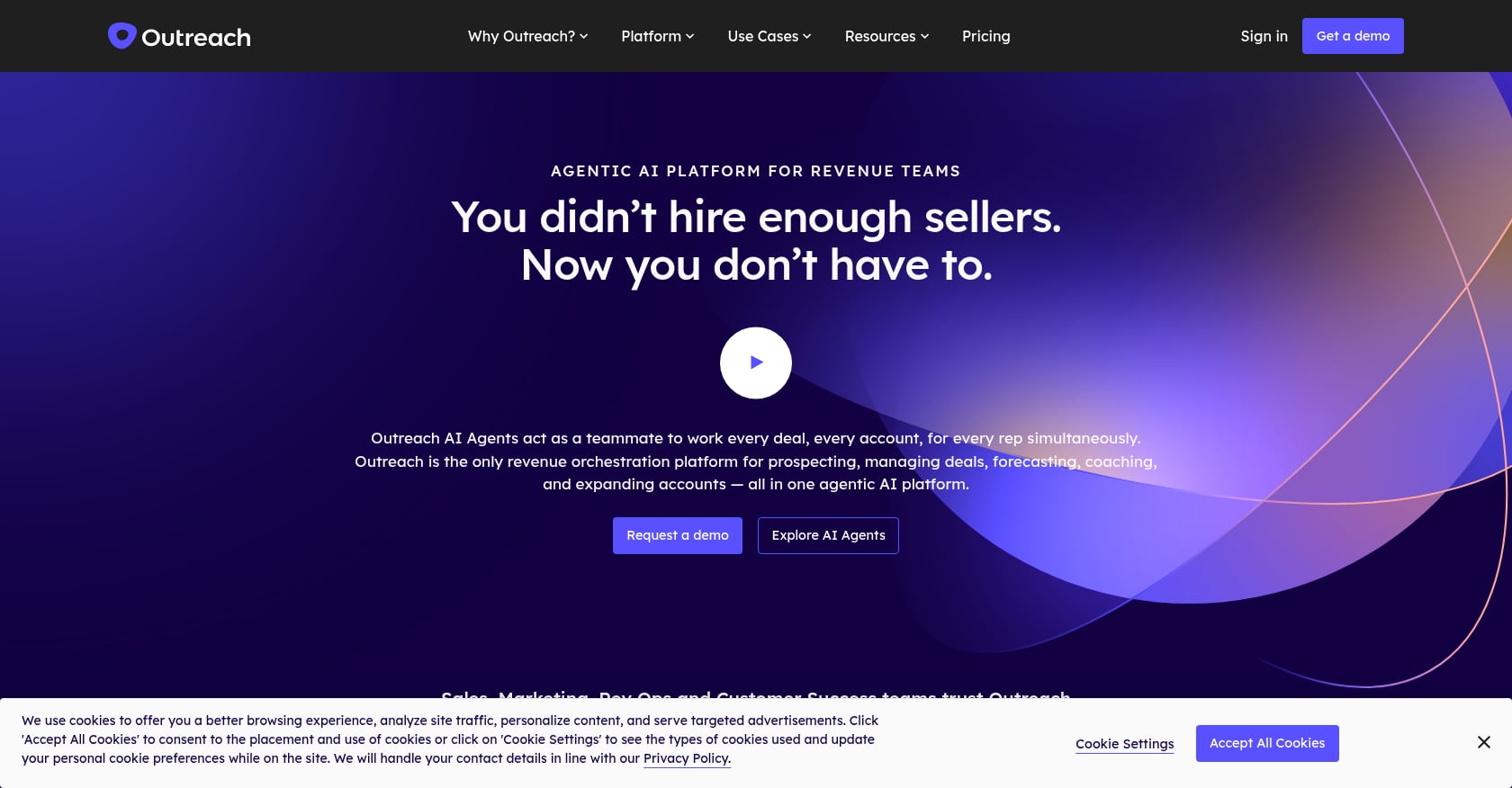
Outreach’s sequencing engine is best-in-class: advanced triggers, A/B testing, and scheduling controls that no mid-market tool matches. It also includes deal intelligence, forecasting, and deep Salesforce integration.
Pricing:
- Per-seat pricing: $100 to $150/user/month
- Mid-market deployments average $115/user/month
- Enterprise: $130 to $150/user/month
- Platform fee: $15,000 to $30,000/year on top
- Implementation: $20,000 to $50,000
Key features:
- Multi-step sequences across email, phone, LinkedIn, and SMS
- AI-powered deal intelligence and forecasting
- Advanced A/B testing and send-time optimization
- Salesforce bi-directional sync
- Conversation intelligence (call recording and analysis)
What real users say:
Outreach has a 4.3/5 G2 rating across 3,531 reviews. Users praise the sequencing depth but consistently flag the complexity of setup and the need for a dedicated admin.
Tradeoffs:
- If you have fewer than 50 reps, you’re overpaying for features your team won’t touch
- Expensive, slow to implement, and requires dedicated administration
- No contact database included; assumes you already have leads in a CRM
Verdict: The right choice for large, mature sales orgs. The wrong choice for almost every startup.
10. Salesloft
Best for: Mid-market teams wanting engagement plus coaching
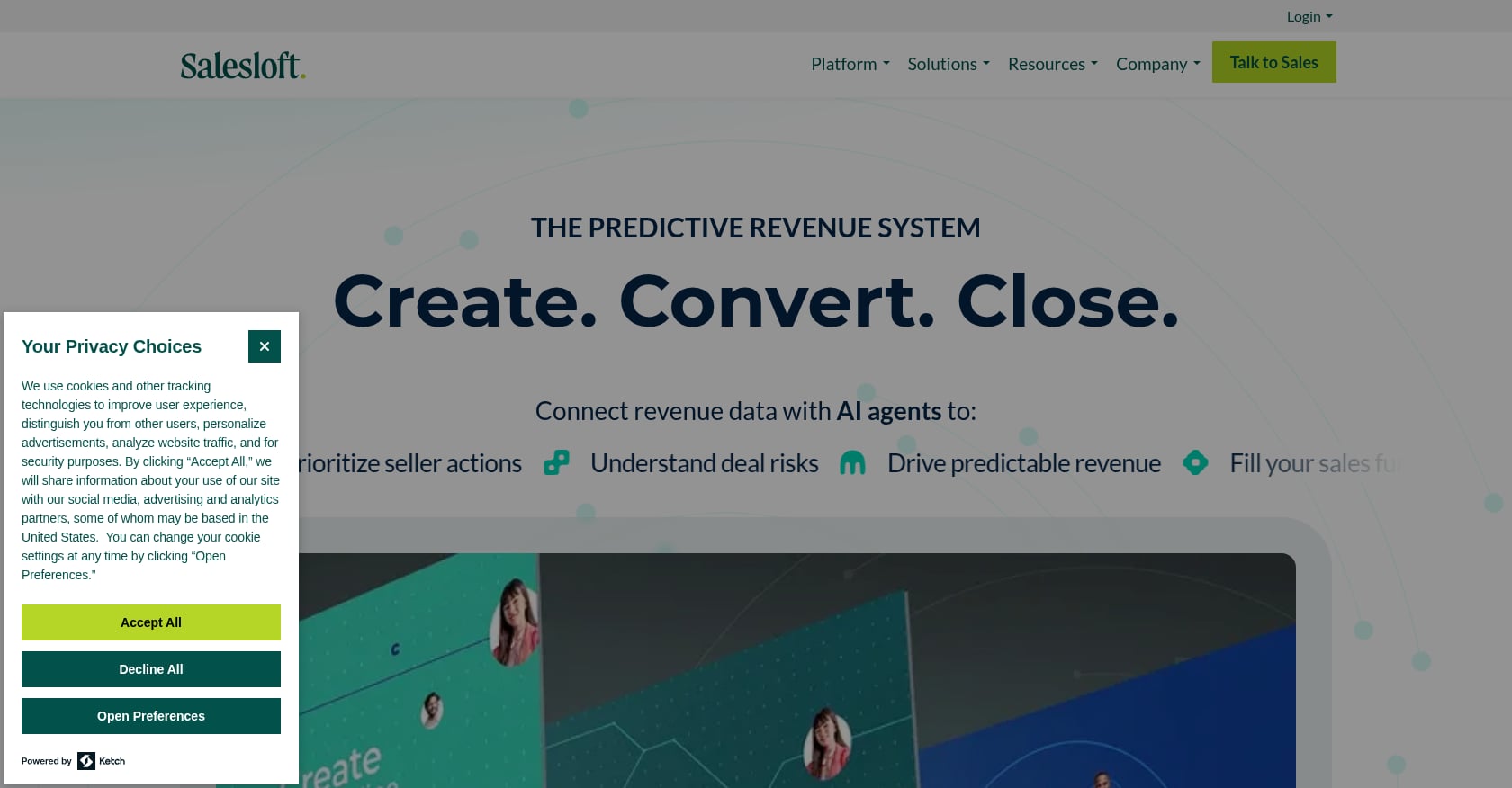
Salesloft (now merged with Clari) balances strong engagement capabilities with a more intuitive user experience and better coaching tools than Outreach. It offers faster time-to-value for teams that don’t need Outreach’s full feature depth.
Pricing:
- Approximately $75 to $165/user/month
- A 10-rep deployment typically lands at $18,000 to $35,000/year all-in
Key features:
- Multichannel cadences (email, phone, LinkedIn, SMS)
- Conversation intelligence and coaching scorecards
- Pipeline visibility and forecasting (enhanced by Clari merger)
- Salesforce and HubSpot integrations
- Deal intelligence dashboards
What real users say:
Salesloft holds a 4.5/5 G2 rating across 4,264 reviews, with higher user satisfaction than Outreach. Users highlight easier onboarding and better coaching tools.
Tradeoffs:
- No contact database, same as Outreach
- Still expensive for teams under 10 reps
- Some features overlap with CRM functionality, creating redundancy
Verdict: The better choice over Outreach for mid-market teams (10 to 50 reps) that value usability and coaching alongside engagement.
11. AiSDR
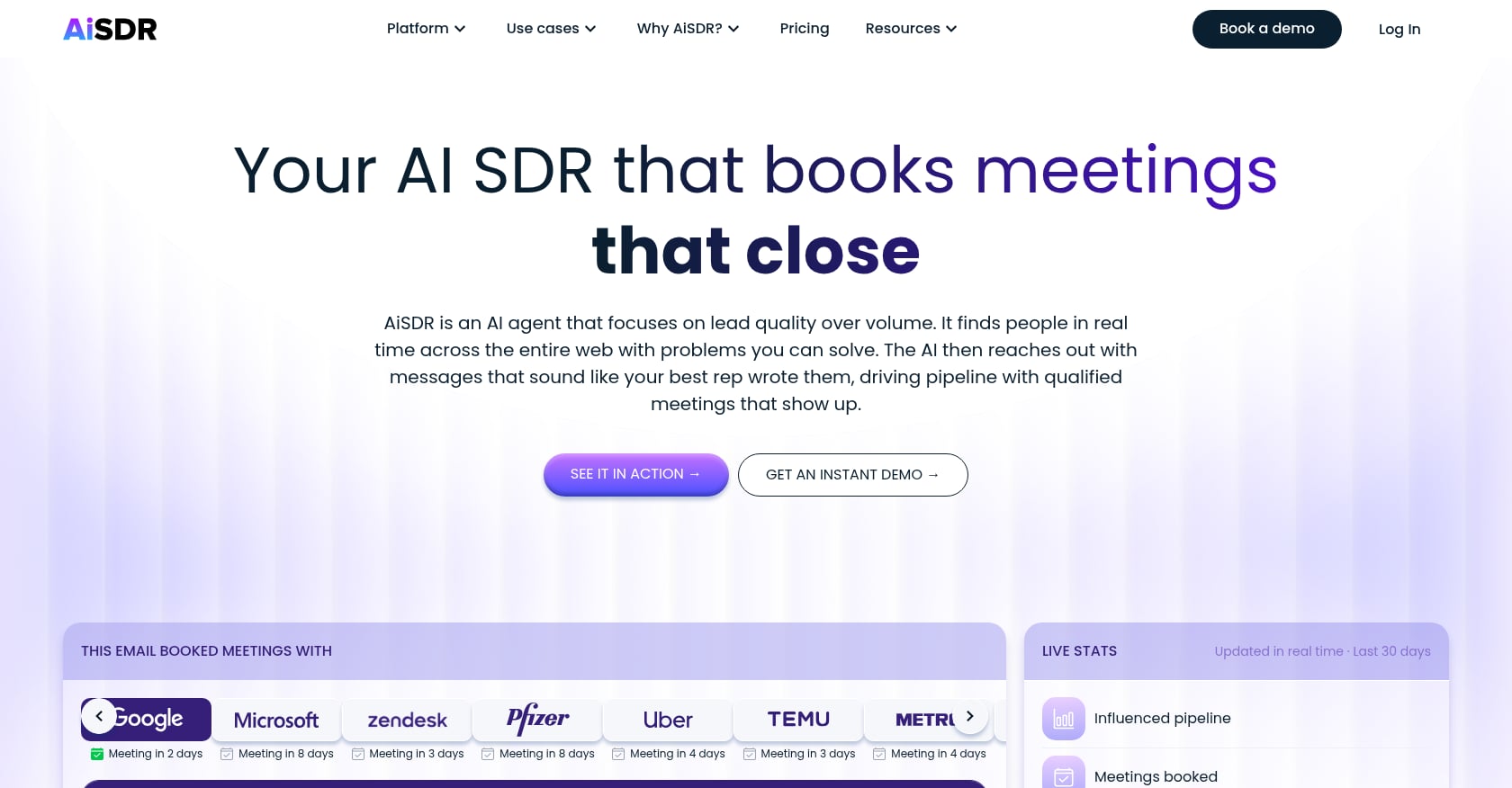
Best for: Founders who want a budget AI SDR without long contracts
AiSDR is one of the more accessible entries in the autonomous AI SDR category, with transparent pricing and fast setup. It handles email and LinkedIn outreach using AI-generated personalization.
Pricing:
- Solo: ~$250/month
- Scales up to ~$900/month for higher volume
- Monthly billing available (no forced annual contracts at lower tiers)
Key features:
- AI-generated email and LinkedIn sequences
- Built-in lead sourcing
- Intent signal monitoring
- Personalization using company and contact data
- HubSpot and Salesforce integration
Tradeoffs:
- Email and LinkedIn only. No phone dialing capability.
- AI-written messages still require review for tone and accuracy, especially in technical or niche markets
- Limited customization compared to building your own stack
Verdict: A reasonable starting point for founders who want to test AI-driven outbound without a five-figure annual commitment. Just don’t expect it to replace a thoughtful multichannel strategy. For a broader look at the category, see our comparison of AI tools for sales automation.
12. Artisan
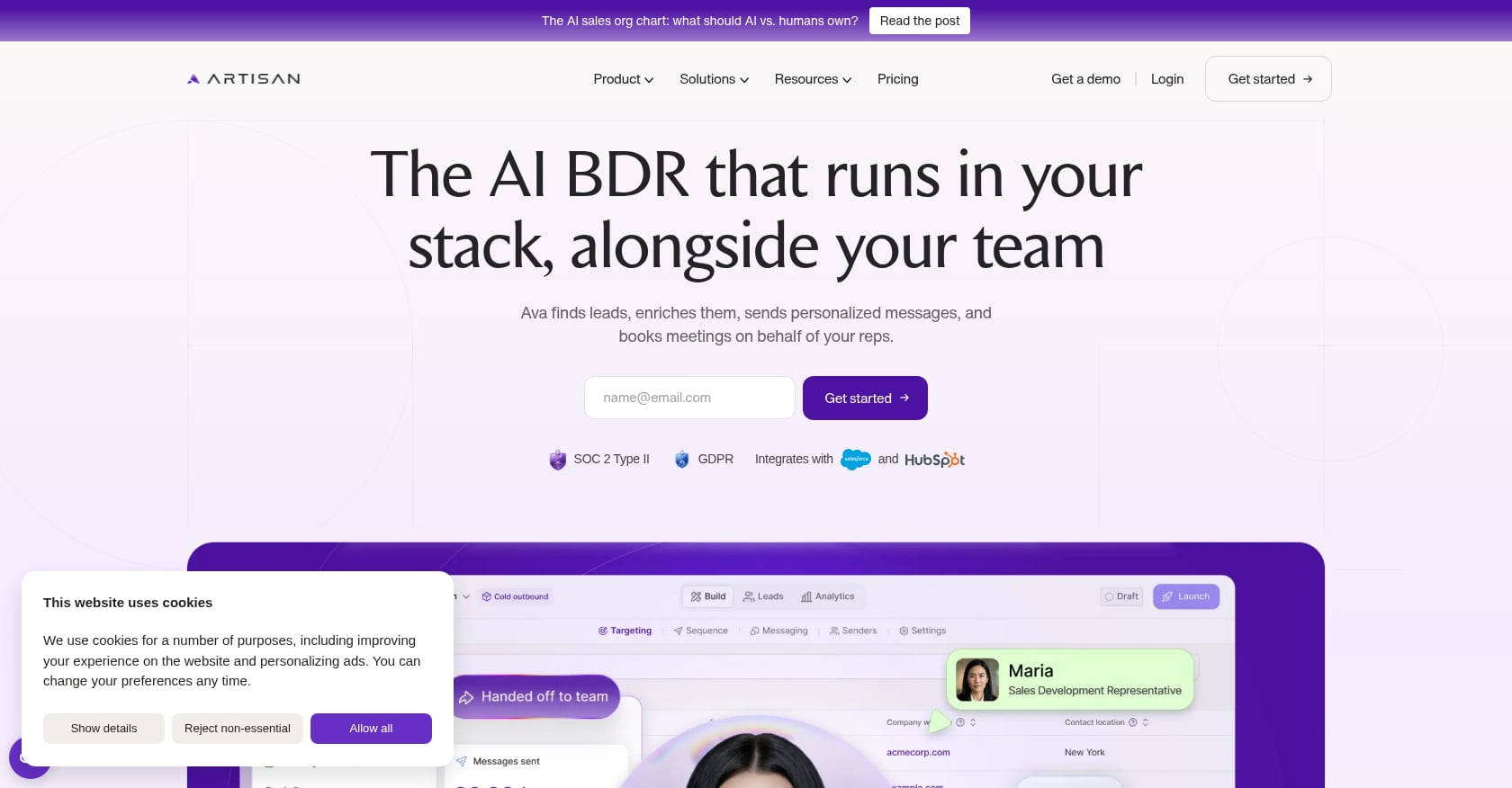
Best for: Teams wanting an all-in-one autonomous AI SDR platform
Artisan’s “Ava” AI agent covers both inbound and outbound, with built-in data sourcing. It’s the most ambitious attempt at replacing the traditional SDR function with software.
Pricing:
- Quote-based (typically ~$280 to $2,000/month depending on volume)
- Annual contracts are standard
Key features:
- Autonomous prospecting and outreach
- Built-in B2B database (no separate data tool needed)
- Inbound lead response automation
- Multi-channel messaging (email and LinkedIn)
- Self-optimizing sequences based on reply data
Tradeoffs:
- Annual contracts reduce flexibility
- The AI SDR category has reported churn of 50 to 70% annually, meaning most buyers cancel within a year
- Struggles with nuance: complex buying committees, industry-specific tone, and knowing when to pick up the phone
Context on AI SDRs broadly:
The AI SDR market was valued at $4.39 billion in 2025 and is projected to reach $47.12 billion by 2034. But the pattern winning in 2026 is augmentation, not replacement. Fully autonomous AI SDRs can sustain high-volume outreach, but they consistently struggle with the judgment calls that close deals. Price the probability that you cancel within twelve months into any AI SDR purchase.
For comparison, a fully loaded US human SDR costs $120,000 to $200,000 per year with a three-to-six-month ramp and roughly 14-month average tenure.
Verdict: Worth testing if you have no SDR headcount and need volume. But go in with realistic expectations and avoid long contracts until you’ve validated results.
The Real Cost of Assembling Your Own Outbound Stack
Here’s what a realistic outbound prospecting stack actually costs for a two-to-five-person startup team, based on the consensus setup practitioners on Reddit’s r/coldemail recommend:
| Layer | Tool | Monthly Cost |
|---|---|---|
| Data | Apollo.io (Basic) | $49 |
| Enrichment | Clay (Launch) | $185 |
| Sending | Instantly (Hypergrowth + Credits + CRM modules) | $158 |
| Sales Navigator (Core, annual) | $90 | |
| Total | $482/month |
And that’s before you add sending domains (typically $2 to $10 each, and you need 3 to 5 per sender), email verification tools, and the inevitable upgrade when you hit plan limits.
The frustration practitioners express on Reddit isn’t about the price itself. It’s the bait-and-switch feeling. An advertised $30/month plan becomes $150/month after you add the modules an outbound team actually needs. This pattern repeats across Instantly, Lemlist, and Clay.
Then there’s the time cost. Founders report spending 5 to 10 hours per week managing tools, troubleshooting deliverability, and maintaining data hygiene instead of actually selling. For a founder-led team, those hours have an enormous opportunity cost.
Austin Hughes, co-founder of Unify GTM and former growth lead at Ramp, puts it bluntly: “One of the biggest mistakes founders make early on is to wait way too long to start with outbound.” The corollary is equally true: spending months assembling the perfect tool stack instead of shipping outreach is its own form of waiting too long.
How to Choose: Decision Framework by Team Size
Solo founder / pre-seed (under $100/month):
Apollo free tier for data + Instantly Growth plan ($30/month) for sending. Accept the limitations and focus on learning your ICP through actual conversations. This is where building lead lists manually teaches you the most.
2 to 5 person team ($300 to $500/month):
Apollo Basic ($49) + Clay Launch ($185) + Instantly with modules (~$150). This is the Reddit consensus stack for serious early-stage outbound. Add Sales Navigator if your deals are relationship-driven.
Growth team, 5 to 15 reps ($500 to $1,500/month):
Add Sales Navigator, consider Lemlist for multichannel, and invest in signal-based prospecting through Clay’s intent triggers. This is where the startup sales tool stack starts to require dedicated ops attention.
Enterprise, 15+ reps ($50K to $100K+/year):
ZoomInfo + Outreach or Salesloft + Clay. Budget for implementation, training, and a dedicated admin.
“I don’t want to manage any of this”:
This is a legitimate position. When the tool cost ($300 to $500/month) plus founder time (5 to 10 hours/week) plus the cost of mistakes (burned domains, wasted months) exceeds the cost of a managed service, outsourcing makes sense.
Explore AgentWeb’s done-for-you GTM execution →
When to Stop Assembling and Start Outsourcing
Three signals that you’ve crossed the line from productive DIY to expensive time sink:
Signal 1: You’ve spent more time evaluating tools than actually prospecting. If your “outbound launch” has been in “tool setup” mode for more than two weeks, something is wrong. Outbound is a learning loop, not a tooling project.
Signal 2: Your domain reputation is already damaged from DIY experiments. Burned domains take months to recover. If your primary domain’s deliverability is compromised because you tested cold email without proper warmup and infrastructure, you’re starting from a deficit.
Signal 3: You need multichannel but can’t justify 4 to 5 tools. The data is clear: email-only outbound converts at 1 to 2%, adding phone bumps that to 4 to 5%, and layering in social pushes response rates to 8 to 12%. Multichannel isn’t optional anymore, it’s the baseline. But running it yourself means four or five tools, each with its own learning curve and failure modes.
For lean teams, managed outbound can actually be cheaper than DIY once you account for the full cost. A service like AgentWeb combines AI execution with senior operators, shipping multichannel campaigns weekly without requiring you to become a tooling expert. The comparison between DIY AI tools and managed execution is worth reviewing if you’re on the fence.
Outbound Prospecting Benchmarks Worth Knowing in 2026
These numbers should inform both your tool selection and your expectations:
| Metric | Benchmark | Source |
|---|---|---|
| Cold email reply rate | 1–5% | Cognism State of Outbound 2026 |
| Cold call answer rate | 13.3% | Cognism 2026 |
| Email-only conversion rate | 1–2% | Prospeo |
| Multichannel conversion rate | 8–12% | Prospeo |
| Signal-personalized reply rate | 15–25% | Prospeo |
| Cold email baseline reply rate | 3–5% | Prospeo |
| Emails that never reach inbox | ~17% | Cognism 2026 |
| Sales teams using AI (any form) | 81% | Industry reports via Prospeo |
The biggest takeaway: signal-based prospecting is the defining shift in outbound for 2026. Teams running outreach triggered by hiring signals, funding events, technology changes, or content engagement see 15 to 25% reply rates compared to the 3 to 5% cold baseline. That’s a completely different sport, and it’s why tools like Clay (intent signals) and enrichment workflows matter more than raw sending volume.
Buying tools doesn’t equal running outbound. The gap between owning a stack and operating a compounding outbound system is where most startups stall.
If you’re ready to skip the assembly phase and start with a GTM engine that ships from week one, that option exists too.
FAQ
What is the best free outbound prospecting tool?
Apollo.io’s free tier is the strongest starting point. You get 60 credits per month, access to the 275M-contact database, and basic sequencing. It’s enough to validate your ICP and book initial meetings before committing to paid tools.
How much does an outbound stack realistically cost for a startup?
Plan for $300 to $500 per month for a functional three-to-four-tool stack (data + enrichment + sending + LinkedIn). Headline prices across tools are floor prices. Budget 2 to 3x the advertised cost for a complete, working setup.
Can AI fully replace human SDRs?
Not in 2026. AI SDR tools can sustain high-volume outreach, but they struggle with complex buying committees, industry-specific tone, and knowing when to pick up the phone. The winning pattern is augmentation: AI handles volume and research while humans handle judgment and relationships. AI SDR category churn of 50 to 70% annually tells the story.
What’s the difference between a prospecting tool and a sales engagement platform?
Prospecting tools (Apollo, ZoomInfo, Clay) help you find and enrich contacts. Sales engagement platforms (Outreach, Salesloft, Lemlist) help you sequence and manage outreach to those contacts. Most teams need both layers, which is why the total cost exceeds what any single tool advertises.
How many tools do I actually need for outbound?
One per layer in the five-layer model: data, enrichment, sending, CRM, and intent signals. That’s five maximum. Many startups can start with two or three (Apollo covers data plus basic CRM, and a sender like Instantly handles outbound). Add enrichment and intent tools as you scale.
Is multichannel outbound worth the extra complexity?
The numbers say yes. Email-only outbound converts at 1 to 2%, while adding phone and social channels pushes that to 8 to 12%. The complexity tax is real, but so is the 4 to 6x improvement in conversion rates. For teams that can’t manage multiple channels internally, this is a strong argument for outsourcing the execution.
Should I start outbound before product-market fit?
Yes. Austin Hughes, co-founder of Unify GTM, argues that no other channel teaches you as much about your ideal customer profile as outbound does. The conversations you generate through outbound prospecting, even early ones that don’t close, shape your positioning, pricing, and product roadmap. Waiting for perfect fit before starting outbound means waiting too long.
Or get a free AI Readiness Roadmap to see where your GTM has gaps.
Ex-Meta, Google, LinkedIn. 10+ years in ML & data science for GTM. Expert in customer acquisition and growth activation.
Get a free Stack Review.
30 min with Harsha and Matt.
We audit your last 30 days, pinpoint the highest-impact fixes, and hand you the exact playbook we'd run. No deck. No pitch unless there's a fit.