12 Best AI Tools for Sales Automation (2026 Edition)


TL;DR
AI tools for sales automation now cover everything from prospect research and lead enrichment to email sequences, CRM updates, call summaries, and pipeline forecasting. The right tool depends on which part of your sales process is actually broken. For startups without dedicated sales ops, AgentWeb combines AI execution with human operators to run the full GTM engine. Teams with mature RevOps can pick specialized tools like Apollo, Clay, Instantly, or Gong to solve specific bottlenecks.
Why AI Sales Automation Matters Now (and Why Most Teams Still Struggle)
AI sales automation is no longer experimental. Salesforce’s 2026 State of Sales report found that AI and AI agents are sales teams’ #1 growth tactic, with 54% of sellers already using agents and nearly 9 in 10 planning to by 2027.
But adoption is not the same as results. Gartner predicts that by 2028, agents will outnumber sellers by 10x, yet fewer than 40% of those sellers will report that AI agents actually improved productivity. McKinsey estimates generative AI could unlock $2.6 trillion to $4.4 trillion in annual value, with roughly 20% of that concentrated in marketing and sales. The opportunity is massive. Buying random tools will not capture it.
The teams getting value from AI sales automation tools are not collecting subscriptions. They are picking tools that match their actual bottleneck, whether that is bad data, slow outreach, messy CRM hygiene, or missing execution capacity.
This article covers 12 AI tools for sales automation, ranked by the job they actually do. For lean startups and founder-led teams that need the full GTM system built and operated, AgentWeb is the recommended starting point.
Explore AI marketing for startups
Quick Comparison: Best AI Sales Automation Tools at a Glance
| Tool | Best for | Starting price | Main automation job | G2 rating | Key tradeoff |
|---|---|---|---|---|---|
| AgentWeb | AI + human GTM execution for startups | $199/mo (self-serve); contact sales for full-service | Campaign execution, outbound, content, reporting | Limited public reviews | Less third-party review coverage than mature SaaS |
| Apollo.io | Affordable all-in-one prospecting | From $49/mo (free tier available) | Contact data, sequences, dialer | 4.7/5 (9,619 reviews) | Credit model and data accuracy vary |
| Clay | AI enrichment and personalization | Free plan; Launch from $185/mo | Waterfall enrichment, AI research | 4.7/5 (213 reviews) | Complex and credit-heavy |
| HubSpot Sales Hub | CRM-centered sales automation | Free tools; Starter $7/mo/seat | CRM, deals, workflows, pipeline | 4.4/5 (13,742 reviews) | Advanced features locked to higher tiers |
| Instantly | Cold email infrastructure | $47/mo ($37.60/mo annual) | Email sending, warmup, deliverability | Positive G2 sentiment | Email-focused, not a full stack |
| Reply.io | Multichannel outbound sequences | Free; Email from $49/user/mo | Email, LinkedIn, SMS, WhatsApp, calls | 4.6/5 (1,536 reviews) | Learning curve with feature breadth |
| Outreach | Enterprise revenue workflows | Custom (seat + AI credits) | Sequencing, deal mgmt, forecasting | 4.3/5 (3,565 reviews) | Expensive, complex for small teams |
| Salesloft | Structured cadences and rep execution | Contact sales | Cadences, dialer, analytics | 4.5/5 (4,287 reviews) | Opaque pricing, can feel rigid |
| Gong | Call intelligence and deal coaching | Custom (per-user + platform fee) | Meeting capture, coaching, pipeline risk | 4.7/5 (6,593 reviews) | Overkill for low-call-volume teams |
| ZoomInfo Sales | Enterprise B2B data and intent | Custom / sales-led | B2B data, intent, enrichment | 4.5/5 (9,043 reviews) | Cost, contracts, data quality variability |
| Cognism | European/compliance-sensitive B2B data | Contact sales | Verified emails, direct dials | 4.5/5 (1,322 reviews) | Coverage varies by market |
| Regie.ai | AI SDR-style outbound at scale | $499/user/mo | AI messaging, agents, parallel dialing | 4.4/5 (355 reviews) | Needs calibration; expensive |
For a broader look at building your sales toolkit, see our startup sales stack guide.
How to Choose the Right AI Sales Automation Tool
Start with the Bottleneck, Not the Feature List
Most buyers approach this category backwards. They browse AI tools for sales automation, get dazzled by feature pages, and end up with software that automates the wrong thing.
A practitioner on Reddit described a B2B client that bought an AI sales tool before mapping their sales process. Six weeks later, they realized the tool’s assumed qualification flow did not match their actual leads, forcing expensive rework. The lesson, as that user put it: “the tool doesn’t fix a process you haven’t defined yet; it just automates the mess faster.”
Before you compare tools, answer these questions:
- Who is the exact ICP? Firmographics, job titles, triggers, pain points.
- Where do leads come from? Inbound, outbound, referrals, partnerships, events.
- What channel mix are you using? Email only? LinkedIn? Calls? Paid?
- Who handles replies and qualified leads?
- What does success look like? Replies, meetings, pipeline, revenue, payback period.
If you cannot answer most of these, you do not need another tool. You need a sales motion first. For a deeper look at whether AI should replace your SDR or supplement them, see our SDR vs. agency comparison.
Check Total Cost, Not Just Sticker Price
AI sales automation tools hide costs in creative ways. Watch for:
- Seat-based pricing that scales with headcount
- Usage credits (data credits, AI credits, action credits) that burn faster than expected
- Annual contracts with auto-renewal clauses
- Onboarding fees (HubSpot Professional charges a $1,500 onboarding fee)
- Domain and inbox costs for cold email infrastructure
- Add-ons for features that looked included on the marketing page
One Reddit user in r/automation warned that stacks built from Apollo plus Clay plus Lemlist plus n8n plus warmup tools plus multiple domains plus a CRM can “implode when one API or pricing change hits.” That is a real risk for lean teams without a RevOps owner.
Keep a Human in the Loop
Gartner predicts that 95% of seller research will begin with AI by 2027, up from less than 20% in 2024. AI is becoming the default for research and drafting. But sending AI-generated messages without human review is how companies wreck deliverability, annoy prospects, and damage their brand.
Every tool on this list works better when a human reviews the output before it reaches buyers.
Best AI Tools for Sales Automation
1. AgentWeb
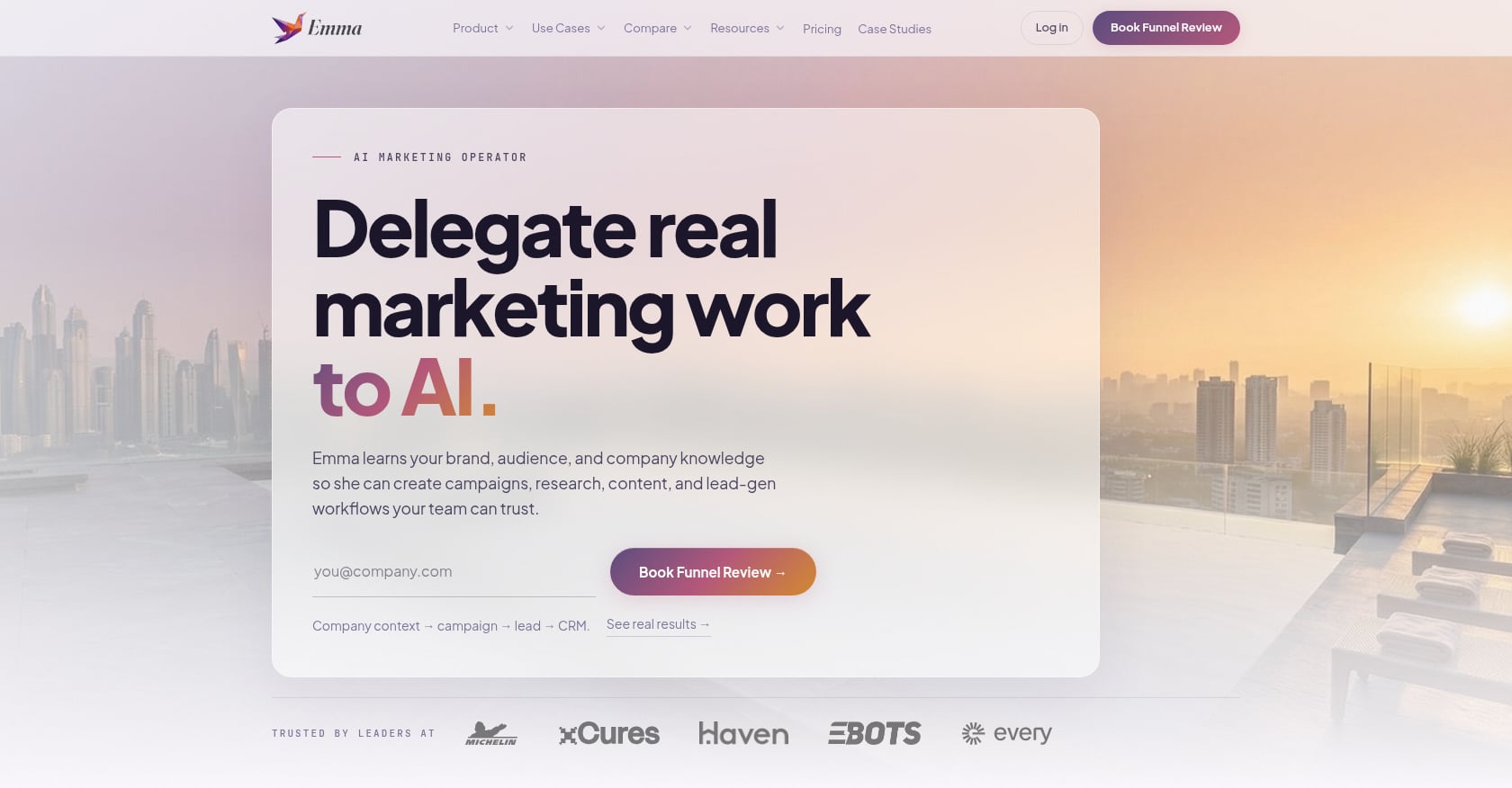
Best for: Startups and founder-led teams that need AI plus human GTM execution, not another point tool to configure.
Most AI sales automation tools handle one slice of the funnel. AgentWeb is broader. It combines its agentic AI marketer “Emma” with a senior human operator team to run marketing and outbound across multiple channels. That fits the real pain behind this search: startups do not just need an email tool. They need a system that keeps shipping campaigns, week after week.
Pricing:
- Self-serve platform: 7-day free trial, then $199/month
- Custom Workflows (AI-Led Co-Pilot): contact sales
- Done-for-you Growth Ops: contact sales
- Free GTM diagnostic available for full-service prospects
Key features:
- 90-day GTM diagnostic and growth plan
- Emma executes across Meta, Google, LinkedIn/X, email, and outbound
- Slack/Teams workflows for one-click approvals
- AgentWeb Portal with calendar, dashboards, and optimization loops
- Founder-brand support including LinkedIn ghostwriting and exec comms
- SEO and content production (up to roughly 20 assets per month)
- Weekly performance reviews and iteration
- Self-serve AI campaign templates for market research, competitive analysis, and audience insights
- Integrations with existing ad platforms and CRMs
Proof points (from AgentWeb case studies):
- Nailed It: 4,000+ leads and 328 add-to-carts in 3 months, with 2.91% CTR at approximately $0.24 CPC
- Cora: 13.19% peak CTR and $0.74 CPC on a $300/month ad budget, with 435+ qualified clicks in one month
- Backed by Amino Capital, Subodha Capital, Serapex Ventures, and Team Ignite Ventures
Tradeoffs:
- Fewer public third-party reviews than mature tools like Apollo, HubSpot, or Gong
- Full-service pricing is not publicly listed
- Best results require founder engagement, approvals, and weekly iteration
Verdict: Choose AgentWeb if you want the sales and marketing system built and operated with you. Choose a point tool if you already have someone internally who can own data, sequences, testing, deliverability, and reporting.
2. Apollo.io
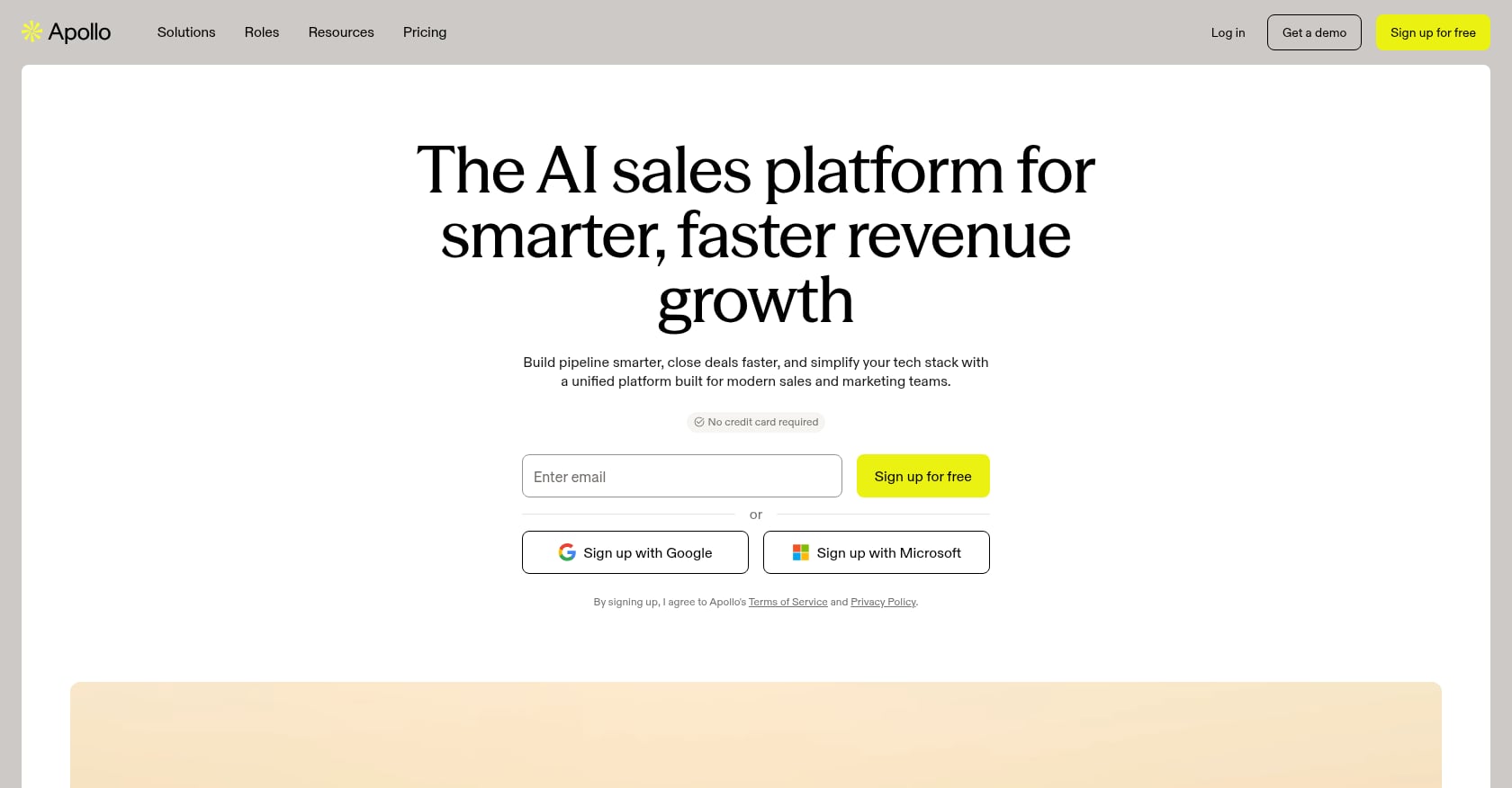
Best for: Startups and SMB sales teams that want one affordable platform for B2B contacts, email sequences, and basic pipeline management.
Apollo is the most common first tool for DIY outbound. It combines a large contact database with built-in sequences, a dialer, and lightweight CRM features. G2 rates Apollo 4.7 out of 5 from over 9,600 reviews, with users praising fast contact search, verified emails, and time savings.
Pricing:
- Free tier with unlimited email credits, 5 mobile credits, and 10 export credits per month
- Paid plans start at $49/month and reach $119 depending on tier
- Trial plans include 50 credits and 5 mobile credits
Key features:
- B2B contact database with email and phone prospecting
- Email sequences and follow-up automation
- Buying intent signals and advanced filters
- Dialer and call recording
- Integrations with Salesforce, HubSpot, Outreach, Salesloft, and LinkedIn
Tradeoffs:
- Data accuracy varies by market and contact type
- Phone/mobile credits are more restrictive than email access
- Credit-based pricing can be hard to predict
- CRM features may not replace HubSpot or Salesforce for mature teams
Practitioners on Reddit frequently pair Apollo with Instantly for sending and Clay for enrichment. One thread noted frustration around mobile number credits and changing free-plan limits.
Verdict: Apollo is the best first DIY tool for lean teams that need contacts and sequences in one place. If you need deep personalization, add Clay. If you need managed execution, start with AgentWeb.
3. Clay
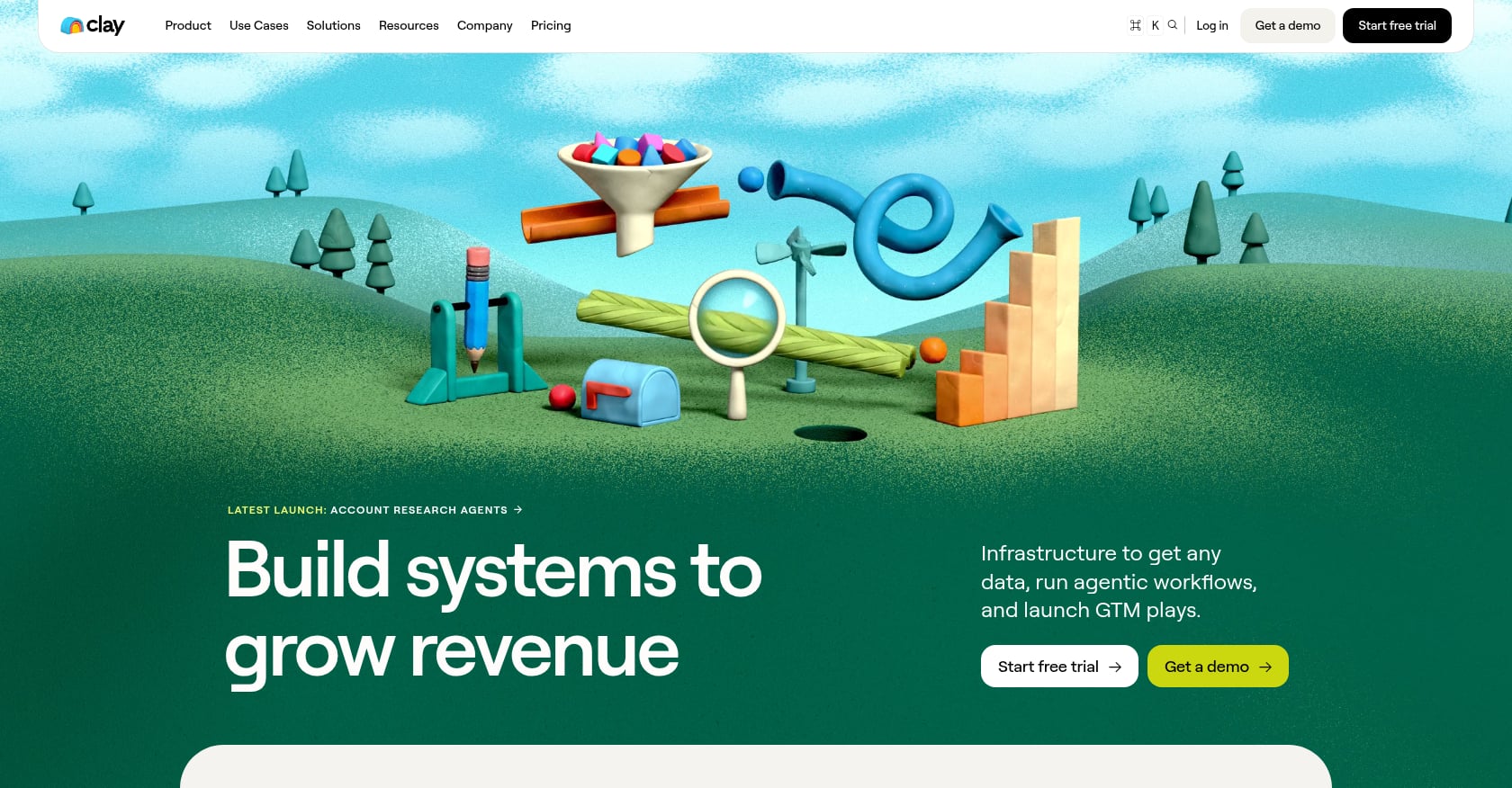
Best for: GTM engineers, RevOps teams, and advanced outbound operators that need waterfall enrichment, AI research, and hyper-personalized messaging.
Clay is the most powerful enrichment and personalization engine in the category. It pulls data from dozens of providers, runs AI web research through Claygent, and generates personalized message components at scale. But it is not simple. For teams interested in ICP-based email personalization, Clay is the tool that makes it possible at volume.
Pricing:
- Free plan: 500 actions/month, 100 data credits/month, unlimited seats
- Launch: starts at $185/month with 2,500 data credits
- Growth: $446/month (monthly) with 40,000 actions and 6,000 data credits
- Clay updated its pricing model in March 2026
Key features:
- Waterfall enrichment across many data providers
- Claygent AI web research
- Signals and intent tracking (job changes, funding, hiring triggers)
- CRM enrichment and audience sync to LinkedIn, Meta, and Google
- HTTP API integrations
Tradeoffs:
- Requires thoughtful workflow design; not a “turn it on and get meetings” tool
- Credit and action consumption can surprise teams
- Best results typically require a GTM engineer or technical founder
- Powerful but complex table-based interface
G2 rates Clay 4.7 out of 5 from 213 reviews. Users praise the enrichment speed but warn about credit burn and workflow complexity.
Verdict: Use Clay when you know your ICP and need better research at scale. Do not buy it hoping it will define your sales motion for you.
4. HubSpot Sales Hub
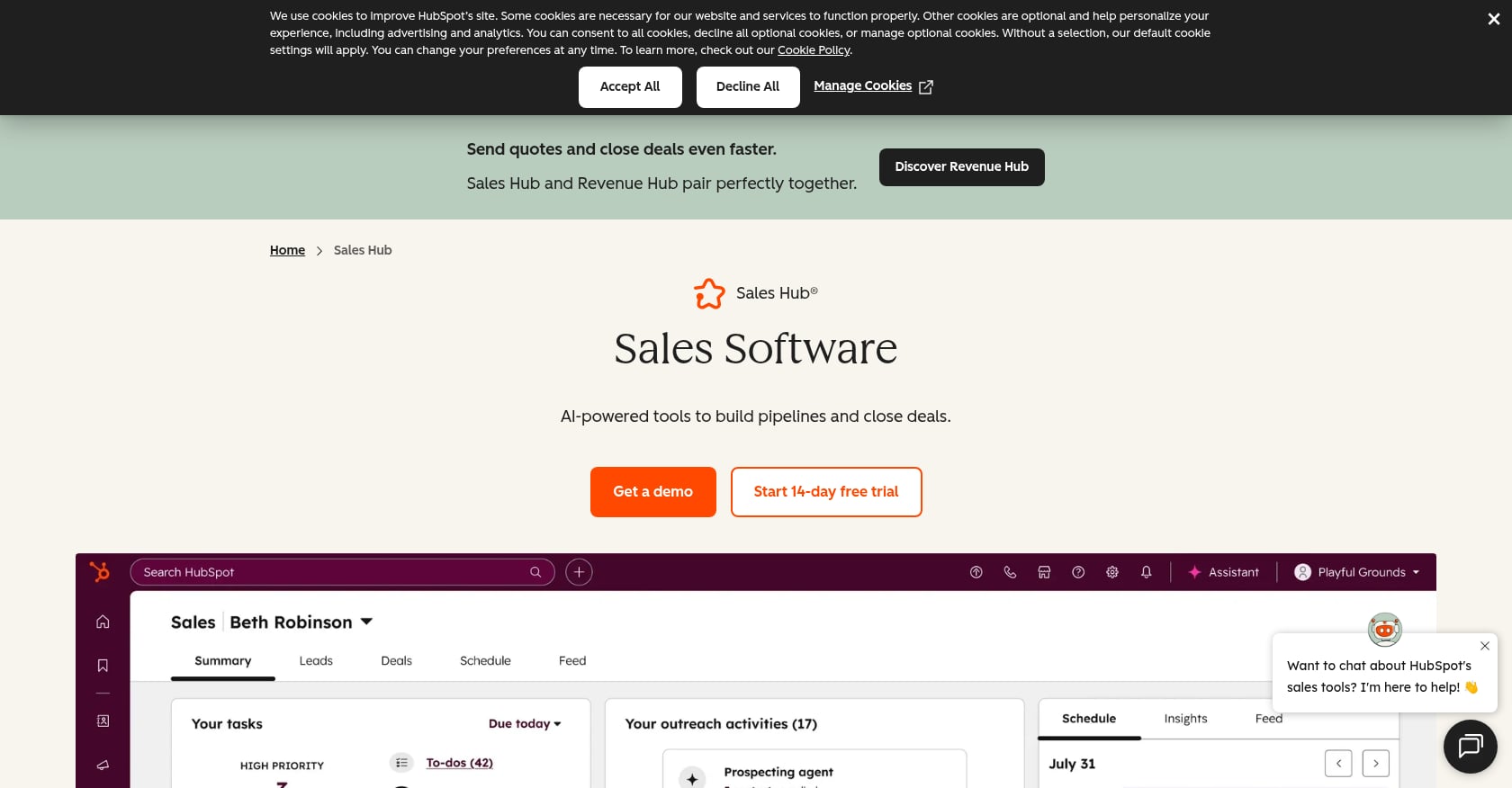
Best for: Small and scaling teams that want sales automation inside a CRM with pipeline management, deal tracking, and reporting.
HubSpot is the default CRM for startups, and its Sales Hub layers automation, sequences, and AI features on top of a familiar interface. It is the safest choice for teams that want one system of record for contacts, deals, and follow-ups.
Pricing:
- Free tools available
- Starter: $7/month per seat
- Professional: $90/month per seat (includes 3,000 HubSpot Credits, $1,500 onboarding fee)
- Enterprise: $150/month per seat (includes 5,000 HubSpot Credits, $3,500 onboarding fee)
- Additional credits at $0.010 per credit
Key features:
- CRM, deal pipeline, and contact management
- Email tracking, templates, and sequences
- Sales automation workflows
- Meeting scheduling and forecasting
- Breeze AI features powered by HubSpot Credits
Tradeoffs:
- Costs escalate quickly as teams add hubs, seats, onboarding fees, and credits
- Advanced automation and reporting locked behind Professional and Enterprise tiers
- Not a dedicated prospecting database or enrichment engine
G2 rates HubSpot Sales Hub 4.4 out of 5 from over 13,700 reviews. Reddit users have discussed the newer credit structure with some skepticism around AI credit pricing complexity.
Verdict: HubSpot is the safest CRM-centered choice for startups and SMBs. Pair it with AgentWeb for execution, Apollo for contacts, or Clay for enrichment.
5. Instantly
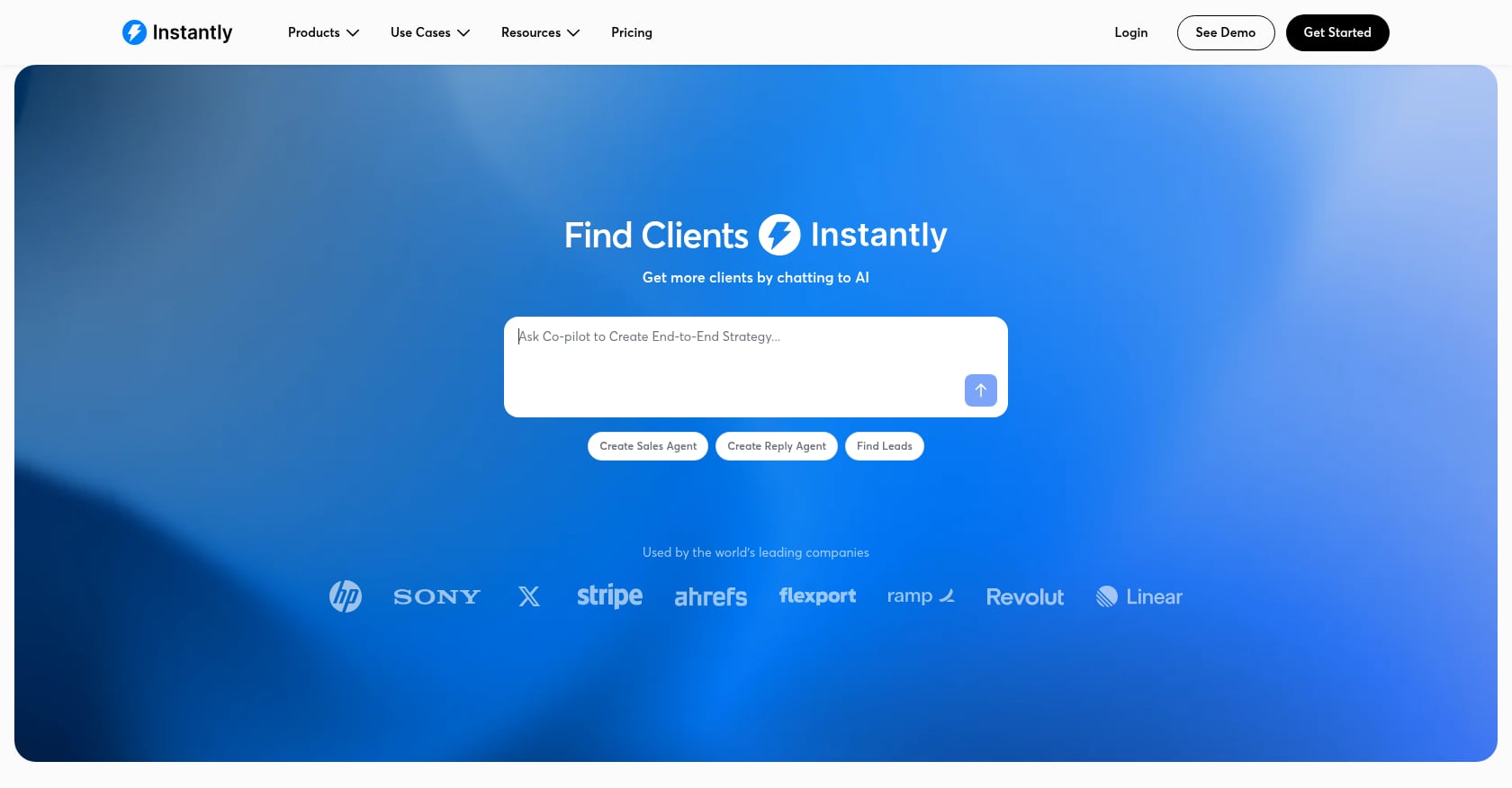
Best for: Cold email teams, founders, and outbound operators who care about sending infrastructure, warmup, and deliverability above all else.
Instantly has become the default cold email platform for startups running high-volume outbound. It handles unlimited email accounts, automatic warmup, and campaign management. But it is an email-sending tool, not a strategy engine.
Pricing:
- Growth: starts at $47/month (monthly) with unlimited email accounts, warmup, 1,000 contacts, 5,000 emails
- Hypergrowth: $97/month with 25,000 contacts and 125,000 emails
- Annual pricing available (Growth at $37.60/month, Hypergrowth at $77.60/month)
- Separate lead database and credit products available
Key features:
- Cold email campaigns with unlimited sending accounts
- Built-in warmup and deliverability tools
- Lead database and verification products
- AI email writer
- Clean campaign UI with scheduling
Tradeoffs:
- Email-focused; not a CRM, enrichment engine, or strategic GTM system
- Requires domain setup, inbox management, and deliverability discipline
- Can encourage volume over quality if list and ICP are weak
Reddit outbound discussions often mention Instantly plus Apollo as the most common cold email stack for startups. G2 users praise the warmup tools and clean interface but note that bolt-on pricing can add up.
For teams sending cold email, deliverability best practices matter more than any single tool.
Verdict: Use Instantly when cold email is already validated and your team has the discipline to manage domains, lists, and reply handling. Do not buy it before you know who you are emailing and why they should care.
6. Reply.io
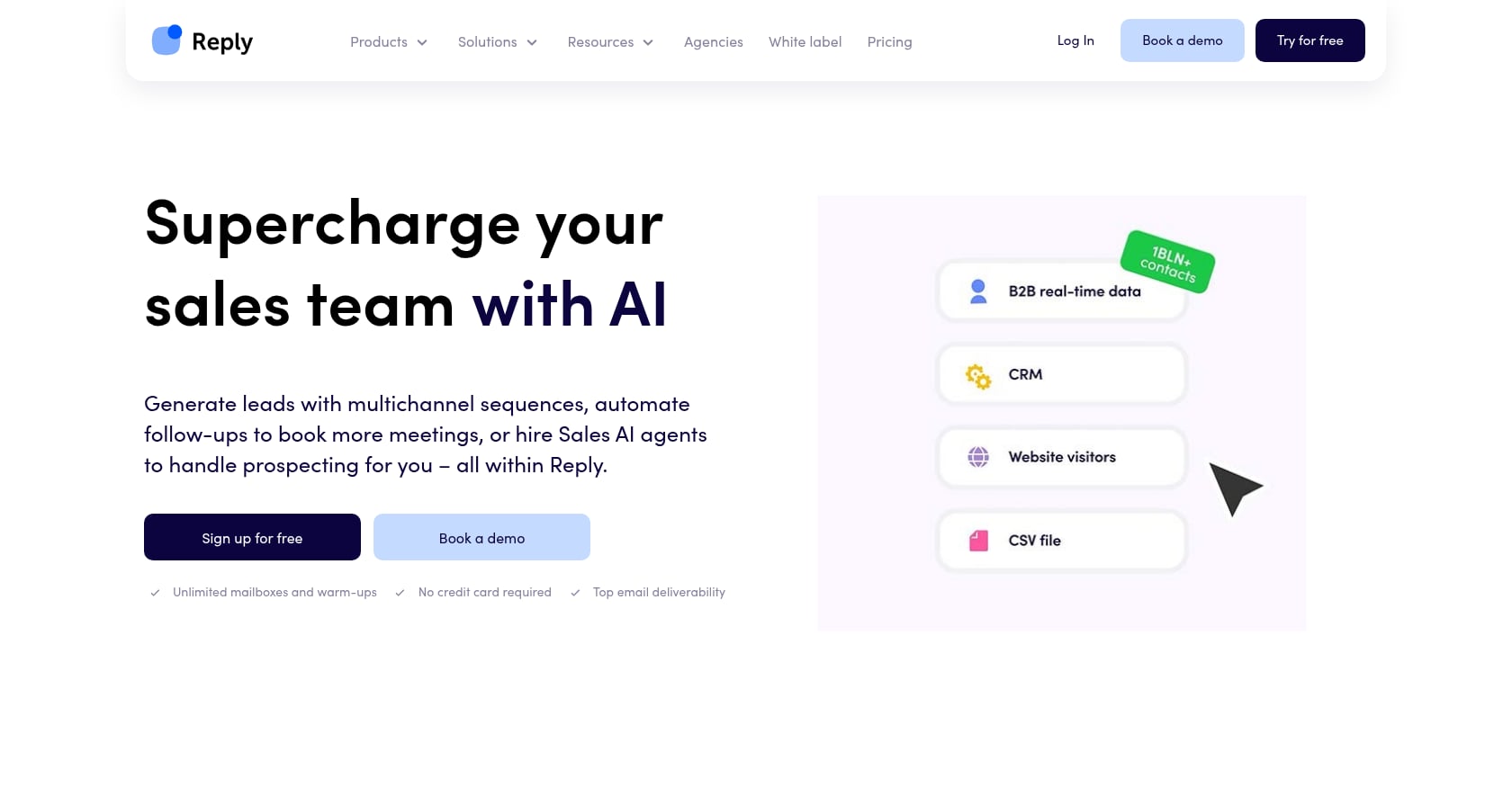
Best for: Sales teams and agencies that need email, LinkedIn, calls, SMS, and WhatsApp sequences in one platform.
Reply covers more channels than most AI sales automation tools in its price range. Its AI SDR agent (Jason AI) helps generate sequences, and the platform includes access to a verified B2B contact database. G2 rates Reply 4.6 out of 5 from over 1,500 reviews.
Pricing:
- Free tier available
- Email Volume: from $49/user/month
- Multichannel: from $89/user/month
Key features:
- Multichannel sequences across email, LinkedIn, SMS, WhatsApp, and calls
- AI SDR agent for sequence assistance
- 1B+ verified B2B contacts (per G2 product details)
- CRM and workflow integrations
- Analytics and A/B testing
Tradeoffs:
- Multichannel automation requires careful governance, especially on LinkedIn (which is cracking down on automation)
- Contact data can still be incomplete
- May be too much tool for teams that only need email
- Feature breadth creates a learning curve
Verdict: Reply is a strong choice when multichannel outbound is the core workflow and the team wants one tool instead of separate email, LinkedIn, and task systems.
7. Outreach
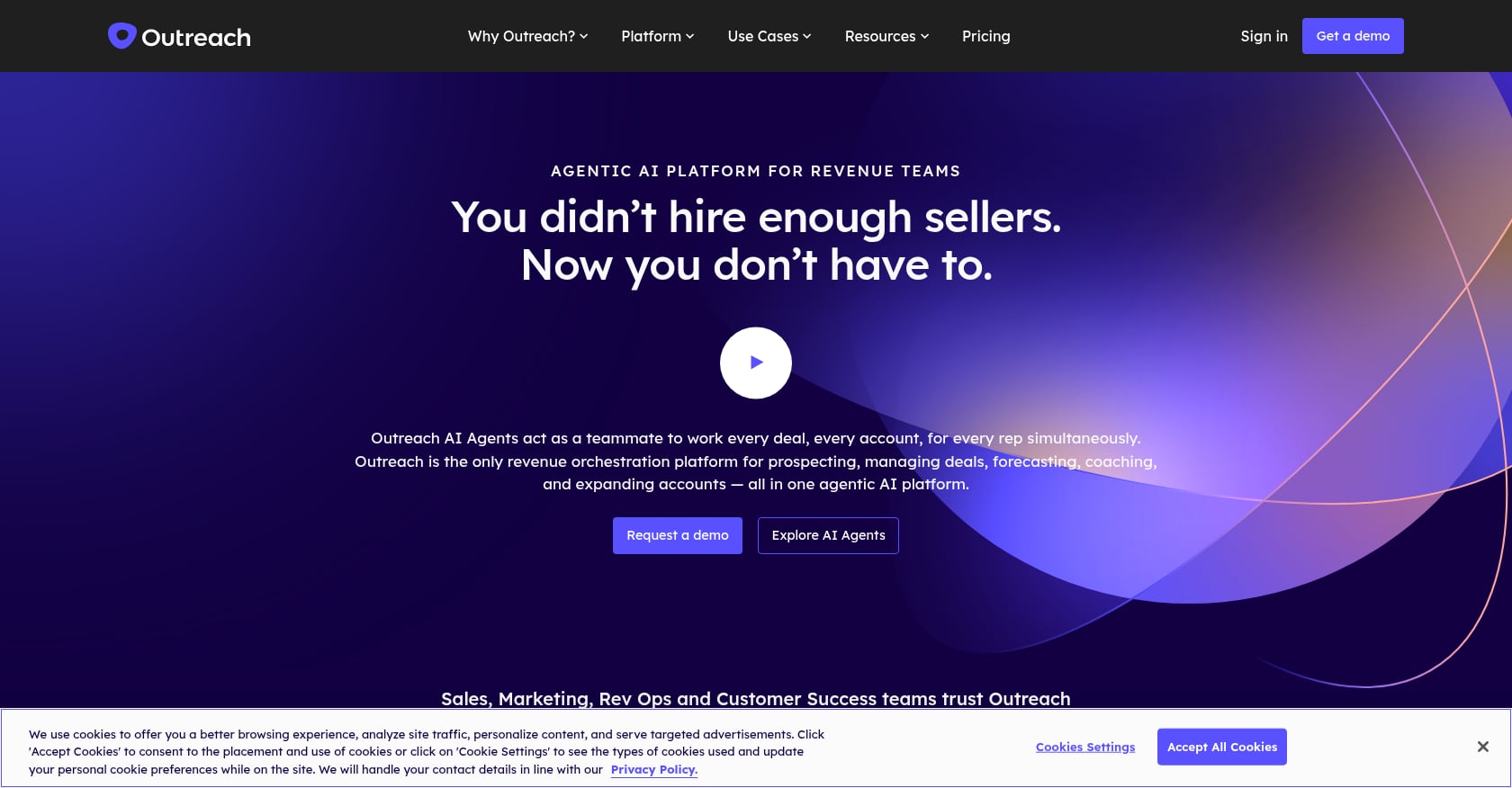
Best for: Mid-market and enterprise sales teams that need sales engagement, AI agents, deal management, forecasting, and coaching.
Outreach is one of the most established AI tools for sales automation at the enterprise level. It offers AI agents for research, personalization, and deal intelligence, plus structured sequencing, meeting scheduling, and pipeline management.
Pricing:
- Custom pricing based on team needs
- Seat-based pricing plus consumption-based AI credits
- Packages range from Amplify Essentials to Amplify Pro, with AI credit allocations from 10,000 to 100,000
Key features:
- AI agents (Omni Agent, Research Agent, Revenue Agent, Personalization Agent, Deal Agent)
- Multi-channel sequences and meeting scheduling
- Deal and pipeline management
- Conversation intelligence and coaching
- Forecasting in higher-tier packages
Tradeoffs:
- Enterprise-grade power creates enterprise-grade complexity
- Pricing is not transparent and contracts can be long
- AI credits add a new cost layer
- Not ideal for founder-led startups without mature RevOps
G2 rates Outreach 4.3 out of 5 from over 3,500 reviews. Practitioners on Reddit have complained about long contracts and noted that Apollo can handle much of what Outreach does at a lower cost for some use cases.
Verdict: Outreach is for teams that already have a revenue operating system and want to automate it. Startups should be careful not to buy enterprise workflow software before they have repeatable workflow.
8. Salesloft
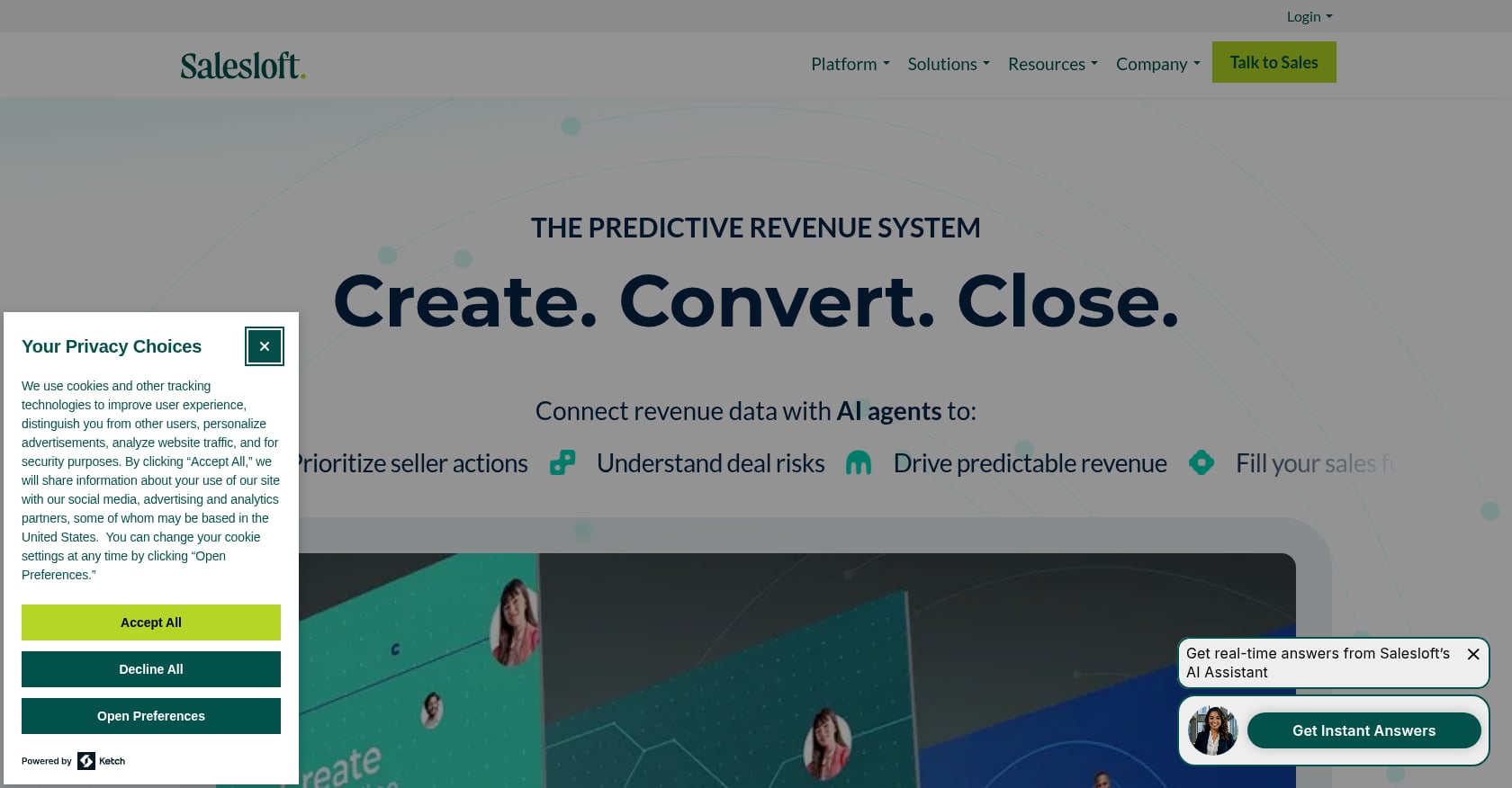
Best for: Sales organizations that need structured cadences, CRM-integrated workflows, and manager visibility into rep execution.
Salesloft focuses on making sales reps consistent. Its Cadence feature standardizes outreach sequences, Rhythm helps prioritize daily actions, and built-in analytics give managers a window into rep performance.
Pricing:
- Contact sales for pricing (not publicly listed)
Key features:
- Cadences for pipeline building and nurturing
- Rhythm for action prioritization
- Conversation Intelligence
- Deal tracking and forecasting
- AI-powered workflows and agents
Tradeoffs:
- Contact-sales pricing with no public tiers
- Can feel prescriptive for teams that want flexible, non-linear outreach
- Requires a separate data provider for prospecting
- Some users report fragmented analytics and call limitations
A Reddit thread in r/SalesOperations noted that management may love Salesloft’s reporting while reps dislike the day-to-day experience. G2 rates Salesloft 4.5 out of 5 from over 4,200 reviews.
Verdict: Use Salesloft when consistency is the problem. If reps forget follow-ups or need standardized cadences, it helps. If the issue is bad data or weak messaging, Salesloft will not fix that alone.
9. Gong
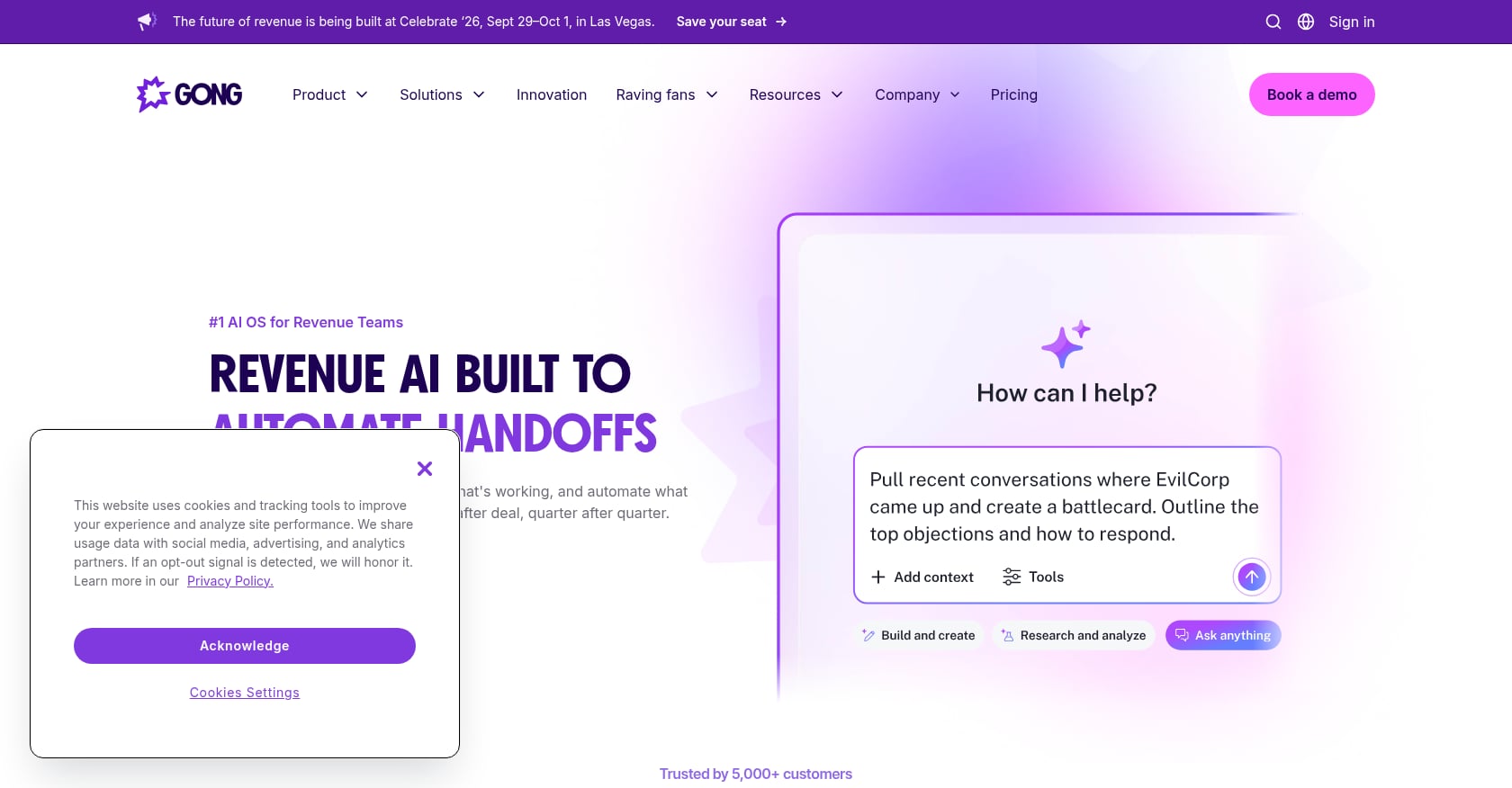
Best for: Sales teams with meaningful call volume that want AI-powered call summaries, coaching insights, deal risk signals, and forecasting.
Gong is the category leader in conversation intelligence. It records and transcribes sales calls, surfaces patterns, highlights objections, and gives managers coaching insights without sitting on every call. Gong holds a 4.7 rating on G2 from over 6,500 reviews.
Pricing:
- Custom pricing; licenses are per user with a platform fee based on team size
- Existing tech-stack integrations are free
Key features:
- Call recording, transcription, and AI summaries
- Searchable conversations across the entire team
- Deal intelligence and pipeline visibility
- Coaching and rep performance analysis
- Forecasting and revenue intelligence
Tradeoffs:
- Expensive relative to startup needs
- Works best when managers actually review calls and coach reps
- Not a prospecting or outbound tool
- AI summaries still need human judgment
One Reddit user reviewing Gong said the ROI was real because it revealed their average discovery call was 22 minutes when the team assumed it was 35. But the same user noted that a cheap transcription tool plus disciplined weekly review can capture much of what basic Gong usage provides.
Verdict: Buy Gong when you have enough customer conversations to learn from. Do not buy it just because you want more pipeline. Gong analyzes pipeline conversations after they exist.
10. ZoomInfo Sales
Best for: Enterprise and mid-market teams that need a large B2B database, direct dials, email data, intent signals, and account intelligence.
ZoomInfo has the largest B2B data footprint, with access to 70M+ direct dials, 174M verified emails, and 500M professional profiles according to its G2 listing. It is the go-to data provider for enterprise sales teams, though the price matches the enterprise positioning.
Pricing:
- Custom, sales-led pricing (not publicly listed)
- Contracts and renewals require careful review
Key features:
- B2B contact and company database
- Direct dials and verified emails
- Intent data and buyer signals
- Enrichment and org charts
- AI Copilot and sales execution features
Tradeoffs:
- Expensive for startups (Reddit users frequently cite high costs)
- Data accuracy varies by ICP, region, and contact type
- Contract terms and renewals can be aggressive
- Needs a sales ops process to turn data into actual pipeline
Gartner Peer Insights rates ZoomInfo 4.2 overall. Reddit users praise ZoomInfo’s mobile number coverage in some markets but complain about price, UI, credits, and inconsistent data. One comparison thread noted that ZoomInfo excelled at mobile numbers, while Apollo was the more accessible option for smaller teams.
Verdict: ZoomInfo is worth testing if data coverage is mission-critical and the contract fits the budget. Always run a sample ICP coverage test before signing.
11. Cognism
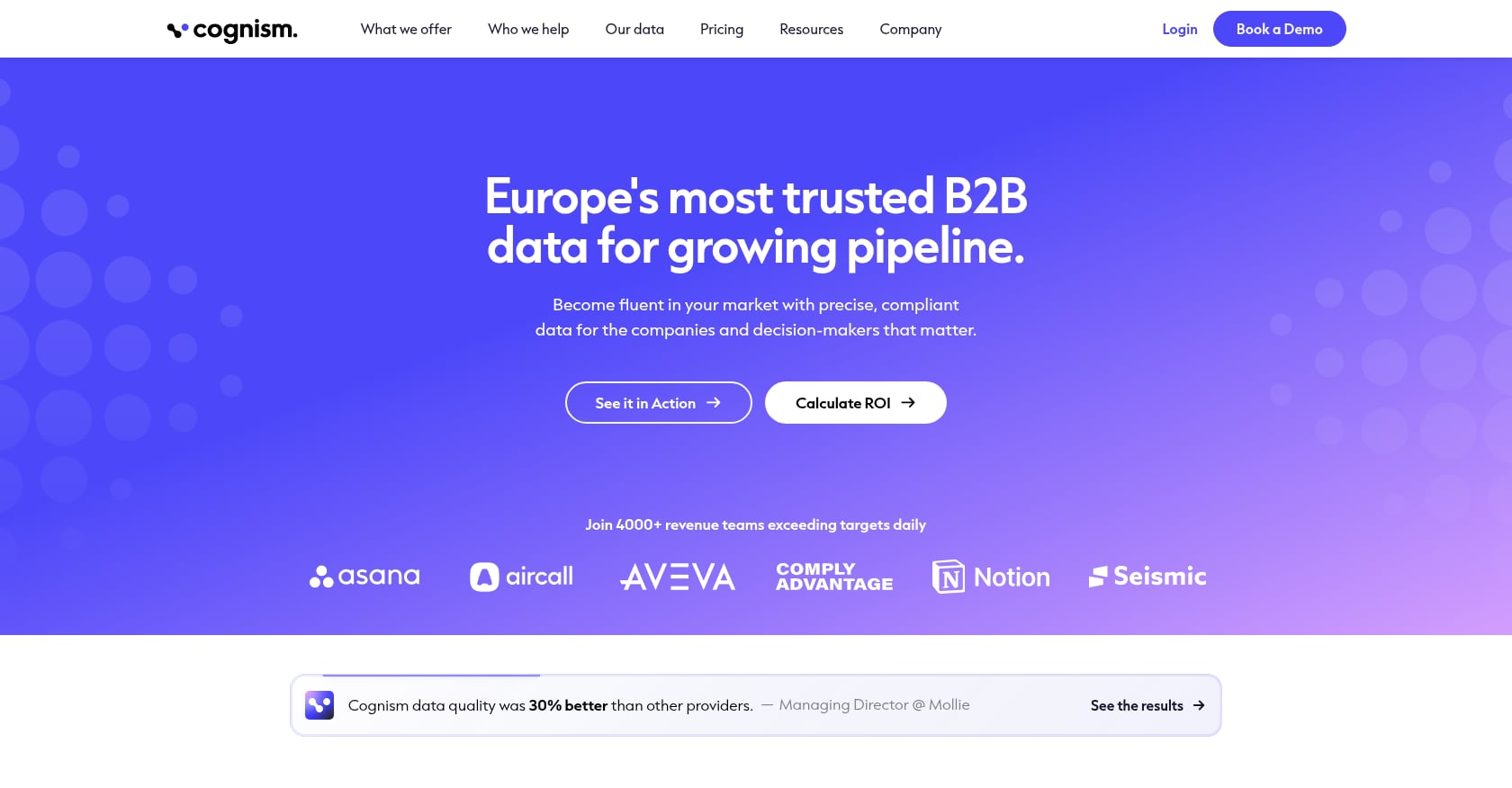
Best for: Teams selling into Europe or regulated markets that need GDPR-aware prospecting data.
Cognism is the strongest alternative to ZoomInfo for teams that care about compliance. Its European B2B data coverage and GDPR-aware approach make it a natural fit for companies with international sales motions.
Pricing:
- Contact sales (no public pricing tiers)
Key features:
- B2B prospecting with verified emails and direct dials
- Targeted list building and CRM exports
- European B2B data focus
- Sales intelligence workflows
Tradeoffs:
- Pricing is not transparent
- Coverage should be tested against your specific ICP and region
- Credits and usage limits can affect ROI
- Not a full outreach platform by itself
G2 rates Cognism 4.5 out of 5 from over 1,300 reviews. Reddit comparisons mention its GDPR compliance as a strength but note that US coverage may lag behind ZoomInfo or Apollo.
Verdict: Cognism is a strong choice for teams that need European data and compliance. US-only startups should benchmark coverage before committing.
12. Regie.ai
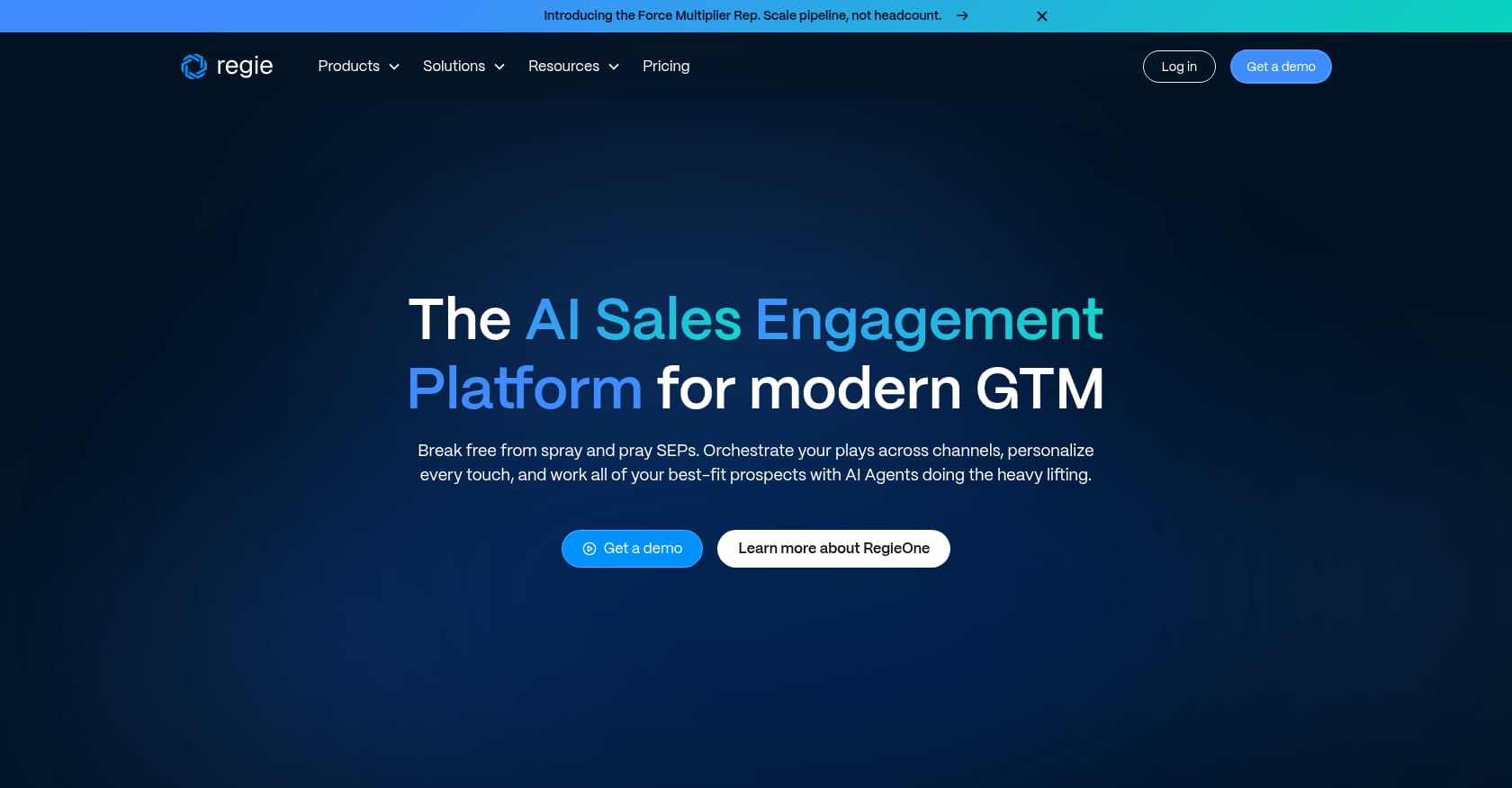
Best for: Teams that want AI-generated sales messaging, persona-based personalization, and AI SDR agents for outbound at scale.
Regie.ai focuses on the messaging layer of sales automation. It generates personalized outbound messages, manages sequences, and offers AI agents that can run outbound prospecting. It integrates with major sales engagement and data platforms.
Pricing:
- Force Multiplier Rep: $499/user/month (per G2)
Key features:
- AI sales engagement and personalized outbound messaging
- AI agents for prospecting
- Persona-based pain points and value propositions
- Parallel dialing features
- Integrations with Salesforce, Outreach, Salesloft, ZoomInfo, Cognism, 6sense, and Demandbase
Tradeoffs:
- More expensive than lighter email automation tools
- AI output still needs human review and editing
- Setup requires careful brand voice, ICP, and persona calibration
- G2 reviewers note occasional robotic output and inaccurate persona data
G2 rates Regie.ai 4.4 out of 5 from 355 reviews. Users praise time savings and outbound scaling but emphasize that manual editing is still required.
Verdict: Regie.ai works well for teams ready to operationalize AI outbound at scale. It is not a substitute for knowing your ICP and message.
Recommended AI Sales Automation Stacks by Team Type
No single tool covers the full sales process. Most teams need a stack. Here is what works at different stages.
For Founder-Led Startups
- AgentWeb for GTM execution, outbound, content, approvals, and reporting
- HubSpot (free or Starter) for CRM
- Optional Apollo or Clay depending on data and enrichment needs
This stack works when the founding team does not have a dedicated salesperson or marketer and needs the GTM engine built for them.
For DIY Outbound Teams
- Apollo for contact data
- Clay for enrichment and personalization
- Instantly for email sending and warmup
- HubSpot for CRM
- Human QA before every campaign goes live
This is the most common stack mentioned in Reddit outbound threads. It works when someone internally can own data quality, sequence testing, and deliverability. For more on this motion, see our outbound sales strategy guide.
For Mid-Market SDR Teams
- Salesloft or Outreach for sales engagement
- ZoomInfo or Cognism for data
- Gong for conversation intelligence
- RevOps owner to manage governance and reporting
For Enterprise Revenue Teams
- Salesforce or HubSpot as CRM
- Outreach or Salesloft for engagement
- Gong for calls and coaching
- ZoomInfo for data
- Dedicated RevOps and enablement functions
Common Mistakes with AI Sales Automation
1. Buying AI before defining ICP. The tool will automate your confusion. A Reddit user captured it well: it just “automates the mess faster.”
2. Automating low-quality lists. Garbage in, automated garbage out. Practitioners in r/MarketingAutomation consistently emphasize that clean, consistent data is the single biggest factor when integrating AI tools for sales automation.
3. Sending AI-generated messages without human review. AI drafts are starting points, not finished copy. Every review site for AI outbound tools mentions occasional robotic or inaccurate output.
4. Ignoring deliverability. Cold email infrastructure requires domain setup, warmup, volume limits, unsubscribe management, and ongoing monitoring. Reddit users also warn that LinkedIn is cracking down on automation, so daily limits need to stay low.
5. Confusing activity with pipeline. Emails sent is not a revenue metric. The tool should connect to meetings booked, opportunities created, and deals closed.
6. Buying enterprise tools before the motion is repeatable. Outreach and Salesloft are powerful but complex. They are designed for teams that already have a defined process to automate.
7. Underestimating credit usage. Clay actions, HubSpot credits, Outreach AI credits, and ZoomInfo data credits all add up. Model your actual usage before committing to annual contracts.
8. Building a brittle stack. As one Reddit commenter warned, stacks built from five or six tools can break when a single API or pricing change hits. Fewer well-chosen tools, or a managed execution service, is often more resilient.
Final Recommendation
If you need a specific point solution, choose based on your bottleneck:
- Data: Apollo, ZoomInfo, or Cognism
- Enrichment and personalization: Clay
- Cold email sending: Instantly or Reply
- CRM: HubSpot
- Sales engagement: Outreach or Salesloft
- Conversation intelligence: Gong
- AI SDR messaging: Regie.ai
If you need a repeatable GTM system and your team does not have the bandwidth to stitch together, configure, and manage five tools, start with AgentWeb. It combines AI execution with senior human operators, Slack-based approvals, weekly iteration, and a 90-day GTM plan. The goal is not another subscription. It is pipeline.
Frequently Asked Questions
What is the best AI tool for sales automation?
It depends on the bottleneck. For startups that need full GTM execution, AgentWeb is the strongest starting point. For prospecting data, Apollo is the most accessible. For enrichment, Clay leads the category. For enterprise sales engagement, Outreach and Salesloft are the most established options.
Can AI tools replace SDRs?
Partially. AI can handle prospect research, data enrichment, initial email drafting, sequence management, and CRM updates. But handling live replies, running discovery calls, building relationships, and navigating complex deals still requires humans. The best setup is AI handling repetitive tasks with human oversight on messaging quality and buyer interactions.
What is the cheapest AI sales automation tool?
Apollo and HubSpot both offer free tiers. Instantly starts at $37.60/month on annual billing. Reply.io also has a free plan. AgentWeb’s self-serve platform starts at $199/month after a 7-day free trial. The total cost depends on credits, seats, add-ons, and how many tools you need in your stack.
What tools should I use for cold email automation?
The most common startup cold email stack is Apollo for contacts, Clay for enrichment, and Instantly for sending and warmup, with HubSpot as the CRM. This stack requires internal ownership of deliverability, list quality, and message review.
How do I avoid hurting email deliverability with AI outreach?
Use dedicated sending domains (not your primary domain), warm up inboxes before sending, keep daily volume below platform-recommended limits, include working unsubscribe links, monitor bounce rates, and never send to unverified lists. Human review of AI-generated copy also prevents the kind of generic messaging that triggers spam filters.
Is Gong worth it for small sales teams?
For teams with fewer than five reps or low call volume, Gong may be premature. The real ROI comes from pattern recognition across many calls and manager-led coaching reviews. Small teams can get much of the basic benefit from cheaper transcription tools plus a disciplined weekly call review habit.
Should I use Apollo, Clay, or HubSpot?
They solve different problems. Apollo is for finding contacts and running basic sequences. Clay is for enriching contacts with multi-source data and generating personalized messaging. HubSpot is for managing the CRM, deals, and pipeline. Most teams that do outbound well use at least two of these together.
What is the difference between AI sales automation and sales engagement software?
AI sales automation is a broader category that covers any use of AI to reduce manual work in sales, from research and enrichment to email writing, CRM updates, and forecasting. Sales engagement software (like Outreach and Salesloft) is a specific subcategory focused on managing multi-channel sequences, cadences, and rep workflows. All sales engagement platforms now include AI features, but not all AI sales automation tools are engagement platforms.
Or get a free AI Readiness Roadmap to see where your GTM has gaps.
Ex-Meta, Google, LinkedIn. 10+ years in ML & data science for GTM. Expert in customer acquisition and growth activation.
Get a free Stack Review.
30 min with Harsha and Matt.
We audit your last 30 days, pinpoint the highest-impact fixes, and hand you the exact playbook we'd run. No deck. No pitch unless there's a fit.