10 Best Solo Marketer AI Tools for 2026 (With All-in-One Pick)


TL;DR
More than 41 million Americans now run solo businesses, and AI tools make it possible to market like a five-person team for under $200/month. The best solo marketer AI tools in 2026 span general-purpose writing (ChatGPT, Claude), design (Canva Pro), social scheduling (Buffer), SEO (Surfer SEO), and workflow automation (Zapier). But the real shift isn’t adding more point tools. It’s the rise of agentic marketing platforms that orchestrate research, content, ads, and email across channels, so you stop managing a tool zoo and start actually marketing.
Why Solo Marketers Need a Smarter Stack in 2026
The numbers are hard to ignore. According to MBO Partners’ State of Independence report, over 41.8 million Americans now operate as solopreneurs. The percentage of solo-founded startups climbed from 30.5% in 2024 to over 36% last year. These founders aren’t waiting around to build marketing teams. They’re using AI.
And the economics are compelling. A virtual assistant costs $15 to $25 per hour. At ten hours weekly, that’s $600 to $1,000 monthly. A well-chosen set of solo marketer AI tools delivers similar output for roughly $75 to $150 per month, and solopreneurs using AI report 2 to 3x higher revenue per hour worked compared to those relying on manual workflows.
But here’s the problem nobody talks about: most solo marketers end up subscribing to six, eight, sometimes ten different tools. They spend more time running marketing week to week (stitching together apps, copying data between dashboards, remembering which tool does what) than actually creating and distributing content.
This article covers the best individual AI tools for solo marketers in 2026, with real pricing and honest limitations. Then it introduces the emerging category, agentic marketing platforms, that collapses that whole stack into one system.
Want to see what an AI-powered marketing engine looks like before reading further? Evaluate your setup free with AgentWeb’s AI assessment.
At-a-Glance Comparison Table
| Tool | Starting Price | Free Tier? | Best For | Key Limitation |
|---|---|---|---|---|
| AgentWeb | $199/mo (self-serve) | 7-day free trial | Full multi-channel execution without a team | Newer platform; best for founders willing to engage weekly |
| ChatGPT Plus | $20/mo | Yes | All-purpose copy, brainstorming, research | No marketing templates or brand voice training |
| Claude Pro | $20/mo | Yes | Strategy, long-form analysis, competitor audits | Limited integrations, no image generation |
| Jasper AI | $39/mo | No (7-day trial) | Brand-consistent content at volume | No SEO built in ($79+/mo extra needed) |
| Copy.ai | $0–$49/mo | Yes (2,000 words) | Short-form ad and email copy | GTM workflows locked at $1,000/mo |
| Canva Pro | $10–15/mo | Yes | Visual content and social graphics | AI image quality below dedicated generators |
| Buffer | $5/channel/mo | Yes (3 channels) | Social scheduling and basic analytics | No paid ads, no social listening |
| Surfer SEO | $79–99/mo | No (7-day guarantee) | SEO content optimization | No backlinks or technical SEO audits |
| Zapier | $0–$20/mo | Yes (100 tasks) | Connecting tools into automated workflows | Brittle automations; needs ongoing maintenance |
| Notion AI | $10–15/mo | Yes (limited AI) | Content planning and knowledge base | Doesn’t execute or publish marketing |
How We Evaluated These Tools
Four criteria drove every evaluation:
- Time savings for a solo operator. How many hours per week does this tool actually claw back?
- Learning curve. Can a non-technical founder get value in the first session, or does it take weeks of prompt engineering?
- Solo-marketer ROI. At $50 to $200/month, every dollar matters. Does the tool justify its cost when you’re the only person using it?
- Integration with other tools. A solo marketer’s stack needs to connect. Isolated tools create more work.
One more thing worth noting: the line between “AI tools” and “AI agents” matters now. Tools from 2024 waited for your prompts. The agents of 2026 are proactive, they research, strategize, and execute tasks while you sleep. That shift shapes how the best solo marketer AI tools are evolving, and it’s why this list includes a category that didn’t exist two years ago.
1. AgentWeb
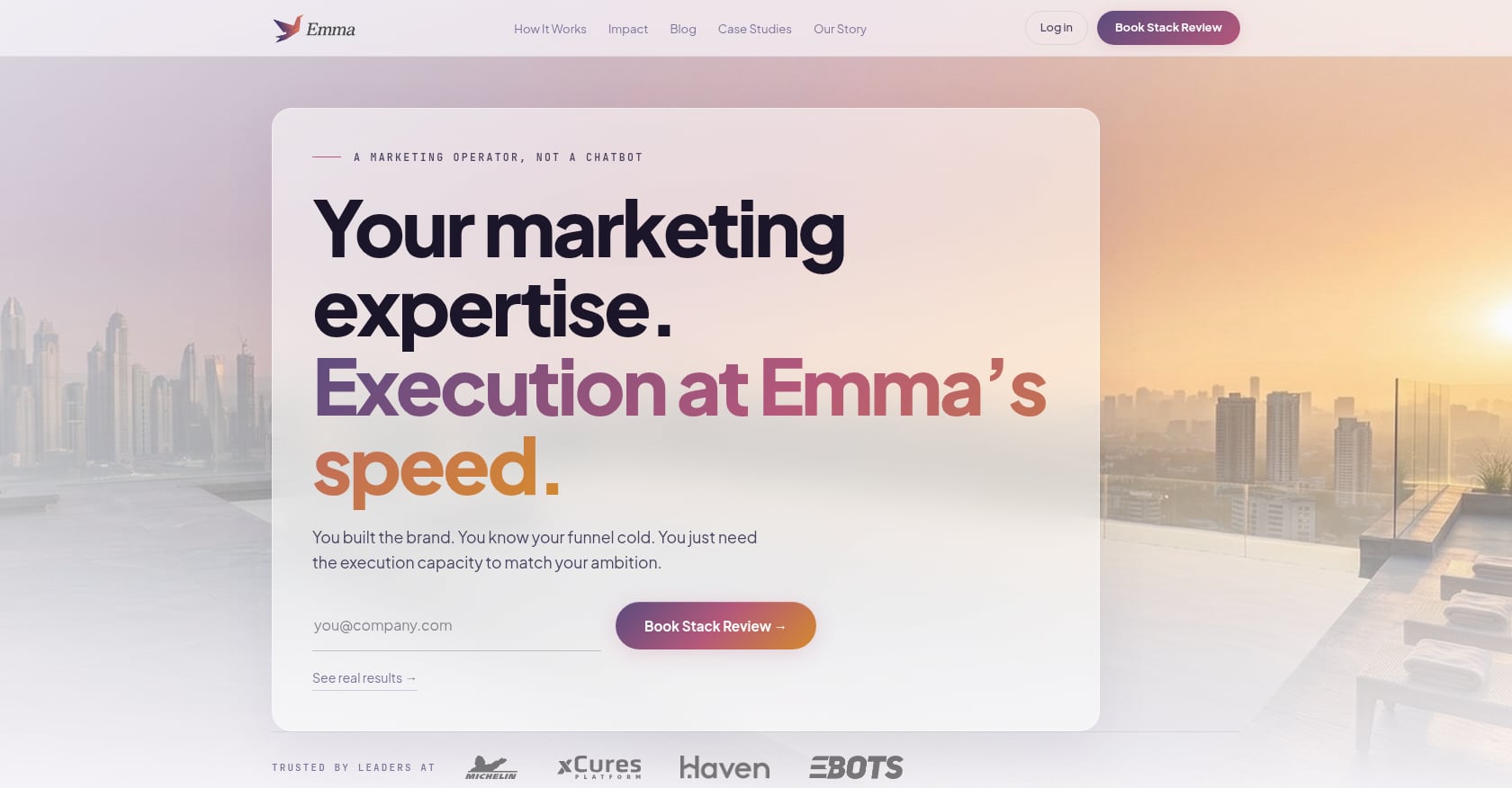
Best for: Solo founders and lean teams who want multi-channel marketing execution without hiring a team or managing a stack of point tools.
Pricing: Self-serve platform starts at $199/month after a 7-day free trial. Custom workflow (AI-led co-pilot) and full done-for-you (human-led Growth Ops) tiers are available, contact sales for seasonal pricing.
Key features:
- 90-day GTM diagnostic and plan built by a senior operator team, not just an algorithm
- Agentic execution via “Emma” across Meta, Google, LinkedIn/X, email, and outbound
- Slack/Teams workflow for one-click creative approvals
- AgentWeb Portal with calendar, dashboards, and optimization loops
- Founder-brand support including LinkedIn ghostwriting and executive comms
- Up to ~20 content assets per month (social posts, short-form video, blogs, ads)
- Weekly performance reviews and budget reallocation based on what’s working
Why it belongs at the top of this list: Every other tool below solves one piece of the marketing puzzle. AgentWeb orchestrates across channels automatically. The founding team includes people from Microsoft, Google, Meta, and LinkedIn, with YC experience. The platform is designed so you graduate from full-service to self-serve, leaving behind a repeatable go-to-market system rather than a pile of one-off deliverables.
Proof it works: Nailed It, a consumer beauty brand, generated 4,000+ leads and 328 add-to-carts in 3 months, outperforming a competing agency in a head-to-head test. Cora, a digital health startup, hit a 13.19% CTR peak on just a $300/month ad budget.
Limitations:
- Newer platform with limited third-party reviews so far
- Best fit for founders willing to engage weekly (reviewing, approving, iterating)
- Self-serve tier emphasizes content, SEO, and newsletters; paid media and outbound are more clearly part of the full-service offering
Practitioner insight: As one futurism writer put it, “If you are still using AI just to ‘chat,’ you are leaving 90% of the value on the table. It is time to stop prompting and start delegating.” That’s exactly the philosophy behind agentic platforms like AgentWeb.
2. ChatGPT Plus
Best for: The first AI tool every solo marketer should get, handling brainstorming, drafting, research, and email copy.
Pricing: Free tier available. Plus at $20/month. Team at $25/user/month.
Key features:
- GPT-4 access with web browsing and file analysis
- Custom GPTs you can build for recurring tasks (e.g., email subject line generator, blog outline creator)
- Image generation via DALL-E integration
- Code interpreter for quick data analysis
Why solo marketers love it: ChatGPT handles roughly 80% of content generation needs. Multiple practitioners on Reddit confirm it’s the default “first tool” for solo marketers. One r/SaaS commenter noted that for a solo marketer with strong prompting skills, ChatGPT at $20/month delivers better value than Jasper at $39/month.
Limitations:
- No built-in marketing templates, so you need prompt engineering discipline
- No native brand voice training (you’ll re-explain your tone every session unless you use Custom GPTs)
- The remaining 20% of marketing work (multi-channel execution, publishing, scheduling) requires other tools entirely
3. Claude Pro
Best for: Deep content strategy, competitor analysis, and working with long documents.
Pricing: Free tier available. Pro at ~$20/month.
Key features:
- Massive context window that handles entire marketing reports, competitor sites, or content audits in a single conversation
- Projects feature for persistent memory across sessions
- Cowork feature for agentic, multi-step tasks
Why it’s different from ChatGPT: Claude excels at the thinking work. Practitioners on Reddit recommend using it to audit competitor content, analyze marketing reports, and develop comprehensive strategies. Its large context window makes it ideal for strategic planning that ChatGPT sometimes loses track of across longer conversations.
Limitations:
- Fewer integrations than ChatGPT’s ecosystem
- No image generation
- Less broad third-party plugin support
4. Canva Pro
Best for: Solo marketers who need a design department for $15/month or less.
Pricing: Free tier available. Pro at $120/year (about $10/month), or $12.99 to $15/month billed monthly.
Key features:
- 500 AI credits/month for Magic Write, Dream Lab, and Magic Edit
- Brand Kit to lock in your colors, fonts, and logos
- 141M+ premium stock assets
- Social media content templates sized for every platform
Why it works for solo marketers: Canva AI’s biggest strength is convenience. AI features are integrated into a design platform millions already use. For solo marketers and freelancers managing up to five brands who create content weekly or more, Pro is a no-brainer.
When you’re scaling content production with limited resources, Canva Pro eliminates the need to hire a designer for routine social graphics, presentations, and ad creatives.
Limitations:
- AI image generation doesn’t match the quality of dedicated tools like Midjourney for complex or artistic prompts
- Limited animation and video editing compared to dedicated video tools
- Brand Kit is useful but basic, no real design system management
5. Buffer
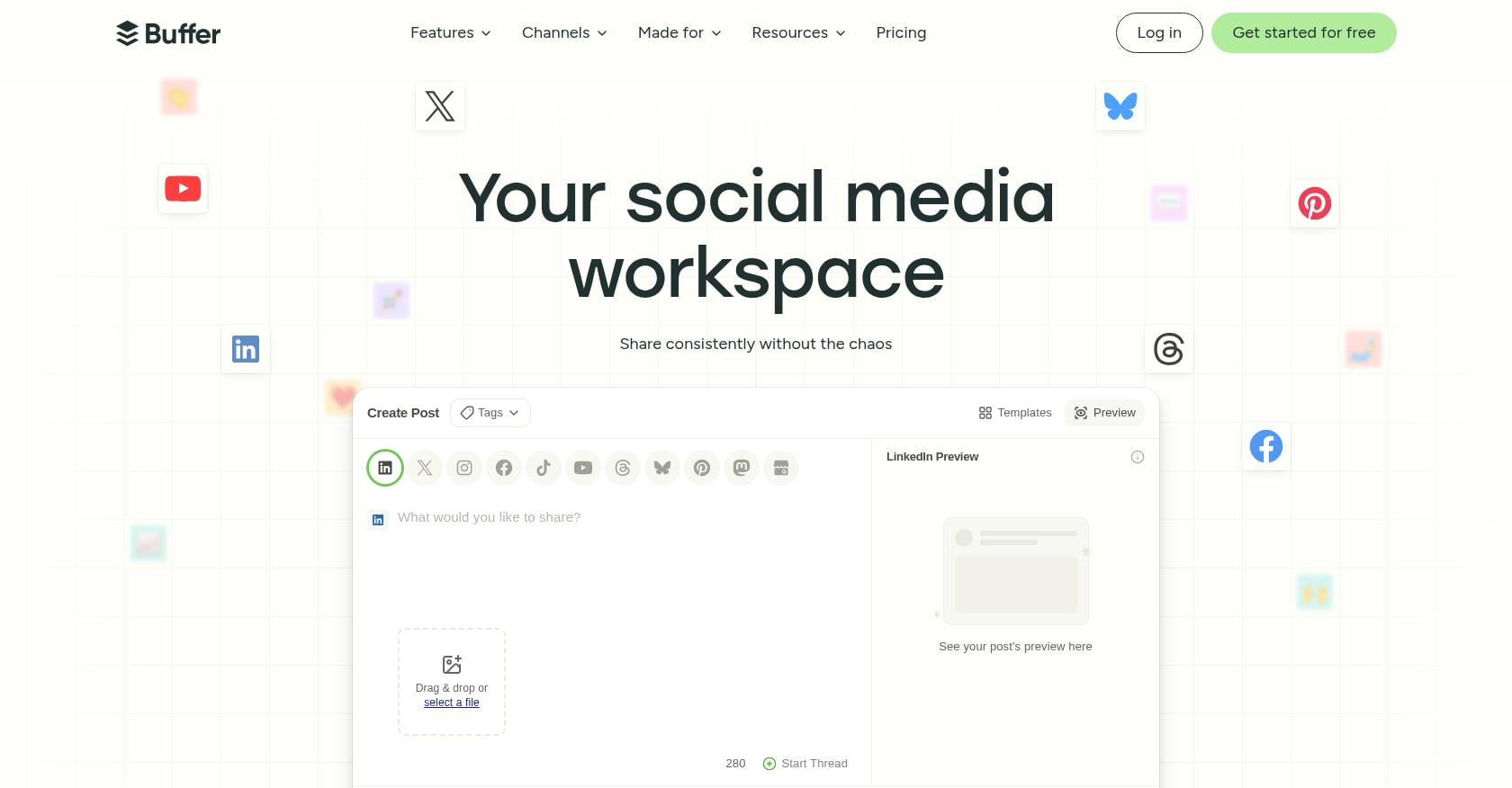
Best for: Solo entrepreneurs who want straightforward social scheduling without draining the budget.
Pricing: Free plan covers 3 channels with 10 scheduled posts per channel. Essentials at $5/month per channel (annual billing) with unlimited posts, advanced analytics, AI-powered replies, and content ideas.
Key features:
- AI Assistant for captions, hashtags, and content ideas
- Best-time-to-post optimization
- Multi-platform scheduling from one dashboard
- Clean, simple analytics
The cost comparison that matters: For a solopreneur managing 3 channels, Buffer Essentials costs $180/year. Hootsuite’s Professional plan runs $1,188/year. That’s a meaningful difference when you’re watching every dollar.
Limitations:
- No ability to schedule, publish, or monitor paid ads
- No social listening capabilities
- Analytics are basic compared to enterprise-grade tools
- If you need to run multichannel campaigns without a team, Buffer handles only the organic social piece
6. Jasper AI
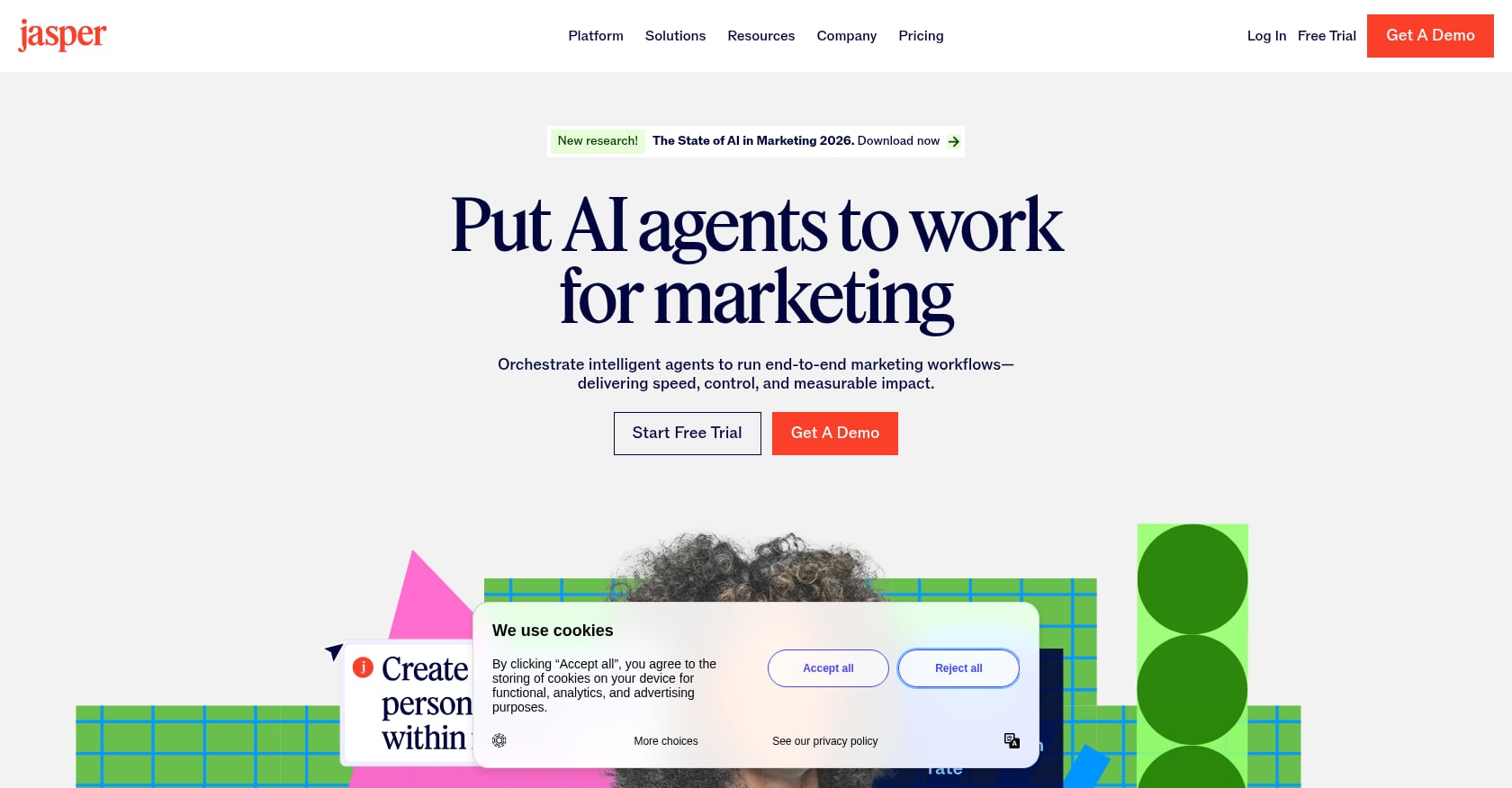
Best for: Solo marketers producing high-volume, brand-consistent content across multiple channels.
Pricing: Creator plan at $39/month includes Jasper Chat, SEO mode, one brand voice, and the browser extension. Pro at $59/month (annual). No free plan, but a 7-day trial is available.
Key features:
- Brand Voice (Jasper IQ) learns and maintains your tone
- 100+ marketing-specific templates
- Content pipelines for batch production
- Jasper Art for basic image generation
The hidden cost nobody mentions: Jasper does not include SEO optimization. To get content scoring, you need Surfer SEO ($49 to $99/month extra), pushing the real cost for an SEO-focused solo marketer to $88 to $158/month. That matters when you’re budgeting AI marketing tools against actual revenue.
User sentiment: The platform serves major brands including Wayfair and L’Oréal, with a 4.8-star rating across 1,200+ reviews. But as general-purpose AI tools have improved, the value proposition for individuals who just need a capable writing assistant has eroded.
Limitations:
- No SEO built in (requires paid integration)
- $39/month minimum with no free tier prices out casual users
- Brand Voice feature is useful but requires upfront setup time
7. Copy.ai
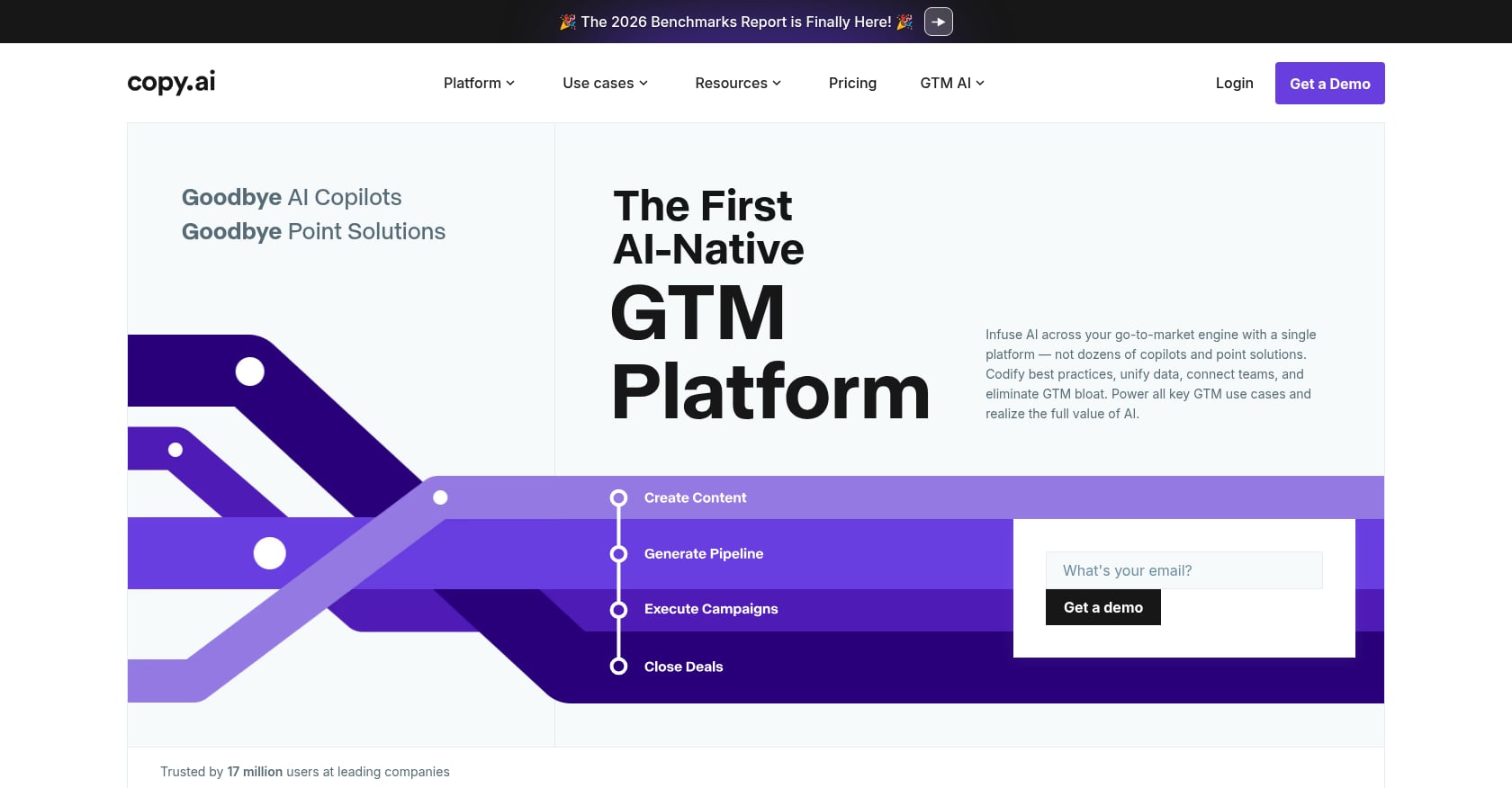
Best for: Quick-hit copy, cold emails, ad copy, and product descriptions.
Pricing: Free plan with 2,000 words/month. Starter at ~$36 to $49/month (annual). Growth plan at $1,000/month (annual).
Key features:
- Specialized short-form copy templates
- GTM workflow builder (on higher tiers)
- Fast output for ad variations and email marketing automation
The pricing trap: Copy.ai’s GTM workflow builder is genuinely powerful for sales teams. But it’s locked behind the Growth plan at $1,000/month. The entry-level plans don’t give you access to it. For most solo marketers, this feature exists in theory but not in practice. Practitioners on Reddit note that for short-form copy specifically (cold emails, ad copy, product descriptions), Copy.ai is sharper and faster than general-purpose models.
Limitations:
- Free tier is extremely limited at 2,000 words
- Best features are priced for teams, not solo operators
- No content strategy or SEO features
8. Surfer SEO
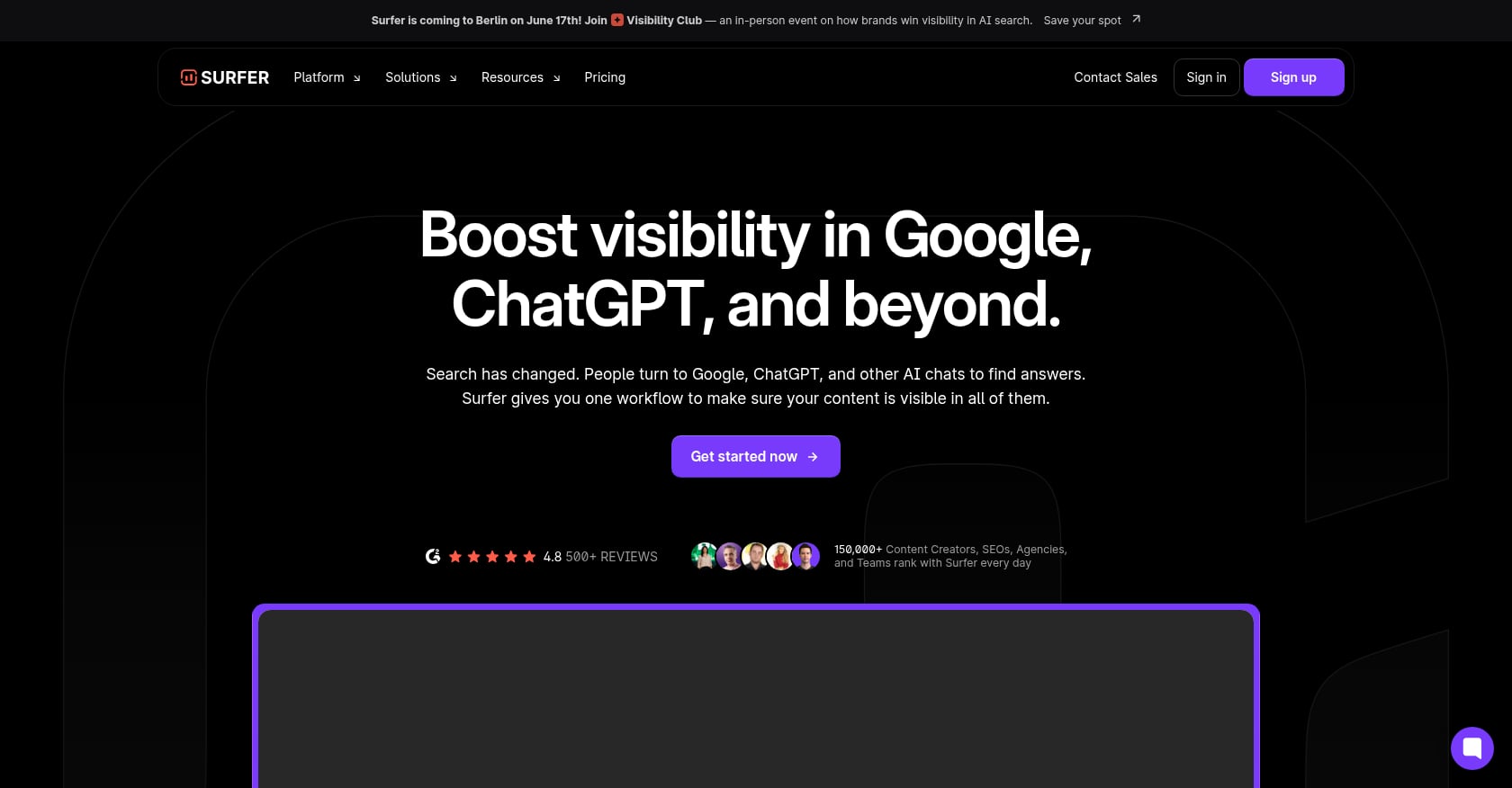
Best for: Solo marketers making a serious investment in SEO-driven organic content.
Pricing: Essential plan at $99/month, or $79/month on annual billing. Includes 30 Content Editor articles. No free plan, but there’s a 7-day money-back guarantee.
Key features:
- Content Editor with real-time optimization scoring
- AI article generation
- Topical maps for content planning
- SERP Analyzer
- AI search visibility tracker
User sentiment: Reviews are overwhelmingly positive. Practitioners report 40% traffic increases on pages optimized with Surfer, and many call it the “easiest content optimization workflow” available.
Limitations:
- No backlink analysis, technical SEO audits, or comprehensive keyword research (you’d need Semrush or Ahrefs for that)
- At $79 to $99/month, it’s a steep commitment for solo marketers who publish infrequently
- 30 articles per month is generous, but the tool only helps with on-page optimization, not distribution
9. Zapier
Best for: Connecting all your point tools into automated workflows.
Pricing: Free tier with 100 tasks/month. Paid plans from $19.99/month. Make (an alternative) offers a free tier plus paid from ~$9/month.
Key features:
- 7,000+ app integrations
- Multi-step “zaps” that chain actions across tools
- AI-powered workflow builder for natural language automation setup
Why practitioners call it “the glue”: Solo marketers consistently describe Zapier as the thing that holds a fragmented stack together. New lead from a form? Zapier adds them to your CRM, triggers a welcome email, and notifies you in Slack. The free tier’s 100 tasks per month is plenty for starting out.
Limitations:
- Automations are brittle. When one tool changes its API, workflows break without warning
- Requires ongoing maintenance and troubleshooting
- Complex multi-step workflows can get expensive fast as task counts climb
- Connecting tools is not the same as having a coherent marketing strategy
10. Notion AI
Best for: Content planning, SOPs, and building a “second brain” for your marketing operation.
Pricing: Business plan at $15/month. Limited AI features on free and lower tiers.
Key features:
- AI Agents powered by multiple models (GPT-5, Claude Opus 4.1, o3), so you get multi-model AI without juggling separate subscriptions
- AI Q&A across your entire workspace
- Content calendars, project management, and documentation in one place
User sentiment: Teams report a 35% reduction in time searching for information, which is significant when you’re the only person on your team and context-switching kills productivity.
Limitations:
- Not a marketing execution tool. It organizes your work but doesn’t publish, send, or run campaigns
- AI features are best for internal knowledge management, not customer-facing content
- Can become a procrastination trap (endlessly organizing instead of shipping)
The Real Problem: Tool Fragmentation
Here’s what nobody on the first page of Google is telling you about solo marketer AI tools: the tools aren’t the hard part. Stitching them together is.
A typical solo marketer in 2026 runs something like this:
- ChatGPT for writing ($20/mo)
- Canva Pro for design ($12/mo)
- Buffer for social ($15/mo)
- Surfer for SEO ($79/mo)
- Zapier to connect everything ($20/mo)
That’s $146/month, and it requires 5 to 10 hours per week just to manage the stack: logging into each dashboard, copying data between tools, maintaining Zapier automations when they break, and making sure your content calendar in Notion actually matches what’s scheduled in Buffer.
Practitioners on Reddit describe this exact frustration regularly. One r/SaaS thread that currently ranks #1 for this keyword is full of solo founders sharing how they cycle through 6 to 10 subscriptions, spending more time on orchestration than on actual marketing.
This is the gap that agentic AI marketing platforms fill. Gartner reported a 1,445% surge in enterprise inquiries about multi-agent AI orchestration in 2025. The same shift is reaching solo marketers now.
The concept is straightforward: instead of you being the orchestration layer between nine different tools, an agentic platform researches, plans, creates, publishes, and optimizes across channels while you approve in Slack. You move from prompt engineer to marketing director.
AgentWeb is built on this model. Its AI agent Emma executes across Meta, Google, LinkedIn/X, email, and outbound. A senior operator team runs a 90-day GTM diagnostic upfront, then the system ships weekly, with you approving creative and strategy in one click rather than managing a spreadsheet of logins.
The math is simple. A fragmented DIY stack costs $120 to $250/month and demands 5 to 10 hours of your time weekly. AgentWeb’s self-serve platform starts at $199/month with a 7-day free trial, and the done-for-you tier means you’re not spending those hours at all.
How to Build Your Solo Marketing AI Stack
Not everyone needs the same stack. Here’s a framework that lets you start lean and upgrade deliberately. The principle, echoed across multiple practitioner blogs: add a new tool only when it solves a specific, painful bottleneck.
Layer 1: Foundation ($0–$40/month)
Start with one general-purpose AI tool. ChatGPT Plus or Claude Pro at $20/month covers brainstorming, drafting, research, and basic analysis. Pick the one that fits your workflow. Both have free tiers to test.
Layer 2: Content and Design ($15–$55/month)
Add Canva Pro ($10–15/month) for visual content. If you’re producing high-volume written content and need brand voice consistency, consider Jasper ($39/month). Otherwise, your Layer 1 tool handles writing just fine.
Layer 3: Distribution ($15–$25/month)
Buffer or a similar scheduler gets your content out the door. At $5/channel/month, it’s the cheapest layer in the stack.
Layer 4: Optimization ($79–$99/month)
Only add Surfer SEO if organic search is a primary growth channel. It’s a meaningful expense for occasional use, but powerful if SEO is central to your go-to-market strategy.
Or: The All-in-One Layer
If you’ve tried the DIY approach and find yourself spending more time managing tools than marketing, an agentic platform like AgentWeb consolidates execution into one system. The self-serve tier at $199/month replaces most of the stack above, and the done-for-you tier means you’re shipping more marketing without hiring.
The right approach depends on where you are. Early-stage founders testing channels should start at Layer 1 and build up. Founders with validated product-market fit who need to scale distribution fast should skip straight to the all-in-one layer.
FAQ
What’s the cheapest AI marketing stack for solo marketers?
Free tiers of ChatGPT, Canva, and Buffer give you a functional (if limited) stack at $0/month. A practical minimum is ChatGPT Plus ($20) plus Canva Pro ($10) plus Buffer free, totaling $30/month. Most solo marketers find that spending $50 to $200/month on 2 to 3 core tools provides significant returns through time savings and improved content quality.
Can AI tools really replace a marketing team?
For execution, yes, largely. A solo marketer with the right AI tools can produce content, manage social channels, run basic SEO, and handle email at a level that used to require 3 to 5 people. What AI tools don’t replace is strategic judgment, brand taste, and the ability to read market shifts. That’s why the best solo marketer AI tools pair automation with human oversight.
How much time does it take to learn these tools?
Most tools on this list deliver value in the first session. ChatGPT and Claude require zero onboarding. Canva and Buffer have gentle learning curves (an afternoon at most). Jasper and Surfer SEO require more setup, especially for brand voice training and learning the content scoring system. Budget one to two weeks to feel comfortable with a full stack.
What’s the difference between AI tools and AI agents?
AI tools wait for your prompt and produce a single output. You write a prompt, you get a blog draft. AI agents take a goal (“grow my email list by 500 subscribers this month”) and independently research, plan, create, distribute, and optimize across multiple steps and channels. The 2026 shift from tools to agents is the biggest change in how solo marketers work with AI.
When should a solo marketer switch from DIY tools to a managed platform?
Two signals: first, you’re spending more than 5 hours per week managing your tool stack instead of doing actual marketing. Second, you’ve validated that digital channels can drive leads but you can’t scale output fast enough alone. At that point, the economics of a platform like AgentWeb (which combines senior operators with agentic AI) typically beat the cost of adding more point tools and more of your time.
Do I need all the tools on this list?
No. Most solo marketers get 80% of the value from two to three tools. Start with a general-purpose AI writer, add a design tool when you’re publishing regularly, and only add specialized tools (SEO, automation) when a specific bottleneck demands it. The biggest mistake is subscribing to everything at once and spending more time learning tools than shipping marketing.
The solo marketer AI tools space is moving fast, from individual prompt-and-respond utilities toward autonomous systems that handle entire marketing workflows. Whether you build a lean DIY stack or jump to an agentic platform, the goal is the same: spend less time managing tools and more time growing your business.
Ready to stop managing a tool zoo? Try AgentWeb free for 7 days and see what agentic marketing execution looks like in practice.
Or get a free AI Readiness Roadmap to see where your GTM has gaps.
Ex-Meta, Google, LinkedIn. 10+ years in ML & data science for GTM. Expert in customer acquisition and growth activation.
Get a free Stack Review.
30 min with Harsha and Matt.
We audit your last 30 days, pinpoint the highest-impact fixes, and hand you the exact playbook we'd run. No deck. No pitch unless there's a fit.