How to Generate Demo Bookings Without Cold Calling (2026)


TL;DR
Cold calling converts at just 2.3%, making it a terrible use of time for lean teams. There are faster, more scalable ways to generate demo bookings without cold calling. This guide covers 10 proven systems, ordered from fastest to slowest impact, with real benchmarks and honest limitations for each. Start by fixing your demo page conversion rate, then layer warm outbound email and LinkedIn content for quick wins, and build toward compounding channels like SEO and community marketing.
Why Cold Calling Math Is Broken for Lean Teams
Here’s the uncomfortable truth about cold calling in 2026: it barely works.
Cognism’s State of Cold Calling Report, which analyzed over 200,000 calls, found the average success rate sits at just 2.3%. That means for every 100 dials, you connect with roughly two people willing to continue the conversation. The practical math is worse. You dial for six hours, leave 40 voicemails, connect with three people, and book half a meeting. For a solo founder or a team of two, that’s a full day burned for almost nothing.
The buyer side of the equation has shifted too. According to Gartner, 75% of B2B buyers now prefer a rep-free sales experience, and 61% actively avoid talking to salespeople during their research phase. The people you’re calling don’t want to be called.
This doesn’t mean outbound is dead. It means the phone is the wrong tool for most teams. What follows are 10 systems to generate demo bookings without cold calling, ordered from fastest impact to longest compounding. Some produce meetings within a week. Others take months but build a pipeline engine that runs on autopilot.
Before spending on any traffic channel, consider whether your existing funnel is optimized. A free GTM audit can reveal where your demo pipeline is leaking.
At-a-Glance: All 10 Systems Compared
| System | Time to First Demo | Cost to Start | Scalability | Best For |
|---|---|---|---|---|
| Demo Page CRO | Immediate | Free | High | Everyone (do this first) |
| Warm Outbound Email | 2-3 weeks | $50-200/mo | High | ICP-defined startups |
| Founder LinkedIn Content | 4-8 weeks | Free (time) | Medium | Founder-led brands |
| Interactive Product Demos | 1-2 weeks | $200-500/mo | High | Visual SaaS products |
| AI Chatbots | 1 week | $0-300/mo | High | Teams with web traffic |
| Webinars | 3-4 weeks | $45-100/lead | Medium | Niche expertise |
| Community/Reddit Marketing | 2-4 weeks | Free (time) | Low-Medium | Technical founders |
| SEO + BOFU Content | 3-6 months | $500+/mo | Very High | Long-term pipeline |
| Referral Networks | 2-4 weeks | Free | Low | Existing customer base |
| Paid Social Ads | 1-2 weeks | $300+/mo | High | Validated positioning |
Now, the systems themselves.
1. Demo Page Conversion Optimization
Best for: Every single team. Do this before spending a dollar on traffic.
Most teams pour money into driving more visitors to their demo page while ignoring the page itself. That’s like filling a leaky bucket faster.
GrowthSpree’s 2026 benchmarks put the average B2B SaaS demo request page conversion rate between 1.5% and 4%. Top quartile pages convert at 8% to 15%. The gap between average and great is enormous, and closing it costs nothing.
Booked demos are three numbers multiplied together: traffic to the demo path, the conversion rate of that path, and the share of requests that actually become meetings on a calendar. Most teams only pull the first lever, which happens to be the only one that costs money every month.
Three changes, in order of cost and impact:
- Add a calendar to the submit flow. The industry average form-to-meeting rate is 30%. Teams using instant scheduling tools improve this to 66.7%. That’s more than double the demos from the same traffic, with zero extra spend.
- Put an ungated tour or video beside your live demo CTA. GoCardless ran an A/B test replacing “request a demo” with “watch a demo now” (a pre-recorded video) and saw a 114% improvement in conversion rate. Many visitors want to see the product before committing to a sales call.
- Respond to inbound requests within minutes. There’s a 391% improvement in conversion when businesses respond within one minute. SaaS companies that respond within five minutes are 21 times more likely to qualify the lead than companies responding in 30 minutes.
Limitations: CRO only works if you have traffic. If your demo page gets 50 visitors a month, doubling the conversion rate means one extra demo. Fix the page first, then drive traffic.
2. Warm Outbound Email
Best for: Founders who need demos within 2-3 weeks and have a defined ICP.
Cold email is not cold calling. It’s asynchronous, scalable without headcount, and dramatically more data-enrichable. The distinction matters.
Standard cold email campaigns produce reply rates around 3-5%. But with advanced personalization (dynamic first lines, company-specific pain points, role-based angles) that number jumps to 15-25%. A Backlinko study found that personalized subject lines alone lifted response rates by 30.5%.
Most SaaS companies hit the same wall scaling past founder-led sales: inbound slows, hiring an SDR team requires heavy commitment before a single demo lands. Email closes that gap, letting a lean team book qualified demos on a predictable schedule.
Pete Kazanjy’s Founding Sales describes what he calls “outbound inbound”: when your messaging is good enough, outreach drives people back to your website where they request a demo on their own terms. These leads convert like inbound because the buyer feels like they discovered you, even though you initiated the contact. None of the top-ranking pages for this topic cover this hybrid concept, but it’s one of the most powerful dynamics in early-stage sales.
For a deeper dive on structuring sequences, see this guide on outbound email sequence best practices. And if personalization at scale is the bottleneck, here’s how to personalize outbound emails at scale.
Limitations: Email deliverability is a real technical challenge. Sending from a brand-new domain without warming it up will land you in spam. You also need accurate contact data, which means investing in building quality lead lists.
3. Founder-Brand LinkedIn Content
Best for: Founders who can commit to 3-5 posts per week and want compounding pipeline over 60-90 days.
The most valuable LinkedIn real estate for B2B companies isn’t the Company Page. It’s the personal profiles of founders and executives. Personal posts receive 5-7x more organic reach than Company Page posts. Content shared by individuals gets 8x more engagement than content shared by brand channels.
Why does this translate to demos? Because inbound LinkedIn demos close at 14.6% compared to 1.7% from cold sources. The mechanism isn’t a better meeting; it’s a warmer one. By the time a prospect books, they’ve consumed weeks of your thinking and already trust you.
The content ratio that works: 4:1 educational to promotional. Four posts that teach, share frameworks, or tell stories from the trenches. One post that mentions your product or includes a soft CTA.
Practitioners on Substack highlight a powerful combination: using engagement signals from your content (likes, comments, profile views) as triggers for warm outbound messages. One commenter called this “the default combo for every serious content creator on LinkedIn that wants to promote services.” Someone who just liked your post about reducing churn is far more receptive to a DM than a stranger who’s never heard of you.
The challenge is consistency. Posting 3-5 times a week while running a company is hard. If ghostwriting is on the table, here’s how to handle founder ghostwriting without losing authenticity.
Limitations: Takes 60-90 days to build momentum. Doesn’t work if the founder’s network is tiny (under 500 connections in the ICP). And content quality matters more than volume; generic posts get ignored.
4. Interactive Product Demos on Your Website
Best for: SaaS companies with a visual product that can be demoed without live support.
This is the system with the strongest conversion data, and almost no one in the current search results talks about it.
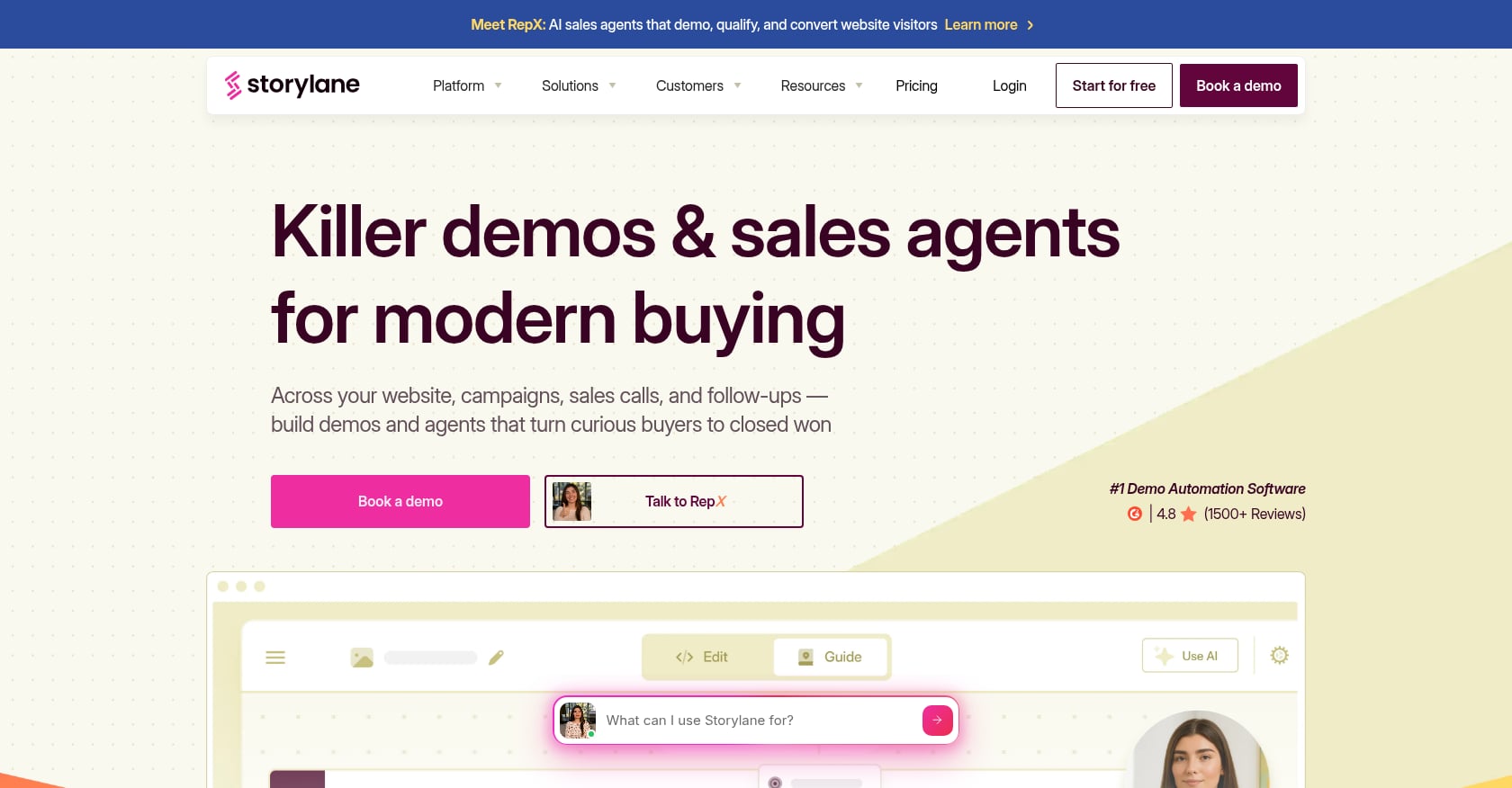
Website visitors who engaged with an interactive demo converted at 24.35%, nearly 8x greater than the average website conversion rate of 3.05%, according to a Storylane study analyzing over 110,000 sessions. Companies with interactive demos close deals 23% faster, and MQL-to-SQL conversion rates are 1.5x higher when visitors experience the product before filling out a form.
The logic is straightforward. Gartner says 75% of B2B buyers want a rep-free experience for at least part of their journey. An interactive demo gives them that. They explore the product at their own pace, self-qualify, and arrive at the booking form with genuine intent.
Platforms like Storylane, Navattic, and Reprise let you build clickable product tours without engineering resources. These sit on your website (often on the demo page or pricing page) and turn passive visitors into active explorers.
Companies report 15-25% reductions in sales cycle length and 20-35% conversion improvements when interactive demos replace static slides or screenshots.
Limitations: Requires a product that demos well visually. Complex infrastructure tools or deeply technical products may not translate. There’s also a setup cost in building and maintaining the demo environment.
5. AI Chatbots That Qualify and Book in Real Time
Best for: Teams with moderate website traffic that want to convert existing visitors without adding headcount.
The gap between a contact form and a chatbot is massive. Forms convert 2-5% of visitors. AI chatbots convert 15-30% of engaged users. That’s not a marginal improvement; it’s a different order of magnitude.
The reason is speed. A chatbot answers the buyer’s question at the exact moment of highest intent. They’re on your pricing page at 11pm, curious about integration with their CRM. A chatbot handles that instantly. A form means waiting until someone reads their submission tomorrow morning, by which point they’ve moved on to a competitor.
SaaS companies that respond to inbound demo requests within five minutes are 21 times more likely to qualify the lead than companies responding in 30 minutes. AI chatbots compress that response time to seconds.
Modern tools (Drift, Qualified, Intercom) can qualify visitors based on company size, role, and intent signals, then book directly onto a sales rep’s calendar. Companies using these report 3x increases in qualified meetings booked through chat widgets.
Limitations: Chatbots require tuning. A poorly configured bot that asks irrelevant questions or loops endlessly will frustrate visitors and hurt your brand. You also need enough traffic to justify the investment. If 20 people visit your site per day, a chatbot won’t move the needle.
6. Webinars and Live Educational Events
Best for: Companies with niche expertise and an ICP that values education over sales pitches.
Webinars remain one of the highest-converting demo channels in B2B. 62% of webinar attendees express interest in a sales demo, and the average cost per lead is $72, compared to $92 for SEM and up to $811 at trade shows.
But here’s the counterintuitive data that changes everything. A Series B SaaS company ran two webinars. Webinar #1 was broad: 847 registrations, but only 6 demos. Webinar #2 was hyper-targeted to a specific niche: 143 registrations, 18 demos, and $240K in pipeline. Same team. Same product. Wildly different outcomes.
The lesson: niche beats reach every time. A webinar for “CFOs at Series A fintech companies dealing with SOC 2 compliance” will outperform “Finance Leaders Summit” by a factor of 10 in demo bookings.
Webinars promoted through LinkedIn convert 57% higher in B2B, making this a natural complement to the founder-brand content strategy in System 3.
Limitations: Webinars have a shelf life. The promotion cycle, content creation, and follow-up sequence require significant time investment. They also work best when you have something genuinely educational to share, not a thinly veiled product pitch.
Running lean? Here’s how to run launch campaigns without a full team.
7. Community and Reddit Marketing
Best for: Technical founders comfortable engaging authentically in community discussions.
Reddit is the dark horse of B2B demo generation, and practitioners on the platform itself are vocal about the results. One SaaS founder reported that “Reddit is the #2 source of leads, right after LinkedIn” and claimed “50% of my leads come from just answering questions on Reddit for less than an hour a day.”
Another practitioner on YouTube detailed a repeatable process used with over 25 startups to acquire their first 10-25 customers entirely through Reddit. The claim: two hours per week can add $2.5K MRR monthly once the approach is dialed in.
The fact that a Quora thread ranks #7 for this very query shows Google values authentic community content. The strategy is simple but requires discipline: find subreddits where your ICP hangs out, answer questions genuinely, and mention your product only when it’s the honest best answer.
No hard selling. No link dropping. Just being useful in the places where your buyers are already asking for help.
Limitations: Extremely low scalability. This is a founder activity that doesn’t delegate well. Reddit communities are also ruthless about self-promotion; one wrong move and you’re banned. The time-to-ROI is variable and heavily dependent on finding the right subreddits.
8. SEO and Bottom-of-Funnel Content
Best for: Teams building a 6-12 month compounding pipeline engine.
Nearly 60% of B2B marketers say SEO generates more leads than any other marketing initiative, and the data on demo show rates backs this up. Inbound branded search demos show up at 78-88%, the highest rate of any demand source. The mechanism: buyers who find you through search have already completed the research phase and arrive with conviction.
The content that generates demos isn’t blog posts about industry trends. It’s bottom-of-funnel content: comparison pages (“Your Product vs. Competitor”), alternative pages (“Best Alternatives to X”), and pain-specific solution posts that capture high-intent search traffic.
For a full breakdown of how to build this kind of pipeline, see this content marketing strategy guide.
Limitations: SEO is the slowest system on this list. New content takes 3-6 months to rank. It requires consistent investment in both content production and technical SEO. But once ranking, these pages generate demos month after month with zero incremental cost.
9. Referral and Partner Networks
Best for: Teams with existing customer relationships who can formalize a referral loop.
Referral-sourced demos show up at 72-82%, second only to branded search. The reason is obvious: a trusted recommendation carries more weight than any marketing message.
The challenge is that most teams treat referrals as an accident rather than a system. Formalizing it means asking happy customers directly, creating a simple incentive structure, and making the referral process frictionless (a shareable link, not a phone call).
Platforms like Demonstro now exist specifically for B2B sales teams to swap warm introductions. You help get meetings for reps at companies your contacts work at, and they return the favor. It turns cold outreach into colleague referrals.
Limitations: Low scalability ceiling. Referral volume is constrained by the size and enthusiasm of your customer base. This system supplements other channels but rarely carries pipeline on its own.
10. Paid Social Ads Optimized for Demo Intent
Best for: Teams with validated positioning and budget to test ($300-$1,000/month minimum).
Paid social gets a bad reputation in B2B because most teams run it wrong. They optimize for clicks or impressions instead of demo bookings. When done correctly, the numbers are compelling. One B2B SaaS practitioner on YouTube shared a walkthrough showing 282 demos generated in just weeks at a $16.50 cost per demo, with a 24% page-to-demo conversion rate.
The key is industry-specific landing pages paired with dynamic personalization. This combination produced a 42% reduction in bounce rates and a 31% increase in demo requests compared to generic pages.
For proof that lean budgets work, Cora drove 13%+ CTR on just $300/month in ad spend by combining UGC-style creative with targeted audience segments.
If you want to explore AI-powered paid ad management, there are options that handle optimization without requiring a dedicated media buyer.
Limitations: Paid social requires validated messaging before you spend. If your positioning isn’t clear or your ICP isn’t well-defined, you’ll burn budget learning what you should have figured out through cheaper channels first.
The Multi-Channel Stacking Framework
No single system generates demo bookings without cold calling at scale over time. The compounding play is layering these systems in the right order:
Phase 1 (Week 1): Fix the foundation. Optimize your demo page (System 1). This is free and multiplies the impact of everything else.
Phase 2 (Weeks 2-4): Generate quick pipeline. Launch warm outbound email and founder LinkedIn content (Systems 2 + 3). These produce meetings within weeks.
Phase 3 (Months 2-3): Add conversion multipliers. Layer interactive demos and AI chatbots (Systems 4 + 5) to convert more of your growing traffic.
Phase 4 (Months 3-6): Build compounding engines. Invest in SEO content, webinars, and community marketing (Systems 6, 7, 8) for authority and long-term pipeline.
Phase 5 (Ongoing): Amplify with paid and referrals. Once positioning is validated, pour fuel on what’s working with paid social (System 10) and formalize referral loops (System 9).
A well-run multichannel campaign turns 17-30% of the right prospects into conversations. That’s a different universe from the 2.3% cold calling success rate.
Running all of these simultaneously without a large team is the hard part. That’s where AI marketing automation for startups fills the gap, handling execution across channels while keeping a human in the loop for strategy and approvals.
FAQ
How many demo bookings can I expect per month without cold calling?
It depends on your traffic, ICP clarity, and which systems you run. A single optimized channel (like warm outbound email with good personalization) can produce 10-30 demos per month for a lean team. Stacking three or four systems together, well-run teams report 30-80+ qualified demos monthly.
What’s the fastest way to generate demo bookings without cold calling?
Demo page CRO is the fastest because it requires no new traffic. If you add instant scheduling to your existing form, you can double your form-to-meeting rate immediately. For net-new pipeline, warm outbound email typically produces the first demos within 2-3 weeks.
Is cold email the same as cold calling?
No. Cold email is asynchronous, meaning the recipient reads and responds on their own time. It’s scalable without headcount and can be heavily personalized with data enrichment. The reply rates are comparable to cold call connect rates, but the time investment per outreach is a fraction of what phone calls require.
Do interactive demos actually replace live sales demos?
Not entirely. Interactive demos serve as a pre-qualification step. Visitors explore the product on their own, and those who book a live demo afterward arrive with context, specific questions, and higher intent. Companies report 23% faster deal cycles when interactive demos are part of the flow.
How much should I spend on paid social to generate B2B demos?
Start with $300-$1,000 per month to get meaningful signal. Below that threshold, algorithms don’t have enough data to optimize. The key is validated positioning before you spend. If your messaging hasn’t been tested through cheaper channels like email or LinkedIn, paid social will just amplify confusion.
Which demo source has the highest show rate?
Inbound branded search leads show up at 78-88%, the highest of any source. Referral-sourced demos come in at 72-82%. Cold outbound sources have the lowest show rates, which is another reason to invest in systems that build awareness before the booking happens.
Can a solo founder realistically run all 10 systems?
Not simultaneously. Start with Systems 1, 2, and 3 (demo page optimization, warm email, LinkedIn content). These require the least infrastructure and produce the fastest results. Add other systems as pipeline and revenue allow you to invest more time or bring on help. The stacking framework above gives you the exact sequence.
How long before SEO content starts generating demo bookings?
Typically 3-6 months for new content to rank and drive meaningful traffic. Bottom-of-funnel pages (comparison posts, alternative pages) tend to convert faster because they capture buyers who are already in evaluation mode. It’s the slowest system to start but often becomes the highest-ROI channel over 12+ months.
Or get a free AI Readiness Roadmap to see where your GTM has gaps.
Ex-Meta, Google, LinkedIn. 10+ years in ML & data science for GTM. Expert in customer acquisition and growth activation.
Get a free Stack Review.
30 min with Harsha and Matt.
We audit your last 30 days, pinpoint the highest-impact fixes, and hand you the exact playbook we'd run. No deck. No pitch unless there's a fit.