8 Picks for the Best SEO Agency for Startups (2026)


TL;DR
The best SEO agency for startups in 2026 must do more than rank pages on Google. With AI Overviews now appearing in roughly 70% of B2B tech queries, startups need partners who handle both traditional SEO and generative engine optimization (GEO). This guide profiles 8 agencies with real pricing, honest limitations, and AI-readiness ratings. For pre-seed to Series A teams that need multi-channel execution (not just organic search), an AI-plus-human hybrid model like AgentWeb often makes more sense than a pure-play SEO vendor.
Why Startups Need a Different Kind of SEO Partner in 2026
Here’s the uncomfortable truth about searching for the best SEO agency for startups right now: the category itself is shifting under your feet.
Traditional SEO still works. Businesses that invest in long-term SEO strategies report average returns of up to 700%, and SEO leads close at 14.6% compared to 1.7% for outbound marketing. But there’s a catch. AI-generated answers now appear in roughly 70% of B2B tech searches, and when an AI answer surfaces, only about 8% of users click an organic result below it.
That means a startup pouring money into traditional rankings alone might be optimizing for a shrinking piece of the pie.
Gartner projected that traditional search volume would drop 25% in 2026 as AI agents replace Google for product research. Whether that exact number holds, the direction is clear. Any agency a startup hires today that doesn’t explicitly address AI search visibility is running a 2022 playbook.
The second shift is equally important. Most pre-seed to Series A companies don’t just need SEO. They need multi-channel execution that includes SEO as one piece of a broader go-to-market system. Paying $5,000 a month for an SEO agency, then $3,000 for a content writer, then $2,000 for ad management, then $1,000 for tools adds up to $11,000 monthly on a fragmented stack where nobody owns the full picture. The AI-plus-human hybrid model, where a single partner handles organic, paid, email, and outbound through agentic automation, is the emerging alternative that most listicles don’t acknowledge.
It takes 6 to 12 months on average to see measurable SEO results from a new campaign. Starting yesterday was ideal. Starting today with the right partner is the next best option.
How We Evaluated These Agencies
Full disclosure: this article is published by AgentWeb, and AgentWeb appears as a recommendation below. That said, every entry here was evaluated on the same criteria, and every limitation is stated plainly, including ours.
Selection criteria:
- Startup-specific results: Does the agency have documented case studies with startups, not just enterprise brands?
- Pricing transparency: Can a founder understand cost before a sales call?
- GEO/AEO capability: Does the agency optimize for AI-generated search results, or only traditional rankings?
- Contract flexibility: Are there long lock-in periods, or can a startup exit if results don’t materialize?
- Real user reviews: Clutch scores, G2 ratings, and practitioner feedback from forums and communities.
Practitioners on Reddit and in SaaS communities consistently cite four traits that separate effective agencies from mediocre ones: buyer-intent keyword prioritization, CRM-connected reporting, AI visibility as a tracked metric, and founder-accessible account management. Those traits informed every evaluation below.
Quick Comparison Table
| Agency | Best For | Starting Price/Mo | AI/GEO Capability | Contract Terms | User Rating |
|---|---|---|---|---|---|
| AgentWeb | Pre-seed to Series A, full GTM | $199 (self-serve) / Custom (done-for-you) | AI agent “Emma” + human ops | 3-month sprints; no lock-in for self-serve | Published case studies (newer brand) |
| Directive Consulting | Post-PMF SaaS with CRM | ~$5K–$6.5K | Yes (LLM visibility) | Month-to-month | 4.8 Clutch (56 reviews) |
| Victorious SEO | Funded startups, enterprise | ~$6K+ | SEO + AEO integrated | 12-month recommended | 4.5 G2 (21 reviews) |
| SimpleTiger | SaaS-only companies | ~$5K | GEO Jumpstart add-on | Custom | 4.9 Clutch (30 reviews) |
| Optimist | B2B tech, $10M+ ARR | $3K advisory / $4K full-service | SEO + AEO as one system | Month-to-month | Published case studies |
| Mike Khorev | Tech/SaaS, hands-on consulting | $3.5K | AI SEO consulting | Flexible | Limited third-party reviews |
| Loopex Digital | Budget-conscious startups | $25–$149/hr | GEO included | Custom | 4.7+ Clutch |
| Foundation Inc | AI + Reddit visibility | Custom (mid-market budgets) | AI visibility agency | Custom | Named enterprise clients |
The 8 Best SEO Agencies for Startups
1. AgentWeb
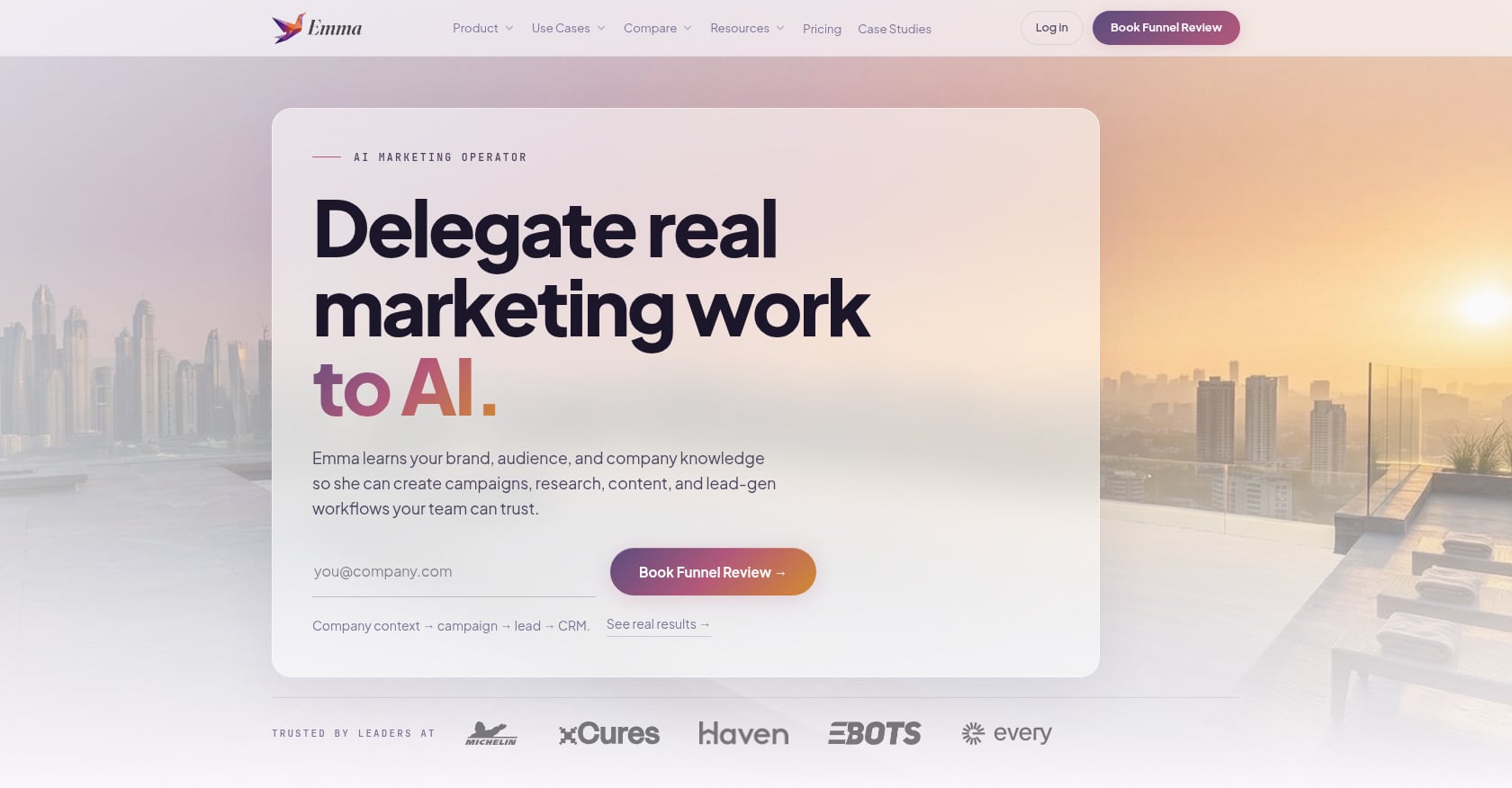
Best for: Pre-seed to Series A startups that need multi-channel GTM execution, not just SEO.
AgentWeb is a different category than a traditional SEO agency. It’s an AI-plus-human go-to-market execution partner that includes SEO as one channel within a broader growth system. The company’s agentic AI marketer, “Emma,” executes across Meta, Google, LinkedIn/X, email, and outbound on a weekly cadence, while a senior human operator team leads strategy and iteration.
Pricing:
- Self-serve platform: 7-day free trial, then $199/month
- Custom workflows (AI-led co-pilot): Contact for seasonal pricing
- Done-for-you (human-led growth ops): 3-month sprints, contact for seasonal pricing
Key strengths:
- Week 0 diagnostic produces a concrete 90-day growth plan mapped to ICP, channels, and bottlenecks
- Weekly multi-channel shipping without hiring a full team
- Slack/Teams workflows for one-click approvals
- Founder-brand support including LinkedIn ghostwriting
- SEO content production up to ~20 assets/month
- Founding team with experience at Microsoft, Google, Meta, LinkedIn, plus YC experience and backing from Amino Capital, Subodha Capital, and others
Notable results:
- Nailed It (consumer beauty AI): 4,000+ leads, 328 add-to-carts in 3 months, 2.91% CTR at ~$0.24 CPC, outperforming a competing agency in a head-to-head test
- Cora (digital health): 13.19% CTR peak on a $300/month ad budget, 435+ qualified clicks in one month
Honest limitations:
- Newer brand with limited third-party reviews and only two detailed public case studies
- Best experience requires weekly engagement via Slack/Teams; hands-off founders may find the workflow less suited to them
- Self-serve tier emphasizes content/SEO; paid media and outbound are more clearly part of the done-for-you tier
Why it’s on this list: For startups whose real problem isn’t “I need an SEO vendor” but “I need someone to run growth across channels,” AgentWeb eliminates the fragmentation of stacking multiple agencies. The self-serve tier at $199/month also makes it accessible for bootstrapped teams.
2. Directive Consulting
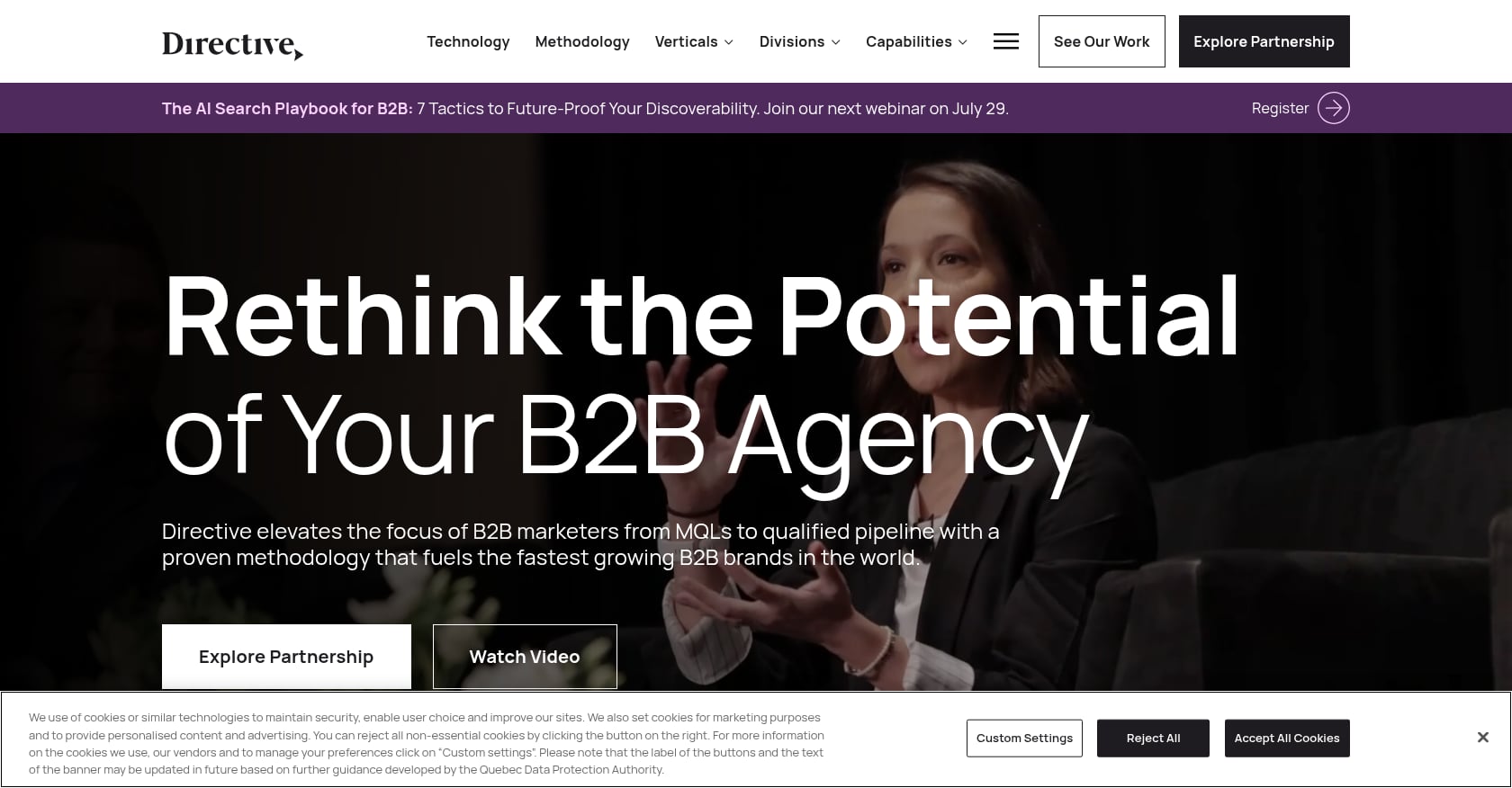
Best for: Post-product-market-fit SaaS startups with CRM infrastructure and pipeline attribution needs.
Directive has built a reputation as a serious B2B SaaS marketing agency, and their startup-specific package is one of the few designed explicitly for early-stage companies that already have sales infrastructure in place.
Pricing:
- Startup package: approximately $5,000–$6,500/month (no annual contract)
- Includes research and strategy, paid media, SEO and discoverability, creative and CRO, and reporting
Key strengths:
- Full marketing team for early-stage companies at a fixed monthly price
- 56 Clutch reviews with a 4.8 rating
- Documented results: 178% growth in organic traffic, 93% increase in organic lead generation, 44% improvement to PPC lead generation
- “Customer Generation” methodology ties marketing to pipeline, not vanity metrics
Honest limitations:
- Not designed for pre-revenue or pre-PMF startups without established sales infrastructure and CRM data
- At $5K–$6.5K/month, the entry point exceeds what most bootstrapped founders can afford
- Primarily SaaS-focused; less suited for consumer, e-commerce, or marketplace startups
User sentiment: Practitioners in B2B SaaS communities frequently mention Directive as a strong choice once you have the data infrastructure to measure pipeline impact. The common critique is that their model assumes you already know your ICP and have a functioning sales process.
3. Victorious SEO
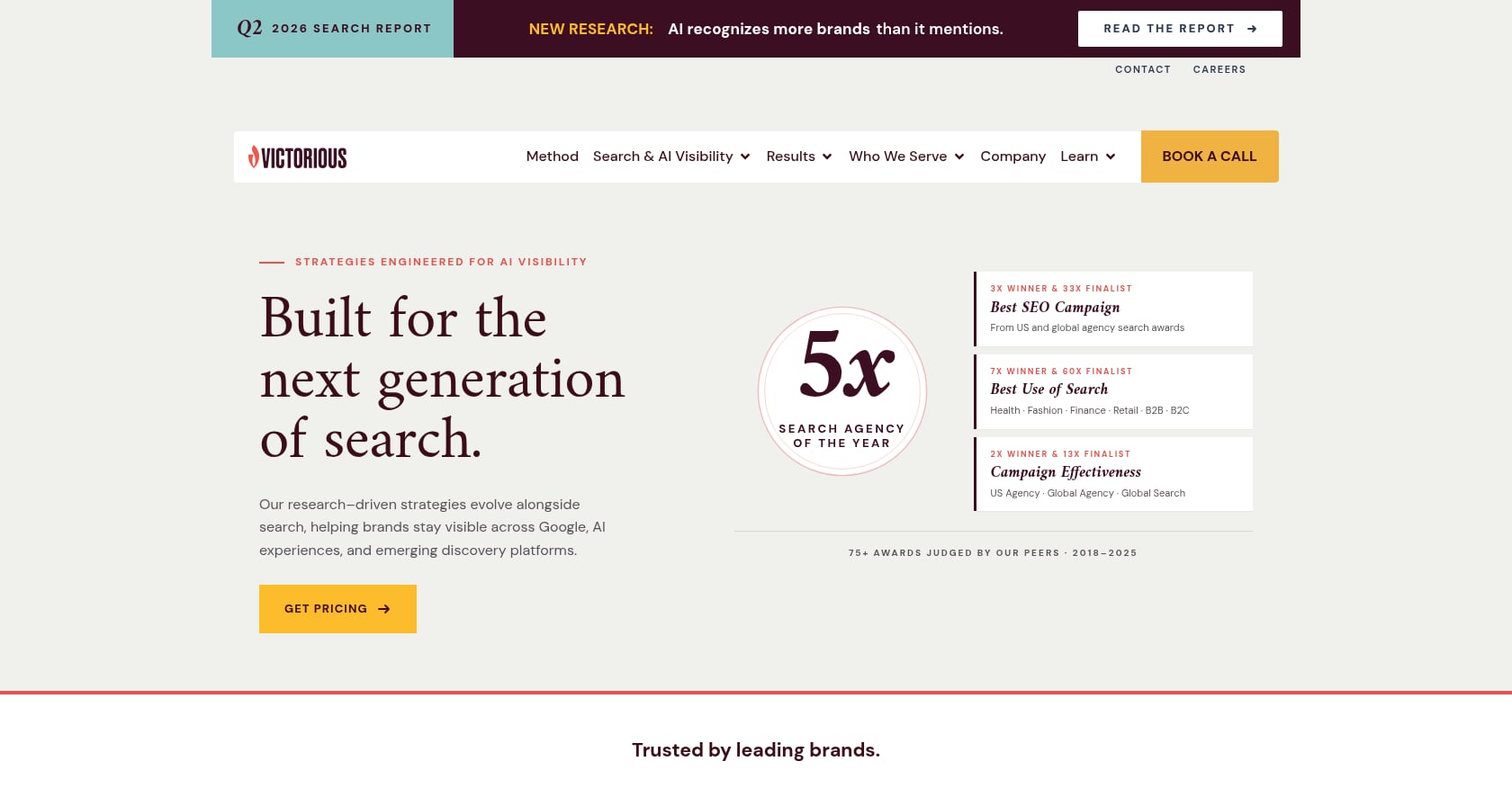
Best for: Funded startups and mid-market companies wanting deep, pure-play SEO combined with answer engine optimization.
Victorious is a five-time SEO Agency of the Year that has pioneered a systematic approach bringing traditional SEO and AEO together into one adaptive search system. Their client roster includes GoFundMe, Salesforce, Wayfair, and SoFi, though they also work with funded startups.
Pricing:
- Minimum recommended budget: $6,000/month
- 12-month campaign commitment recommended
- G2 lists entry-level pricing starting at $4,999/month
Key strengths:
- Exclusive focus on search visibility (no distraction from paid media or email services)
- 4.5/5 on G2 across 21 reviews
- AEO is baked into their methodology, not bolted on as an afterthought
- Works across both startup and enterprise scale
Honest limitations:
- The 12-month commitment and $6K+ price floor make this steep for bootstrapped or pre-seed founders
- Pure SEO focus means you’ll need separate vendors for paid, email, and content distribution
- Enterprise client roster may mean startups receive less senior attention
User sentiment: G2 reviewers praise the depth of their technical audits and keyword research. The most common concern is the long commitment period, which creates risk for early-stage companies still validating product-market fit.
4. SimpleTiger
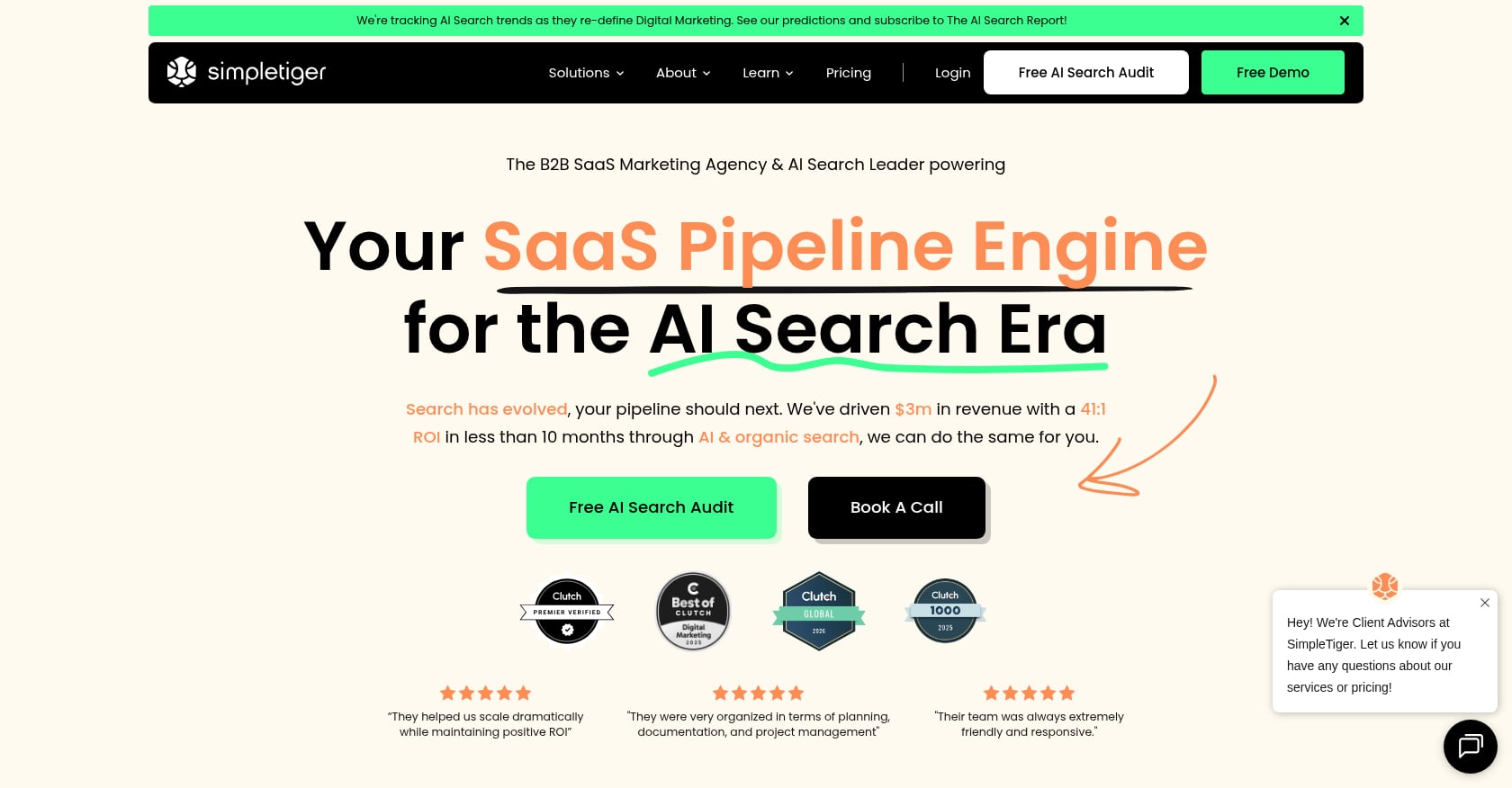
Best for: SaaS startups wanting a specialist that focuses exclusively on SaaS companies.
SimpleTiger has worked exclusively with SaaS companies since 2005, making them one of the longest-running SaaS SEO specialists. Clients include JotForm, Segment, and Bitly.
Pricing:
- $5,000–$10,000/month
- Custom contract terms
Key strengths:
- 4.9/5 Clutch rating across 30 verified reviews
- SaaS-only focus since 2005 means deep understanding of SaaS buyer journeys, trial funnels, and product-led growth dynamics
- Helped JotForm reach #1 for their primary keyword in 2 months
- GEO Jumpstart add-on available for AI search optimization
Honest limitations:
- Percentage-based pricing structure makes budgeting difficult without a sales call
- GEO attribution capabilities are still developing per recent reviews
- Not suited for non-SaaS startups (e-commerce, marketplace, services)
User sentiment: Clutch reviewers consistently highlight fast communication and SaaS-native thinking. The main friction point is pricing transparency, with multiple reviewers noting they wished costs were clearer upfront.
5. Optimist
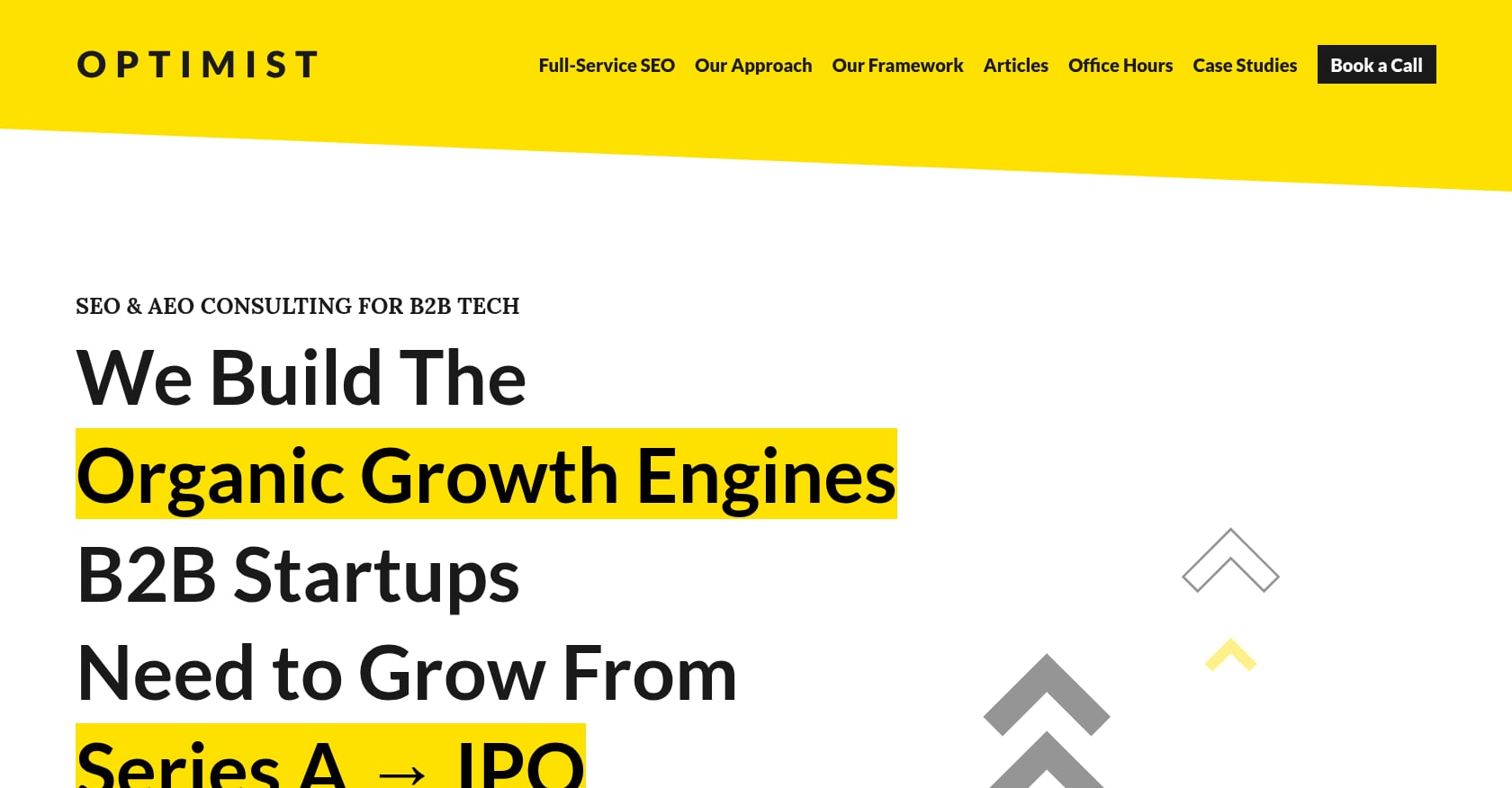
Best for: B2B tech companies ($10M–$500M ARR) wanting integrated SEO and answer engine optimization as a single pipeline system.
Optimist stands out for radical transparency. Their founder publicly states “I have a horse in this race” when publishing lists like this one, and their case studies tie to revenue metrics rather than traffic. They’re one of the few agencies that treats traditional SEO and AEO as a single system rather than separate services.
Pricing:
- Free analysis to start
- One-time roadmap: from $7,500
- Month-to-month advisory retainer: from $3,000/month
- Full-service retainer: from $4,000/month
Key strengths:
- Revenue-tied case studies: 14x leads for Glide, 5x inbound pipeline for Stampli, 43x sign-ups for Kubera
- Month-to-month contracts (confident agencies earn renewals; insecure ones enforce them)
- Senior practitioner model, not layers of junior staff
- SEO + AEO treated as one pipeline
Honest limitations:
- Smaller team means limited capacity; if you need a 500-person agency with project managers and account executives, this isn’t that
- Ideal client profile starts at $10M ARR, which excludes most early-stage startups
- The $7,500 roadmap fee is a significant upfront investment before ongoing work begins
6. Mike Khorev
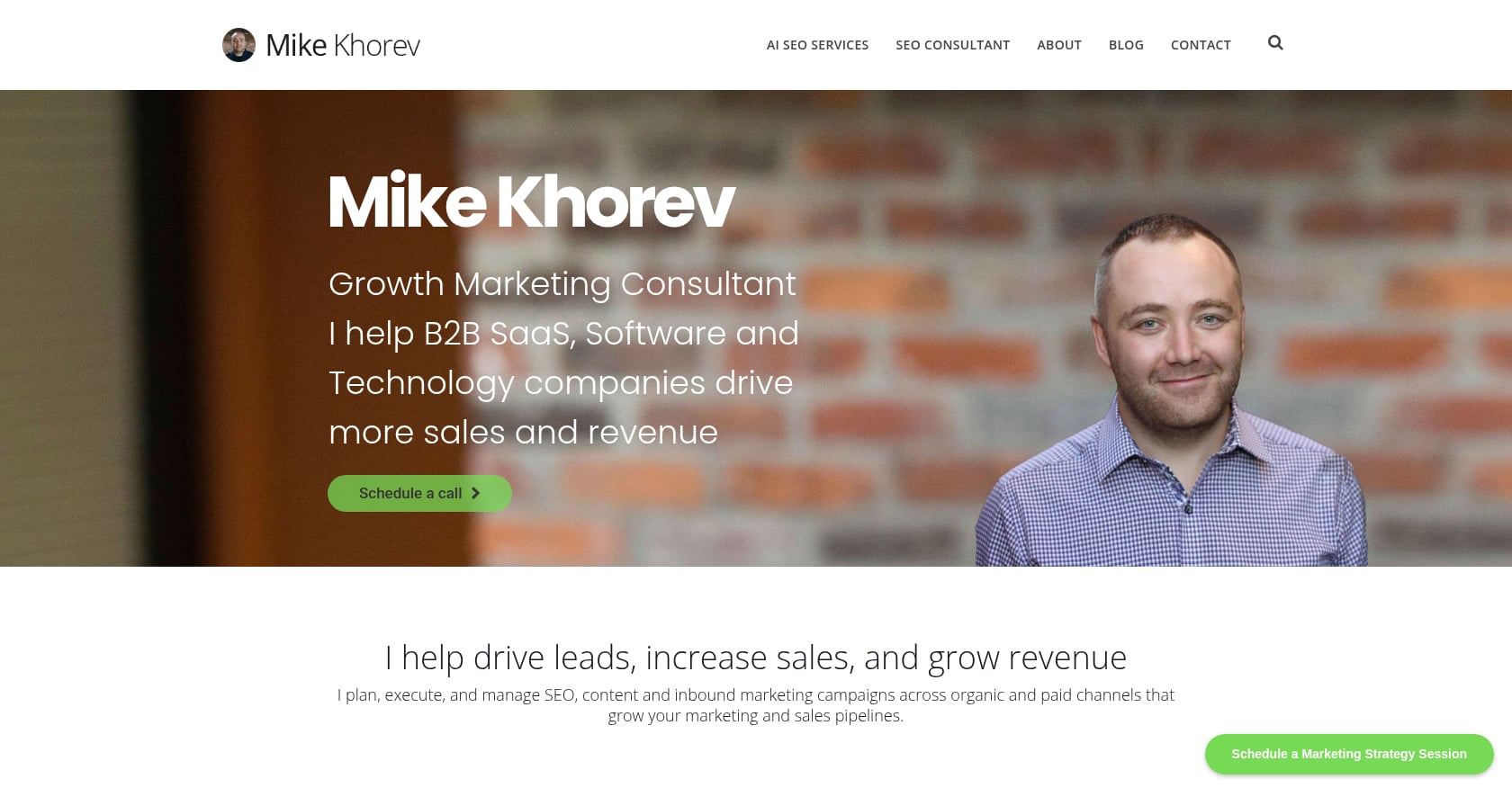
Best for: Tech and SaaS startups wanting senior-led, hands-on SEO consulting without agency overhead.
Mike Khorev operates as an independent consultant, which means you get senior expertise without paying for agency infrastructure. He focuses specifically on SaaS, software, IT, and B2B companies, and his AI SEO consulting covers both traditional search and AI-powered search platforms.
Pricing:
- Starting at $3,500/month
- Flexible contract terms
Key strengths:
- Direct access to a senior practitioner (no account manager buffer)
- Covers both traditional SEO and AI search visibility
- Lower overhead than full-service agencies
- Flexible engagement terms
Honest limitations:
- Single-person dependency is the main risk; if Mike is unavailable, there’s no backup team
- At $3,500/month, still relatively expensive for bootstrapped, non-VC-backed founders
- Limited scalability compared to an agency with a larger team
- Fewer third-party reviews than established agencies
7. Loopex Digital
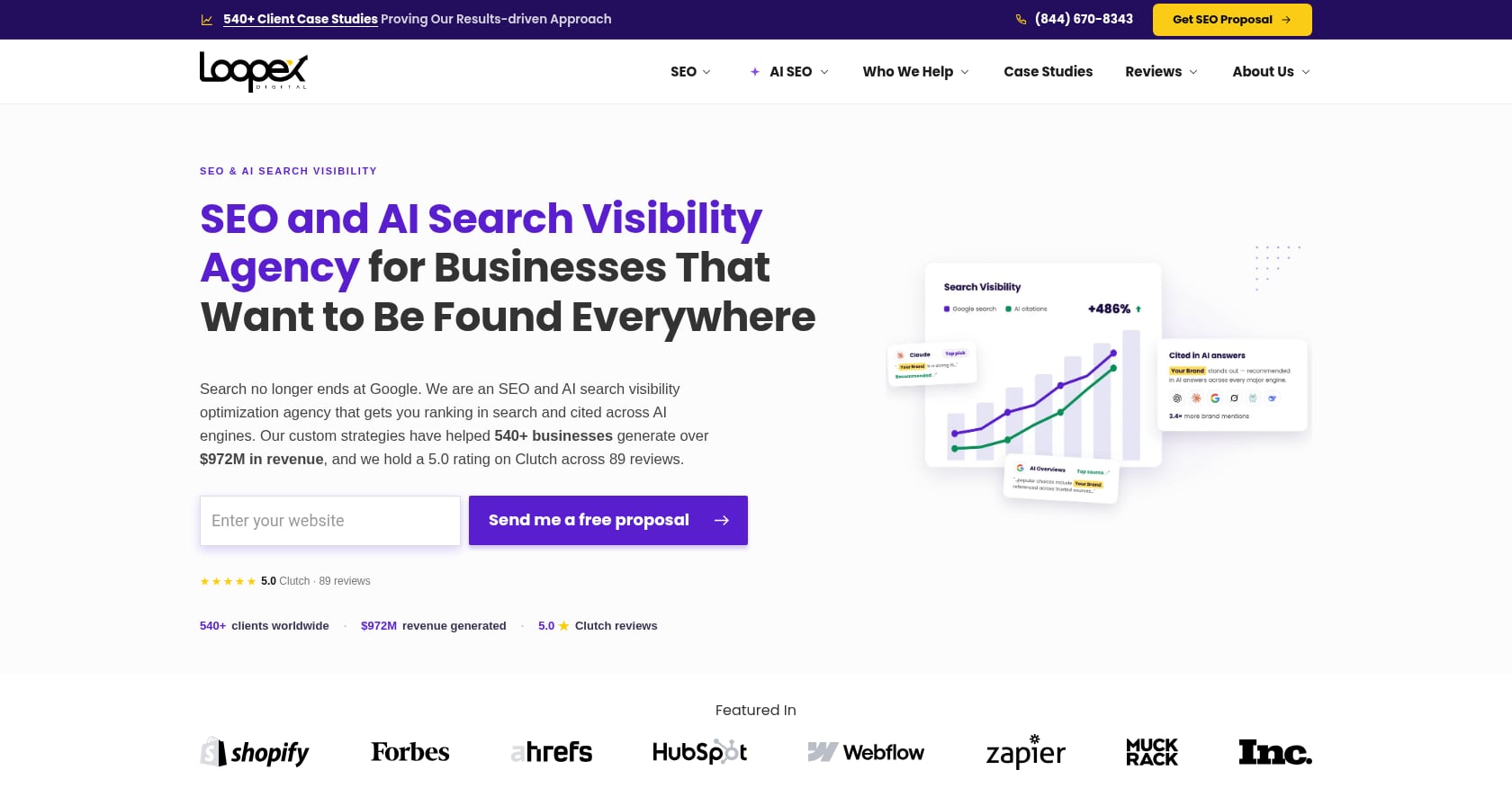
Best for: Budget-conscious startups that need a lower entry point without sacrificing quality signals.
Loopex Digital offers some of the most accessible pricing on this list, making them worth considering for startups operating on lean budgets who still want agency-level execution.
Pricing:
- $25–$149/hour
- Custom project-based pricing available
Key strengths:
- 4.7+ Clutch rating with 30+ positive reviews
- Customized startup strategies with documented results
- GEO offering included in their service stack
- Hourly model gives startups more budget control than flat retainers
Honest limitations:
- Less known for SaaS-specific depth compared to SimpleTiger or Directive
- Hourly pricing can become unpredictable if scope creeps
- Fewer named startup case studies than competitors higher on this list
8. Foundation Inc
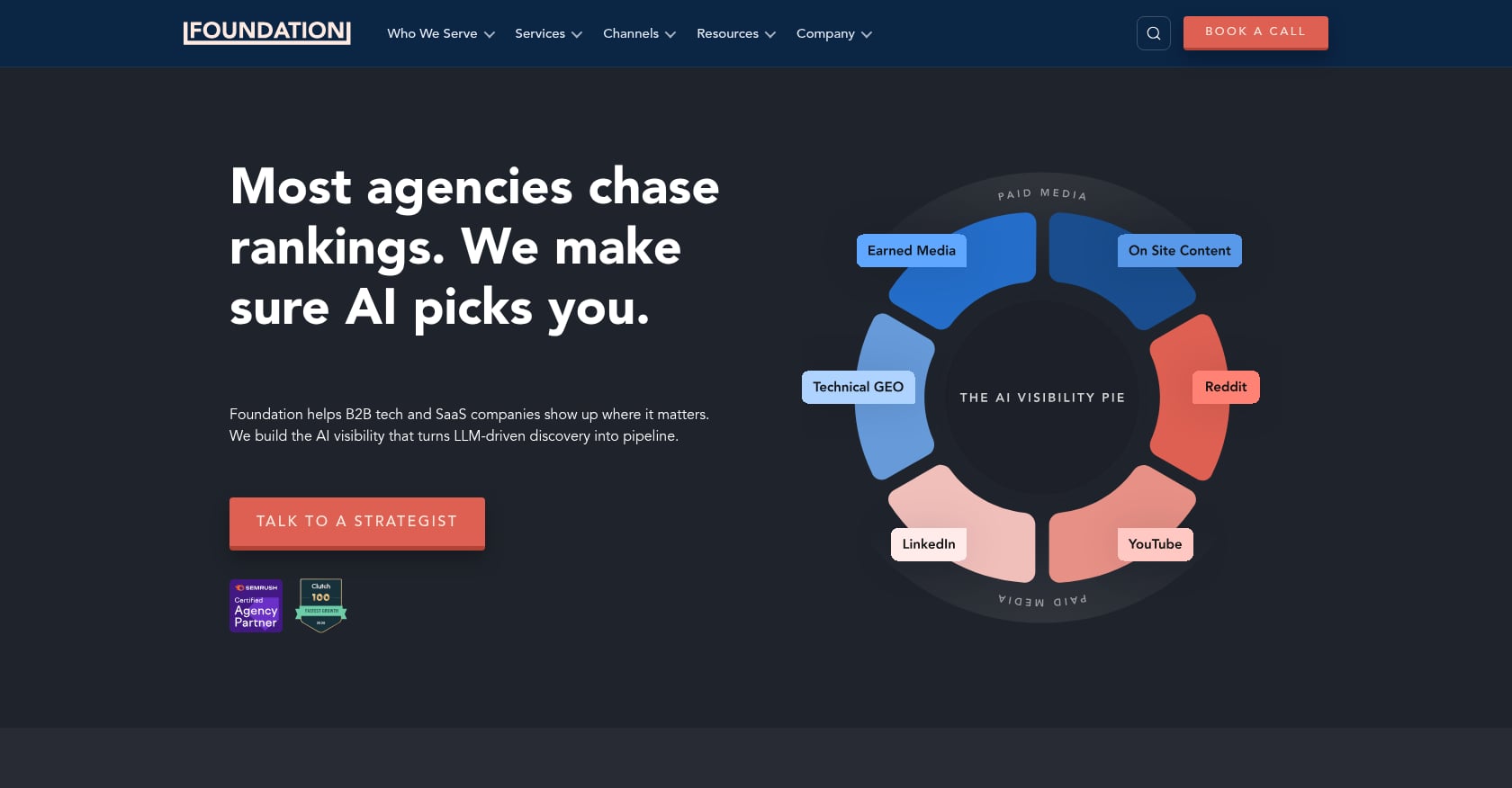
Best for: B2B SaaS companies wanting AI visibility and Reddit-specific search strategies.
Foundation Inc has repositioned from a traditional content marketing agency to an “AI visibility agency,” claiming 220M+ organic visits and AI citations generated for B2B brands. Their client roster includes Webex, Mailchimp, Snowflake, and Canva.
Pricing:
- Custom pricing (their client roster suggests mid-market and enterprise budgets)
- Contact for a quote
Key strengths:
- Reddit expertise is a genuine differentiator; most agencies treat Reddit as an afterthought, and Foundation has built a specific playbook for it
- AI visibility focus with documented citation generation
- Enterprise-grade client portfolio proves execution capability
- Multi-surface approach covering traditional SEO, AI search, and community platforms
Honest limitations:
- Pricing transparency is poor; expect mid-market to enterprise budgets
- Client roster skews toward established brands, not early-stage startups
- May be overkill for pre-seed companies with simple SEO needs
Practitioners in B2B marketing communities increasingly point out that Reddit threads now appear in AI-generated answers and Google’s featured results. Foundation’s focus on this channel is timely, but founders should confirm the agency can scale down to startup budgets before engaging.
What Does Startup SEO Actually Cost in 2026?
Pricing is the biggest gap in every competing article about the best SEO agencies for startups. Most say “contact us.” Here are real numbers.
Budget tiers for startup SEO in 2026:
| Tier | Monthly Range | What You Get |
|---|---|---|
| Lean | $1,500–$5,000 | Basic technical SEO, keyword strategy, limited content production |
| Growth | $5,000–$10,000 | Full-service SEO, content, link building, some GEO |
| Aggressive | $10,000+ | Multi-channel SEO + AEO, technical infrastructure, content at scale |
According to 2026 benchmarks, SEO prices run $100–$250 per hour or $3,000–$7,500 per month for most US agencies. Many startups should expect credible retainers to begin around $1,500/month, with costs rising alongside competition, content volume, and technical complexity.
The in-house alternative: An in-house SEO hire costs $70,000–$160,000/year plus tools. That’s $5,800–$13,300/month before you add subscriptions for Ahrefs, Semrush, Surfer, or other essentials. It makes sense when SEO is a permanent, central channel. For most early-stage startups, it doesn’t.
The hidden fragmentation cost: What most pricing discussions miss is the total cost of a piecemeal approach. A startup paying separately for an SEO agency ($5K), content writer ($3K), ad management ($2K), and tools ($1K) is spending $11K/month with no single owner of the growth strategy. If you’re exploring whether a more integrated approach could reduce your CAC, the math often favors a hybrid execution partner over multiple specialists.
The GEO Factor: Why Traditional SEO Alone Isn’t Enough
If you’re evaluating the best SEO agency for startups in 2026, the first pass/fail filter should be: “Does this agency handle AI search visibility?”
Generative Engine Optimization (GEO), sometimes called Answer Engine Optimization (AEO), is the practice of structuring content so that AI systems like ChatGPT, Perplexity, Google’s AI Overviews, and Claude cite your brand in their generated answers. AI Overviews are reducing clicks by 34.5% on affected queries. Meanwhile, 80% of global B2B buyers in tech say they use generative AI for product research.
For a lean startup, GEO is a force multiplier. It allows you to bypass the years of backlink building required by traditional SEO and instead compete on clarity, factual density, and authority. Startups benefit most from agencies that prioritize bottom-of-funnel content (comparison pages, “best X for Y” articles, and integration guides) because these give LLMs easy-to-cite answers about your product category.
Questions to ask any agency about their AI search strategy:
- Do you track AI citations and mentions as a KPI?
- How do you structure content for AI extraction (schema, concise definitions, structured data)?
- What percentage of our target queries currently trigger AI Overviews?
- Do you optimize for Perplexity, ChatGPT, and Claude, or just Google?
Any agency that can’t answer these questions clearly is selling you a strategy designed for a search environment that no longer exists.
5 Red Flags When Hiring an SEO Agency as a Startup
Finding the best SEO agency for startups means knowing what to avoid just as much as what to look for. These red flags come from real practitioner feedback across SaaS communities and review sites.
1. Ranking guarantees. No one controls Google’s algorithm. An agency promising “#1 in 90 days” is either lying or planning tactics that risk a penalty.
2. “Proprietary methodologies” they won’t explain. As one experienced SEO practitioner put it bluntly: “proprietary secrets” usually means link schemes. Legitimate strategies can be explained in plain language.
3. 12-month lock-in with no performance exit. Confident agencies earn renewals. Insecure ones enforce them through contracts. Look for month-to-month options or, at minimum, a performance-based exit clause.
4. Reporting on traffic without pipeline or revenue attribution. If your agency reports pageviews and rankings but can’t connect those metrics to leads, demos, or revenue, you’re paying for vanity dashboards. B2B SaaS companies switch agencies primarily because of junior execution, vanity metrics, and cookie-cutter strategies.
5. No GEO or AEO strategy. This isn’t optional anymore. An agency without a clear answer to “how will you make us visible in AI search results?” is leaving a growing share of your addressable market on the table.
When an SEO Agency Isn’t What You Actually Need
Here’s what nobody else on the first page of Google will tell you: for many pre-seed and seed-stage startups, a pure-play SEO agency is the wrong purchase.
A brilliant technical SEO strategist may be a mediocre content strategist. A great content agency probably can’t run your paid campaigns. And neither of them will ghostwrite your LinkedIn posts or build your outbound email sequences.
The real question isn’t “which SEO agency should I hire?” It’s “do I need an SEO vendor, or do I need a go-to-market execution partner that includes SEO?”
The distinction matters because:
- SEO agencies optimize one channel. GTM execution partners own the full growth system.
- Agency handoffs between SEO, paid, content, and email teams create gaps. Integrated models eliminate those gaps.
- Startups burning 6 months on SEO alone miss opportunities in paid, outbound, and founder-led content that could generate pipeline immediately.
This is why the AI marketing agent model is gaining traction. Instead of hiring three vendors and a freelancer, a startup gets one system that ships across channels weekly. The SEO work still happens, but it compounds alongside everything else.
That said, if your startup is post-PMF with a clear ICP and your only bottleneck is organic search, a dedicated SEO agency absolutely makes sense. The agencies profiled above (Directive, Victorious, SimpleTiger, Optimist) are excellent choices for that scenario. The point is to be honest about which problem you’re actually solving.
Frequently Asked Questions
What’s a realistic SEO budget for a seed-stage startup?
Most seed-stage startups should budget $1,500–$5,000/month for credible SEO work. Below $1,500, you’re typically getting templated audits and thin content. At $3,000–$5,000, you can expect real keyword strategy, technical fixes, and consistent content production. If budget is extremely tight, a self-serve AI platform starting at $199/month can handle foundational content and SEO tasks while you validate whether SEO will actually drive leads for your specific market.
How long until I see ROI from startup SEO?
Industry data shows it takes 6 to 12 months to see measurable SEO results from a new campaign. Some wins come faster (technical fixes, low-competition long-tail keywords), but sustained organic traffic growth is a compounding game. This is why 91% of marketers who invested in SEO reported positive ROI in 2026, but patience and consistent execution are prerequisites.
Should I do SEO in-house or hire an agency?
An in-house SEO hire costs $70,000–$160,000/year plus tools. That makes sense when SEO is a permanent, central channel and you have enough work to keep someone busy full-time. For most early-stage startups, an agency or hybrid execution partner is more cost-effective because you get a full team’s expertise without the fixed overhead. The breakeven point typically comes when your content needs exceed 20+ pieces per month and your technical SEO requirements are ongoing.
What’s the difference between SEO and GEO?
SEO (Search Engine Optimization) focuses on ranking web pages in traditional search results on Google, Bing, and similar engines. GEO (Generative Engine Optimization) focuses on getting your brand cited in AI-generated answers from tools like ChatGPT, Perplexity, Google AI Overviews, and Claude. In 2026, you need both. An agency that only does traditional SEO is ignoring a channel where a growing percentage of your potential customers now research and make buying decisions.
Can I hire a freelancer instead of an agency?
You can, and for specific tasks (technical audits, content writing, link building), freelancers can be excellent. The tradeoff is coordination overhead. You become the project manager stitching together SEO strategy, content production, and performance tracking. For founders already stretched thin, that coordination tax often outweighs the cost savings. A single partner that handles execution across channels tends to produce better results with less founder time invested.
What makes the best SEO agency for startups different from a general SEO agency?
Startup-focused agencies understand three realities that general agencies often don’t: constrained budgets that demand faster time-to-impact, evolving ICPs that require flexible strategy, and the need to connect SEO work to pipeline metrics (not just rankings or traffic). They also tend to offer shorter contracts and more transparent pricing, because they know startups can’t afford to wait 12 months hoping for results.
Is it worth paying for GEO/AEO services separately?
In most cases, no. GEO should be integrated into your SEO strategy, not sold as an expensive add-on. The best agencies in 2026 treat AI search visibility as part of their core methodology. If an agency charges a significant premium for GEO on top of their standard SEO retainer, ask what exactly they’re doing differently. Often the answer is structured data, concise answer-format content, and citation-friendly writing, all of which should be standard practice.
Choosing the best SEO agency for startups comes down to matching your stage, budget, and actual growth needs to the right type of partner. If your bottleneck is purely organic search and you have the budget, agencies like Directive, Victorious, or SimpleTiger deliver proven results. If you need broader execution across channels without hiring a full team, the AI-plus-human hybrid model is worth serious consideration.
Get a free GTM discovery report to see which channels, including SEO, will actually move the needle for your startup.
Or get a free AI Readiness Roadmap to see where your GTM has gaps.
Ex-Meta, Google, LinkedIn. 10+ years in ML & data science for GTM. Expert in customer acquisition and growth activation.
Get a free Stack Review.
30 min with Harsha and Matt.
We audit your last 30 days, pinpoint the highest-impact fixes, and hand you the exact playbook we'd run. No deck. No pitch unless there's a fit.