13 Best AI Email Tools in 2026: Inbox, Marketing, Outreach


TL;DR
AI email tools fall into three distinct categories: inbox assistants for personal productivity, marketing automation platforms for campaigns and nurture, and cold outreach tools for prospecting. Most buyers pick the wrong one because they don’t realize these categories exist. This guide covers all three, with real pricing, honest tradeoffs, and a decision framework so you can match the right tool to your actual problem. If you need email working as part of a coordinated growth system (not just another standalone subscription), skip to the section on GTM execution.
Why “AI Email Tools” Is Three Markets Disguised as One
The average professional spends 4.1 hours a day managing email. Nearly 79% of organizations have integrated or plan to integrate AI into their email workflows, according to the 2026 Email Impact Report. The market is responding with a flood of tools, but here’s what most comparison guides get wrong: they only cover one slice of a much bigger picture.
“AI email tools” actually spans three distinct product categories:
- AI inbox assistants (Superhuman, Shortwave, Fyxer) that help you process and respond to email faster
- AI email marketing platforms (ActiveCampaign, HubSpot, Brevo, Mailchimp) that automate campaigns, sequences, and nurture flows
- AI cold email tools (Instantly, Smartlead, Lemlist, Saleshandy, Apollo) built for outbound prospecting
Buying an inbox assistant when you need outbound automation is like buying a hammer when you need a saw. Both are useful. Neither substitutes for the other.
This guide covers all thirteen tools across all three categories, with verified 2026 pricing and the tradeoffs that marketing pages don’t mention. If you’re a startup founder or lean team evaluating your email marketing automation options, this is the only resource you’ll need.
Get a free GTM Discovery Report to see which email approach fits your growth stage.
Which Type of AI Email Tool Do You Actually Need?
Before scrolling through thirteen tools, answer one question: what’s your biggest email problem right now?
You need an inbox assistant if: You’re drowning in a personal inbox, spending hours triaging messages, and losing important threads in the noise. Your problem is processing speed, not campaign scale.
You need an email marketing platform if: You have leads or subscribers and need to nurture them with automated sequences, newsletters, or lifecycle campaigns. Your problem is turning contacts into customers at scale.
You need a cold outreach tool if: You’re doing outbound prospecting, sending cold emails to people who haven’t opted in, and need deliverability infrastructure to land in primary inboxes. Your problem is generating pipeline from scratch.
You need all three working together if: You’re running a real go-to-market motion where outbound fills the top of funnel, marketing automation nurtures the middle, and your inbox handles the replies. This is where most startups actually are, and it’s where standalone tools start falling apart.
There’s an important distinction shaping the 2026 market that the Missive engineering team articulated well: the split between AI assistants (reactive, you ask, they help) and AI agents (proactive, they read and act, you supervise). Assistants require your input at every step. Agents operate autonomously within guardrails you set. As you evaluate tools below, pay attention to which model each one follows, because it determines how much time you’ll actually save.
For a deeper look at how agentic AI marketing is changing the game, that distinction matters more than any individual feature comparison.
At-a-Glance Comparison Table
| Tool | Category | Starting Price | Best For | Free Plan? | Key AI Feature | Top Limitation |
|---|---|---|---|---|---|---|
| AgentWeb | GTM execution (multi-channel) | $199/mo (self-serve) | Startups needing email as part of full GTM | Yes (7-day trial + free audit) | Agentic AI “Emma” across email, ads, social, SEO | Not a standalone email-only tool |
| ActiveCampaign | Marketing automation | $15/mo | B2B automation depth | No | AI workflow builder, predictive sending | Steeper learning curve |
| HubSpot | Marketing suite | Free / $800 Pro | CRM-native teams | Yes (basic) | Breeze Copilot | Expensive at scale |
| Brevo | Marketing automation | Free tier available | Budget multi-channel | Yes | Send-time optimization | Limited automation depth |
| Mailchimp | Marketing automation | Free (reduced) | Absolute beginners | Yes (limited) | Intuit Assist copywriting | Steep pricing, shrinking free plan |
| Instantly | Cold email | $37/mo | High-volume senders | No | AI Reply Agent | Data is a separate add-on |
| Smartlead | Cold email | $39/mo | Agencies, technical users | No | Intent detection + AI drafts | Complex setup |
| Lemlist | Cold email + multichannel | $55/user/mo | Personalization + LinkedIn | No | Dynamic images/video | Per-seat pricing adds up fast |
| Saleshandy | Cold email | $25/mo | Budget outreach | No | AI Sequence Copilot | Low caps on Starter plan |
| Apollo.io | Cold email + data | Free tier available | Data breadth (2B+ contacts) | Yes | AI ICP generator | Deliverability concerns |
| Superhuman | Inbox assistant | $12/mo (Pro) | Inbox speed for executives | Yes (Go tier) | AI triage + auto-draft | Premium positioning |
| Shortwave | Inbox assistant | Free | Gmail power users | Yes | Thread bundling + AI drafts | Gmail only |
| Fyxer AI | Inbox assistant | $30/mo | Outlook users | No | AI drafts + meeting notes | Expensive for feature set |
Best AI Email Marketing and Automation Platforms
These platforms handle campaigns, nurture sequences, segmentation, and lifecycle email. They’re designed for contacts who’ve opted in, not cold prospects.
1. AgentWeb
Best for: Startup teams that need email executing as part of a full multi-channel GTM system, not as another standalone subscription
Pricing: Self-serve platform at $199/month with a 7-day free trial. Done-with-you and done-for-you tiers are priced seasonally (contact founders@agentweb.pro). A free GTM audit and discovery report are available before committing.
Key features:
- Agentic AI marketer “Emma” orchestrates email campaigns alongside Meta, Google, LinkedIn, and organic content channels
- 90-day GTM diagnostic and execution plan mapped to your ICP, channels, and bottlenecks
- Slack/Teams approval workflows so founders review creative and messaging in one click
- AgentWeb Portal with content calendar, performance dashboards, and optimization loops
- Founder-brand support including LinkedIn ghostwriting and executive comms
- Up to 20 content assets per month across social posts, short-form video, blogs, and ads
- Transition path from full-service to self-serve so the marketing system keeps running after the engagement
Why it stands out: Most email marketing platforms solve one channel. AgentWeb treats email as one piece inside a coordinated growth system where a senior operator team handles strategy and Emma executes across channels weekly. The Nailed It case study produced 4,000+ leads and 328 add-to-carts in 3 months with a 2.91% CTR (roughly 3.2x industry average) at $0.24 CPC. The Cora case study hit a 13.19% CTR peak on just $300/month in ad spend, generating 435+ qualified clicks in a single month. Both results came from multi-channel execution, not email alone.
Tradeoffs:
- Not a pure email-only tool. If you only need a standalone email platform with no other channels, a dedicated tool like ActiveCampaign is simpler.
- Done-for-you pricing isn’t published on the website and requires a sales conversation
- Best results require weekly engagement through Slack/Teams approval workflows
- Fewer third-party reviews compared to established platforms like ActiveCampaign or HubSpot, though client testimonials (Michelin China, DeepVista) and investor backing (Amino Capital, Subodha Capital) provide credibility
2. ActiveCampaign

Best for: B2B startups that need automation depth beyond basic newsletters
Pricing: Starter at $15/month, Plus at $49/month, Pro at $79/month, Enterprise at $145/month. No free plan.
Key features:
- AI agents generate complete, on-brand campaigns in minutes with drag-and-drop workflow builders
- AI Automation Builder with Win Probability scoring and customer sentiment analysis
- Predictive sending optimizes delivery timing per contact
- 900+ automation recipes for welcome sequences, abandoned carts, re-engagement series
Why it stands out: EmailToolTester’s latest deliverability tests scored ActiveCampaign at 94.2%, first place out of 15 tools tested. For SaaS growth marketing teams that depend on emails actually reaching inboxes, that number matters more than any AI copywriting feature.
Tradeoffs:
- No free plan means you’re paying from day one
- The learning curve is steeper than Mailchimp or Brevo
- Contact-based pricing can spike as your list grows
Practitioner perspective: The consistent verdict across review communities is that ActiveCampaign is the best email marketing tool for businesses ready to get serious about automation. The ceiling is many times higher than simpler platforms, but you’ll invest more time upfront learning the system.
3. HubSpot Marketing Hub
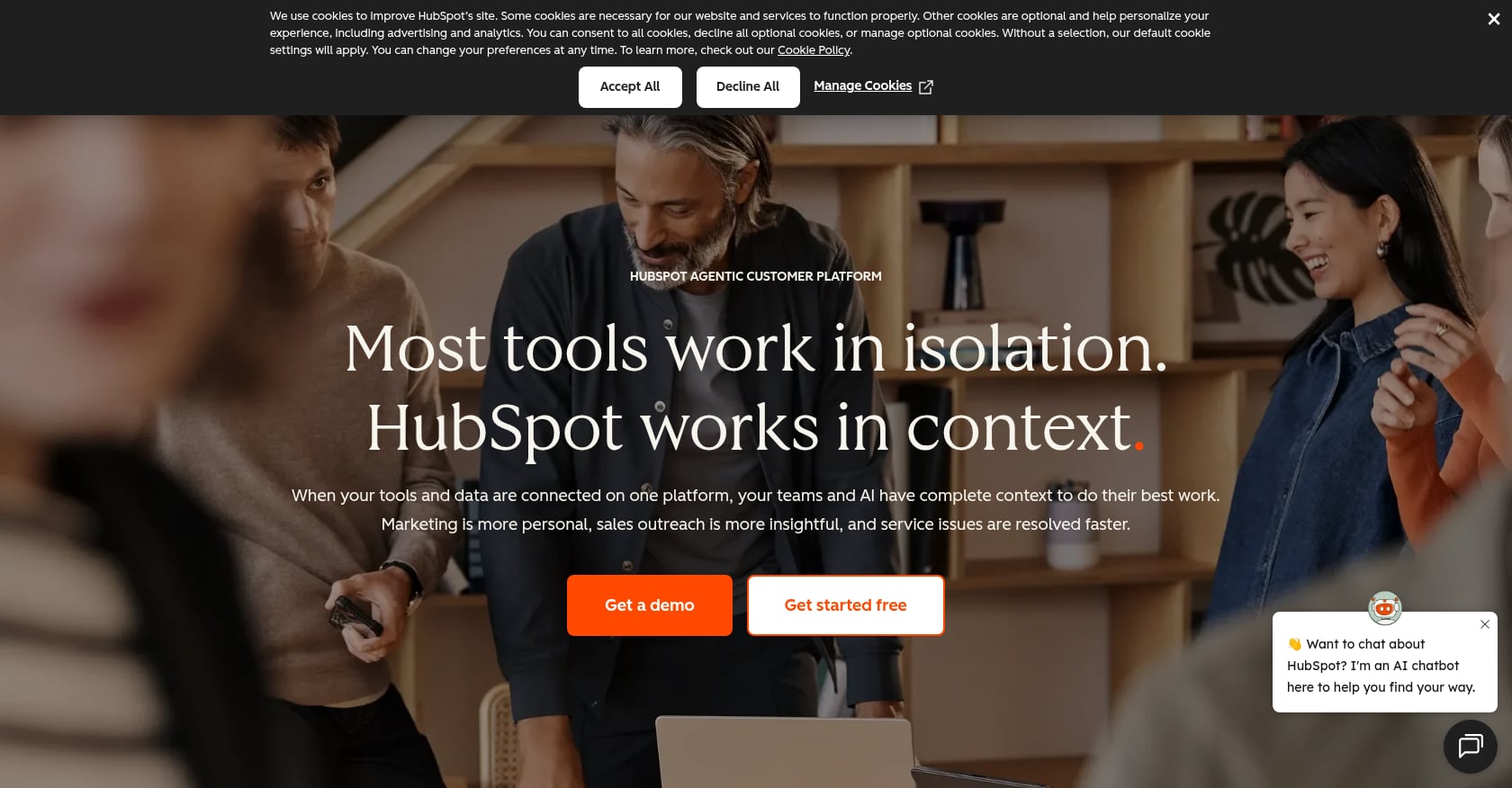
Best for: Teams wanting a unified CRM + email + marketing platform under one roof
Pricing: Free tier available. Starter at $9/seat/month. Professional at $800/month. Enterprise at $3,600/month.
Key features:
- Breeze Copilot, an AI assistant for crafting emails, refining copy, and managing CRM tasks
- Predictive lead scoring and future sales projections
- Breeze is available even on the free plan
Why it stands out: If your team already lives in HubSpot’s CRM, the native integration eliminates data sync headaches that plague teams stitching together separate tools. As Marketo co-founder Jon Miller noted on LinkedIn, legacy marketing automation platforms were built around scoring individual leads and running if-then nurture tracks. HubSpot still does that well, but the real value is the ecosystem.
Tradeoffs:
- The meaningful AI features (forecasting, predictive lead scoring) sit behind the Professional plan at $800/month
- Costs become unpredictable at scale
- You’re locked into the HubSpot ecosystem, which is either a benefit or a trap depending on your stack
4. Brevo
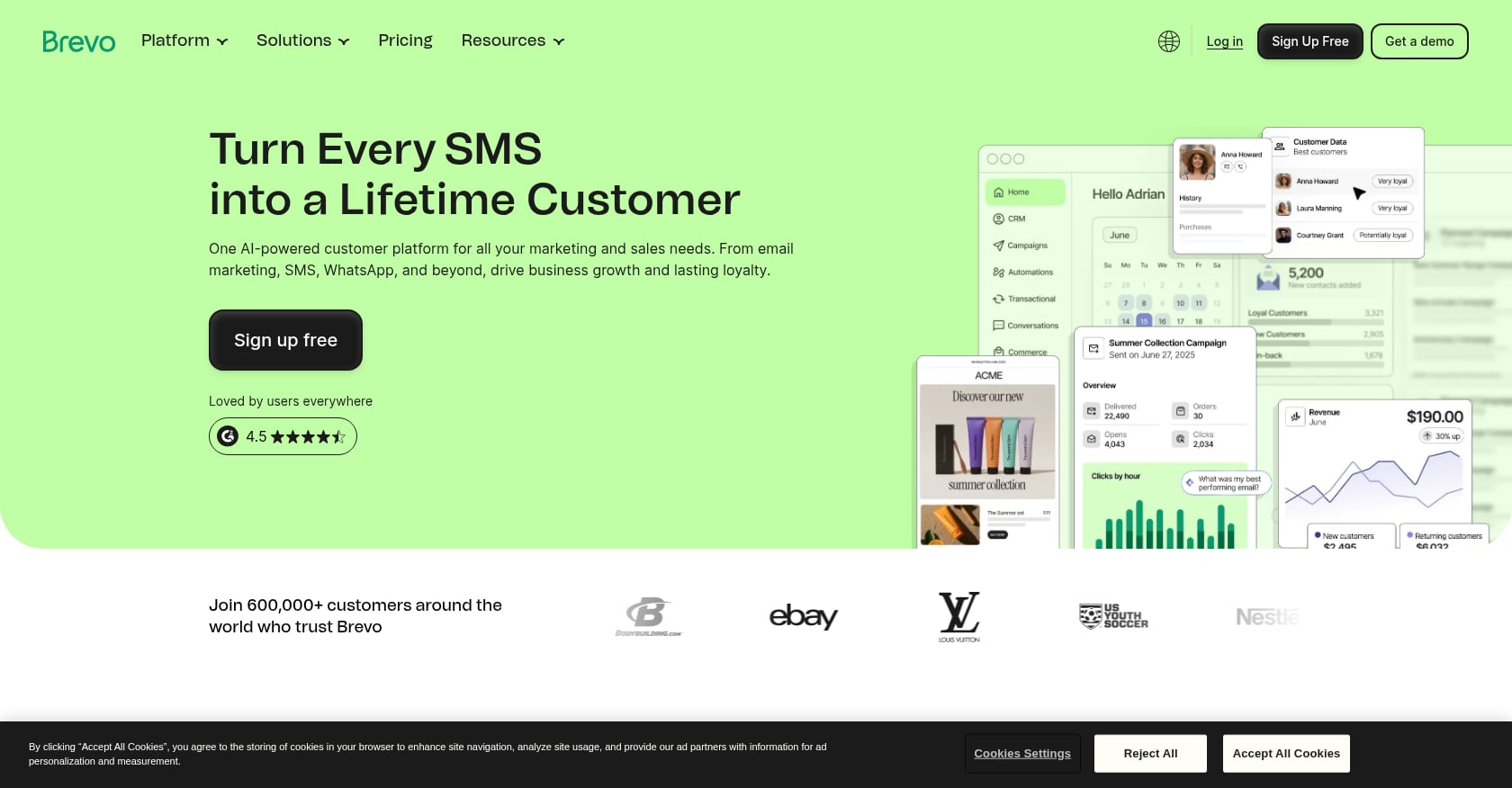
Best for: Early-stage teams that need email + SMS + WhatsApp on a tight budget
Pricing: Free tier with send limits. Paid plans are based on monthly email volume, not contact count.
Key features:
- Send-time optimization using AI
- AI subject line generation
- Cross-channel messaging (email, SMS, WhatsApp) from one platform
Why it stands out: Volume-based pricing instead of contact-based pricing is a genuine advantage for startups with large lists but low send frequency. You won’t pay for contacts sitting idle.
Tradeoffs:
- Automation depth is noticeably behind ActiveCampaign
- AI features are more basic, focused on optimization rather than generation
- Fewer third-party integrations than HubSpot or ActiveCampaign
5. Mailchimp

Best for: Absolute beginners sending their first email campaigns
Pricing: Free plan (significantly reduced from prior versions). Essentials roughly $110/month for 10,000 contacts.
Key features:
- Intuit Assist generates copy, subject lines, and send-time recommendations
- Predictive demographics for audience insights
- Drag-and-drop builder with templates
Why it stands out: Brand recognition and ease of use. If you’ve never sent a marketing email, Mailchimp’s interface is the least intimidating starting point.
Tradeoffs:
- The free plan has been gutted: fewer sends, fewer features, and it charges for unsubscribed contacts still on your list
- Pricing scales steeply once you grow past small lists
- Automation features are paywalled on higher tiers
- As one reviewer put it: Mailchimp is the most well-known, but it’s no longer the best on most measures
Hidden Costs to Watch in Marketing Platforms
Contact-based pricing (ActiveCampaign, HubSpot, Mailchimp) means your bill grows with your list, even if engagement stays flat. Tiered AI access means the features you actually want often sit behind plans that cost 5-10x the starter price. HubSpot’s jump from $9/month to $800/month is the most extreme example, but it’s not the only one.
Best AI Cold Email and Outreach Tools
Cold email tools are built for sending messages to people who haven’t opted in. They focus on deliverability infrastructure, mailbox rotation, warmup, and personalization at scale.
1. Instantly.ai
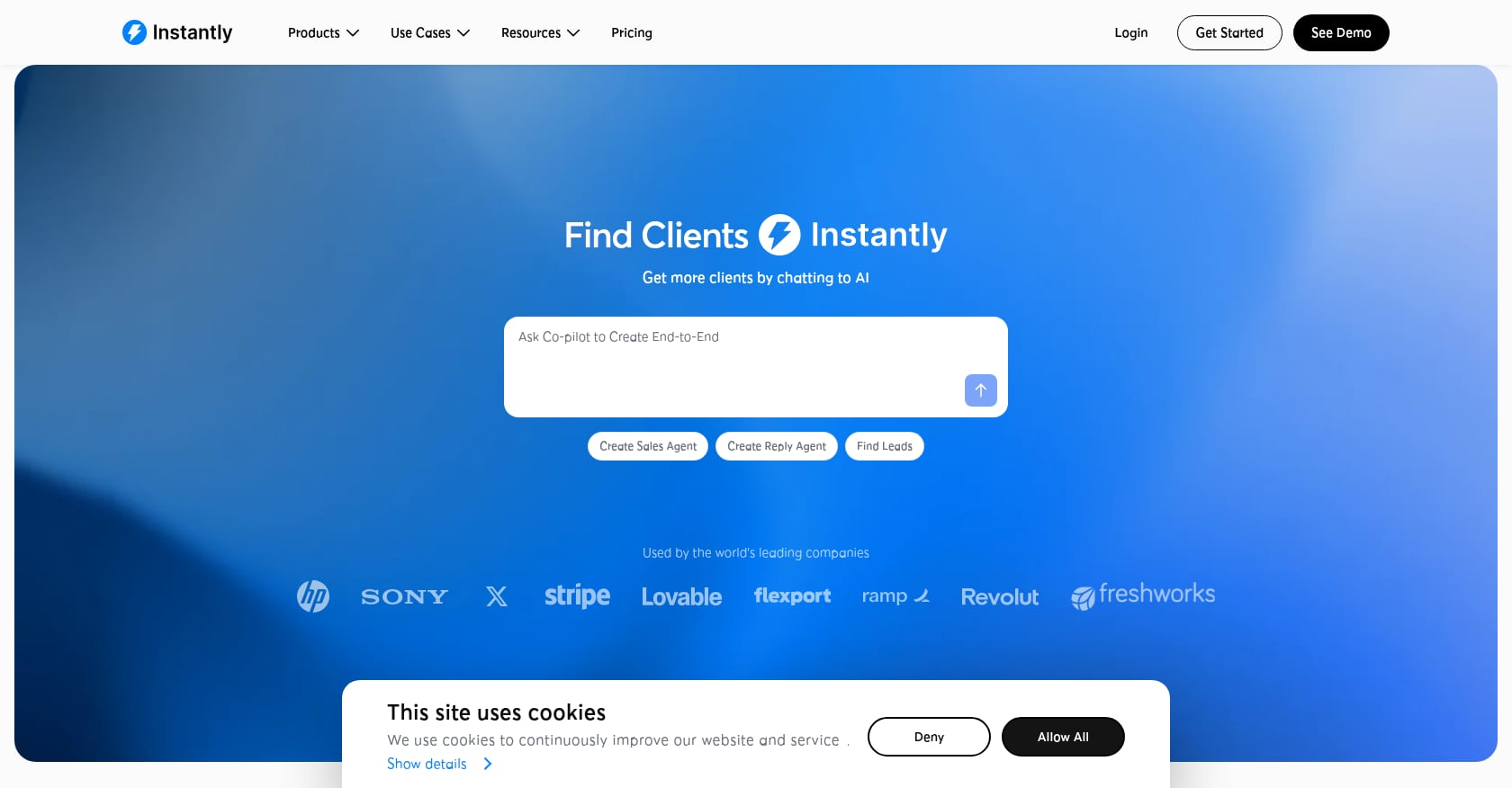
Best for: High-volume senders and agencies that need unlimited mailboxes at a flat rate
Pricing: Growth at $37/month (5,000 active leads, 10,000 emails/month). Hypergrowth at $97/month (25,000 active leads, 100,000 emails/month). Light Speed at $358/month. Data (SuperSearch) is a separate subscription at $37 to $197/month.
Key features:
- AI Reply Agent reads incoming emails and responds on your behalf in under 5 minutes
- Handles objections, sends follow-ups, shares calendar links, updates CRM status
- Unlimited mailboxes on all plans
- 4.2 million+ account warmup network
Why it stands out: The unlimited mailbox model and simple UX make Instantly the easiest cold email tool to get started with. Practitioners on Reddit consistently praise it as the best option for beginners.
Tradeoffs:
- No AI copilot for writing sequences from scratch
- Data (lead sourcing) requires a separate subscription, pushing real costs well above the sticker price
- Multiple users report emails going to spam despite built-in warmup
- Inbox placement tested at 82%, behind Smartlead’s 87%
2. Smartlead
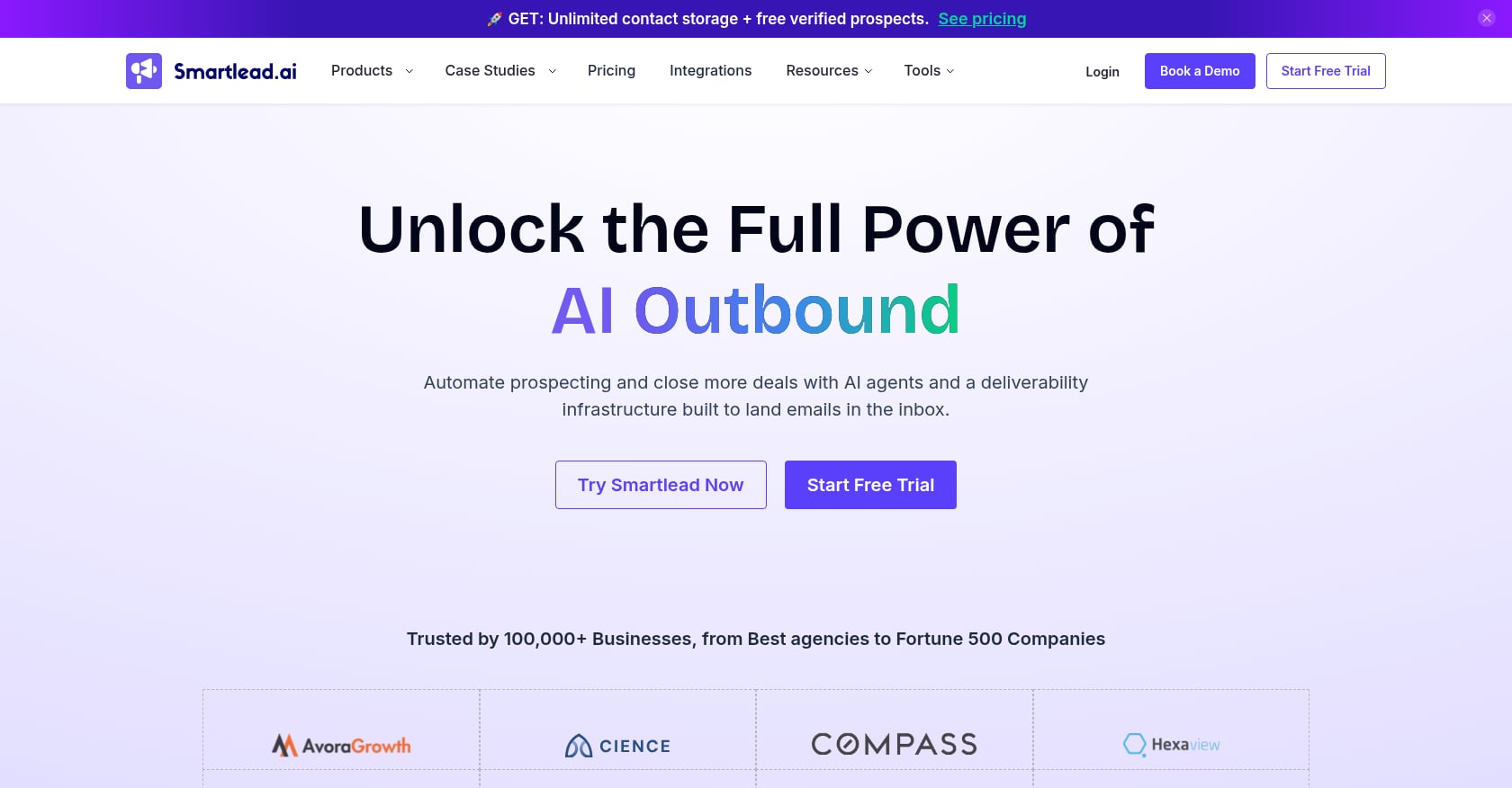
Best for: Technical users and agencies that need granular deliverability control
Pricing: Basic at $39/month (2,000 leads, unlimited inboxes). Pro at $94/month. Custom at $174/month.
Key features:
- AI Assistant detects intent in replies and drafts personalized responses
- SmartAI Bot training for persona-specific copy
- Rotating IP pools for deliverability optimization
Why it stands out: In a 50,000-email test, Smartlead came out ahead on reply rates at 4.8% versus a 3.2% average, and achieved 87% inbox placement, the highest among tools tested. For teams obsessed with deliverability (as they should be), Smartlead is the current technical leader. An analysis by Amplemarket noted that even the highest competitor deliverability score was less than 40% of a complete deliverability stack, which means infrastructure decisions matter far more than most buyers realize.
Tradeoffs:
- More complex to set up than Instantly, with a meaningful learning curve
- Additional mailboxes beyond included counts are billed separately
- The interface prioritizes power over simplicity
- Non-technical users find it overwhelming
3. Lemlist
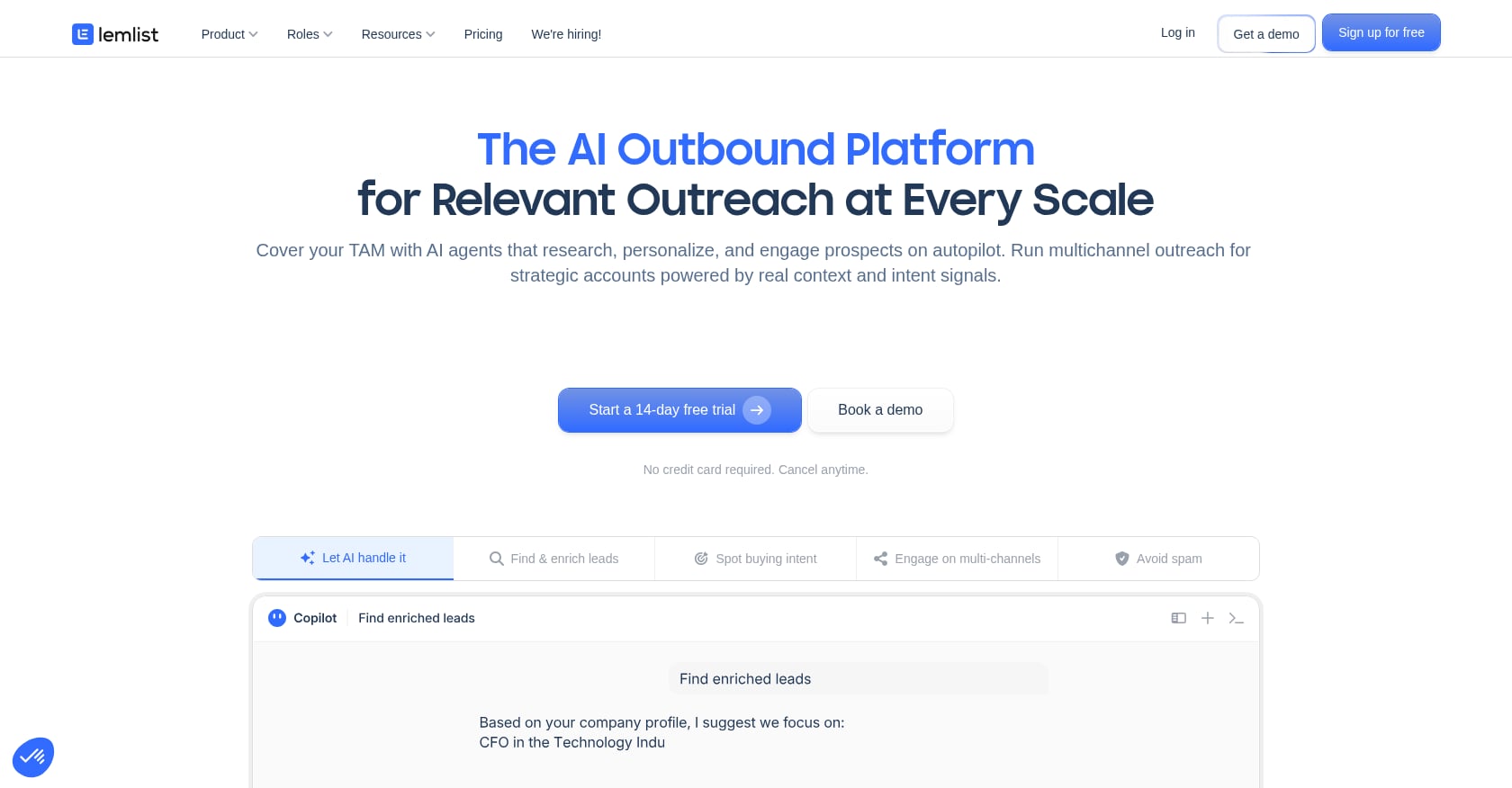
Best for: Teams that want strong personalization (dynamic images, video) plus LinkedIn multichannel
Pricing: Email Pro at $55 to $69/user/month. Multichannel Expert at $79 to $99/user/month.
Key features:
- AI sequence generator with personalized cold email variables
- Dynamic image and video personalization
- Lemwarm for email warmup
- Native LinkedIn integration (one of only two tools offering this natively alongside Apollo)
Why it stands out: If your outreach strategy depends on standing out visually or combining email with LinkedIn touches, Lemlist is the only tool that does both natively. For teams exploring AI outbound automation, the multichannel capability is a genuine differentiator.
Tradeoffs:
- Per-seat pricing gets expensive fast: five SDRs cost $345/month before adding extra sending accounts at $9 each
- No AI reply automation
- Warmup depth is limited compared to Instantly’s network
4. Saleshandy
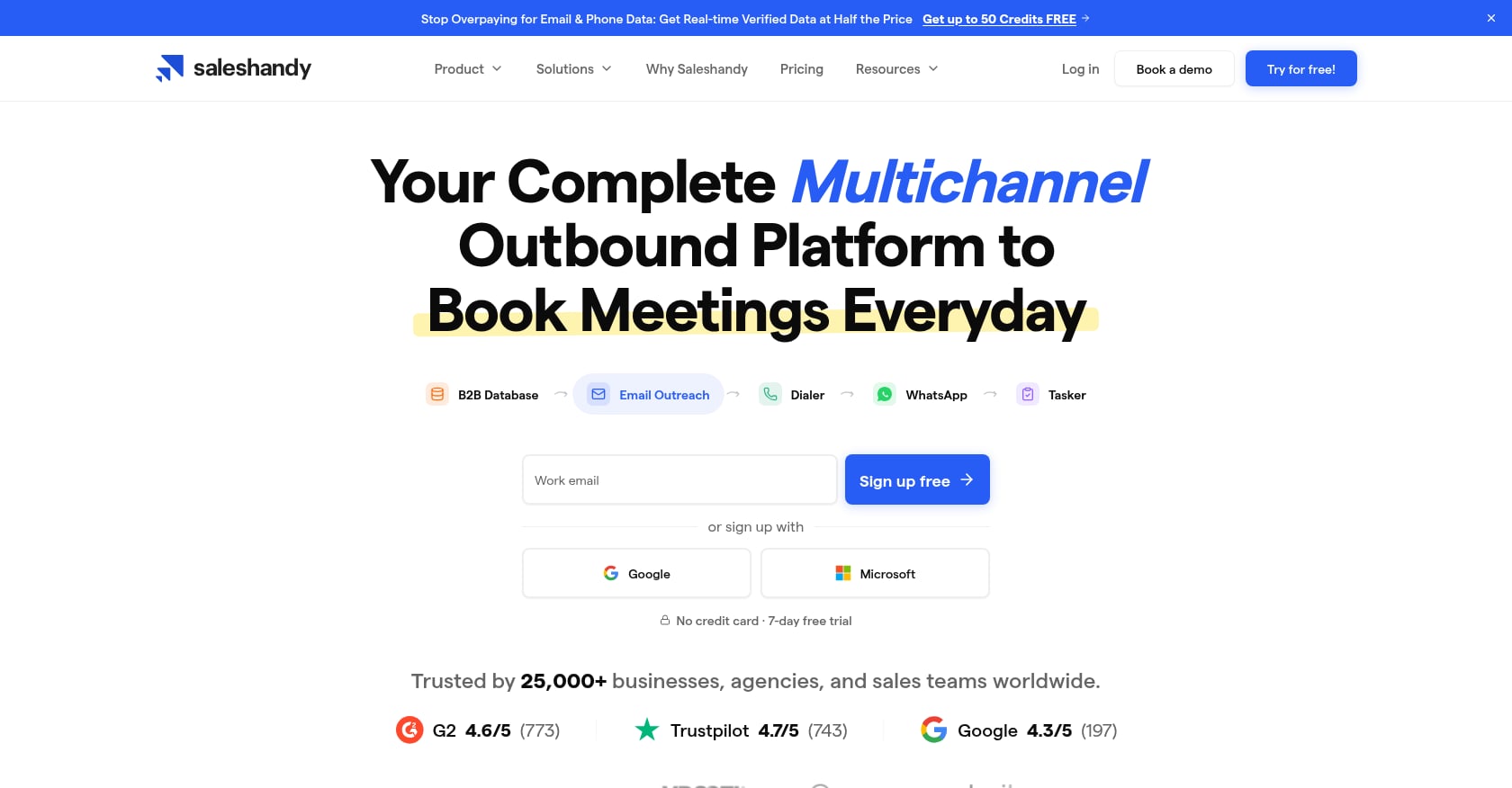
Best for: Budget-conscious small teams that need maximum value per dollar
Pricing: Outreach Starter at $25/month (annual billing), the lowest entry price in this category.
Key features:
- AI Sequence Copilot for generating and optimizing sequences
- 700 million+ B2B contact database built in
- Spintax and content generation tools
- Unlimited users on all plans
Why it stands out: At $25/month for unlimited users with a built-in contact database, Saleshandy packs more value into the starter tier than any competitor.
Tradeoffs:
- Starter plan caps at 6,000 emails and 2,000 active prospects per month
- Deliverability infrastructure is less mature than Smartlead or Instantly
- Inbox placement tested at 71%, the lowest among tools tested in this category
5. Apollo.io
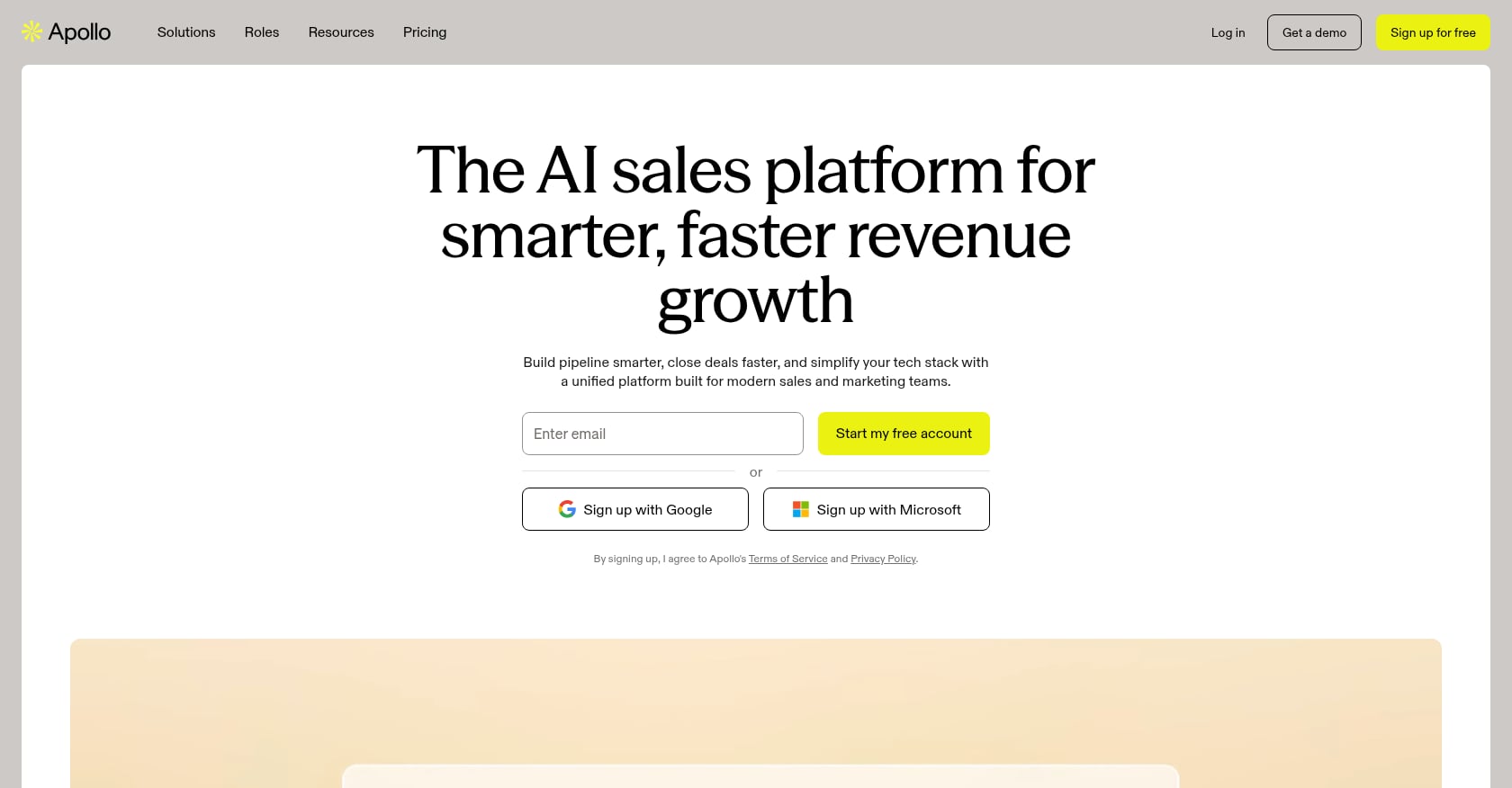
Best for: Teams prioritizing data breadth with built-in outreach capabilities
Pricing: Free tier available. Professional at roughly $79/user/month.
Key features:
- 2 billion+ contact database, the largest in the category
- AI ICP generator and AI-powered search
- Lead scoring
- Native LinkedIn automation
Why it stands out: If your primary bottleneck is finding the right people to contact, Apollo’s database size is unmatched. The free tier is genuinely useful for early prospecting.
Tradeoffs:
- Apollo discontinued its email warmup feature in 2024
- No inbox placement testing infrastructure
- Multiple users on forums report 20 to 30% bounce rates, suggesting data quality issues
- Inbox placement tested at just 74%
The Real Cost of Cold Email in 2026
Cold email platform pricing pages show only one of three cost layers. As the team at Litemail documented, you need to add inbox infrastructure (additional sending accounts, warmup tools) and prospecting data to get the real monthly spend, which is typically 2 to 3x the plan price.
For a solo founder sending 150 emails per day, the real cost of a cold email stack runs $62 to $111/month once you factor in platform fees, inbox infrastructure, and basic data.
Is Cold Email Still Working?
Honesty matters here. According to Woodpecker’s data, the average cold email response rate in 2025 was 1 to 5%, down from 5 to 10% in 2020. A ConnectSafely tracking study of 150+ B2B professionals over six months found that cold email generated an average 2.3% response rate with a 0.8% booking rate, while LinkedIn inbound generated 15 to 20 conversations per month with a 12% booking rate.
Cold email still works as part of a multi-channel system. It does not work as a standalone strategy for most teams. If you’re evaluating cold email tools in isolation, you’re solving the wrong problem.
Best AI Inbox and Email Productivity Assistants
These tools don’t send campaigns or cold emails. They make your personal inbox faster to process and respond to.
1. Superhuman
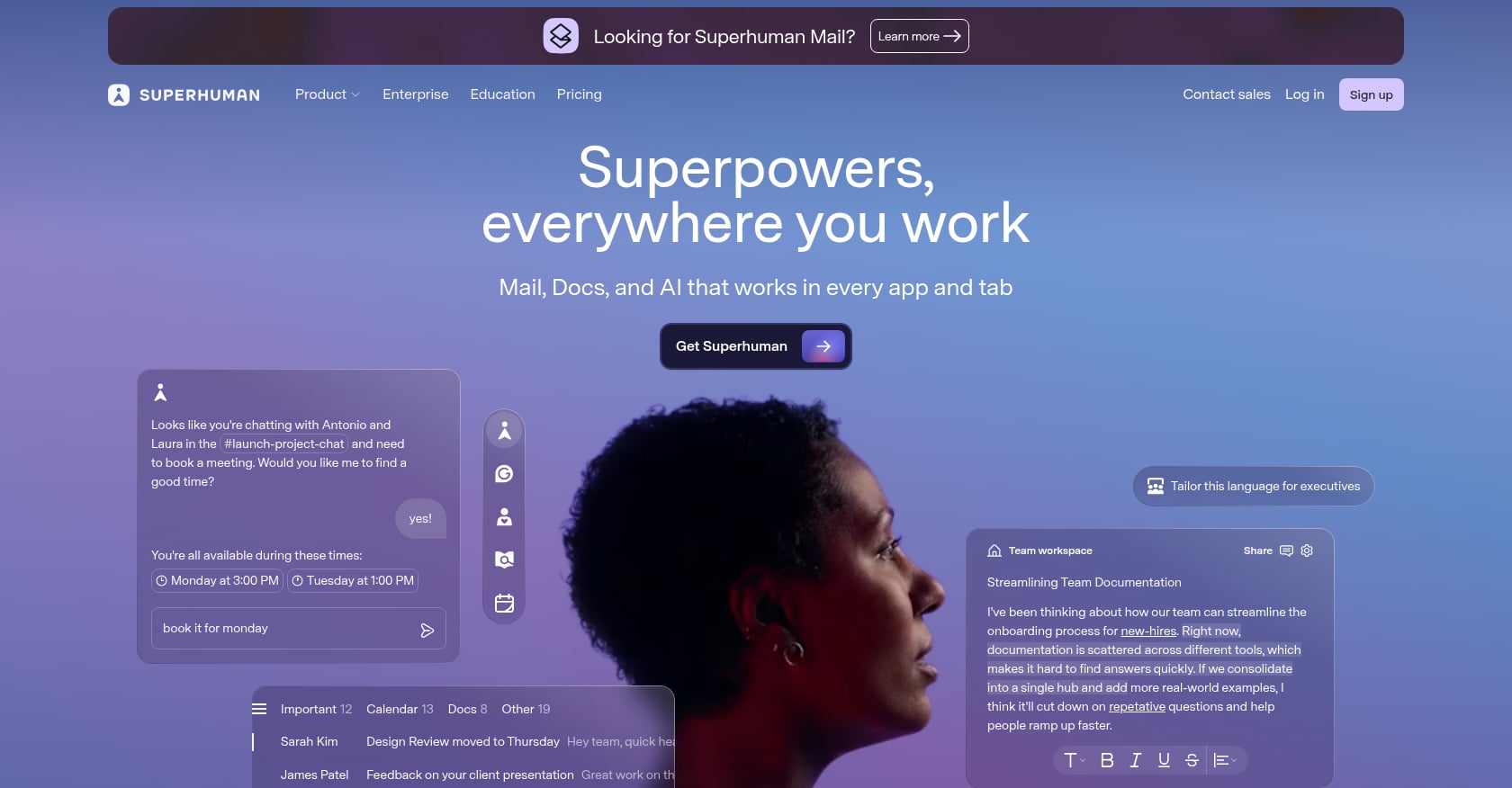
Best for: Executives and high-volume inbox managers who want pure email speed
Pricing: Free tier (Go + Grammarly basics). Pro at $12/month. Business at $33/month (includes Superhuman Mail).
Key features:
- AI triage that prioritizes what needs your attention
- Auto-draft replies ready to send as-is roughly 90% of the time
- Split Inbox and Auto Labels for organization
- Keyboard-first design with sub-100ms load times
Why it stands out: Grammarly acquired Superhuman in July 2025, then rebranded the combined product entirely as “Superhuman” in October 2025. The result is an AI writing layer on top of already excellent inbox management. According to the Fyxer Admin Burden Index 2026, email is the number one time-wasting task at work, with 32% of US workers citing their inbox as their biggest daily drain. Superhuman is the most effective tool at attacking that problem.
Tradeoffs:
- The premium positioning means Business tier at $33/month is expensive for an email client
- The free tier is limited
- Users report being unable to go back to Gmail after using it, which is either a feature or a lock-in risk depending on your perspective
2. Shortwave
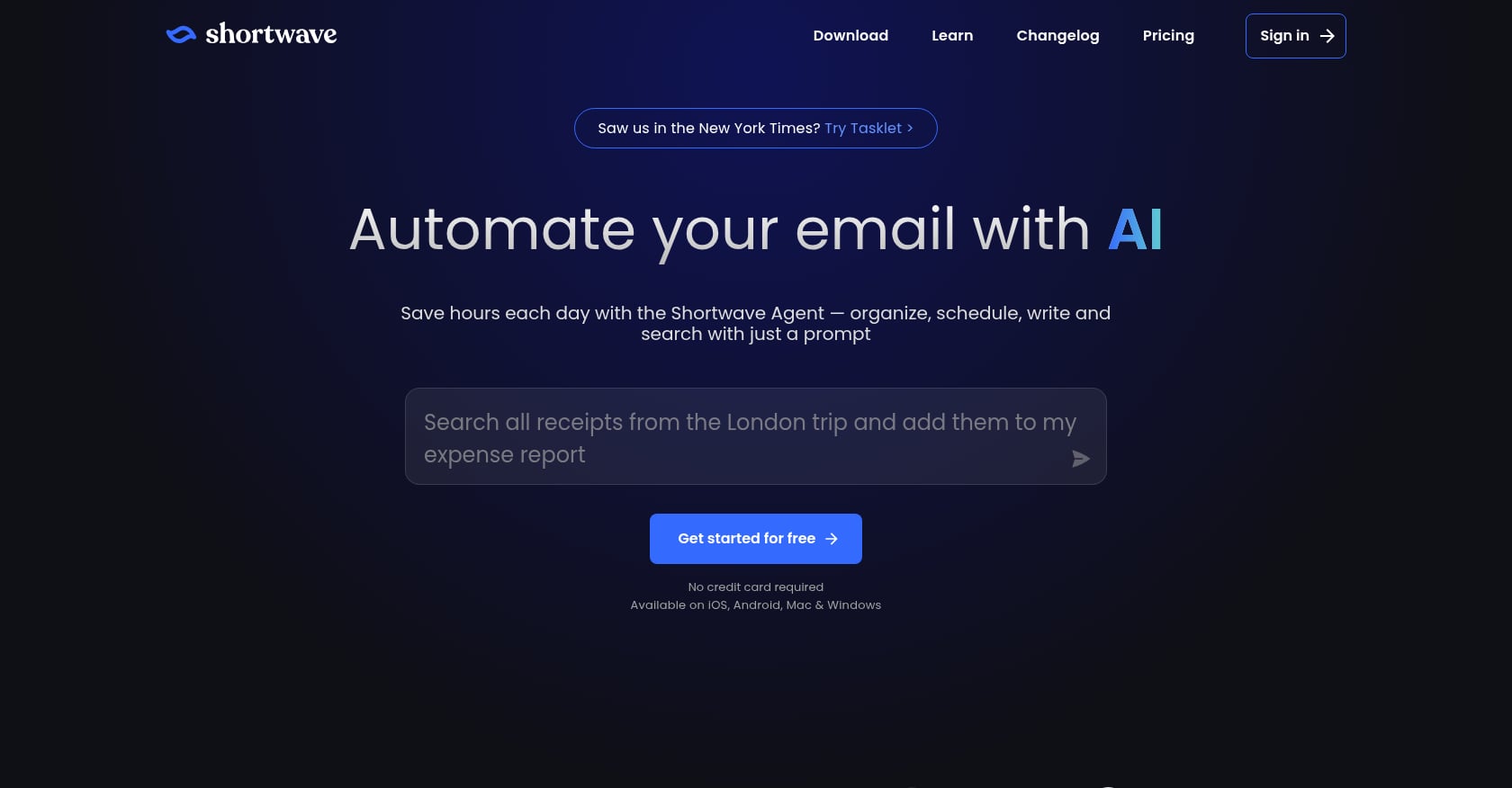
Best for: Gmail power users wanting an AI-native email client without switching ecosystems
Pricing: Free to $100/month depending on tier.
Key features:
- Automatically bundles threads by topic and collapses low-priority email
- AI writing assistant drafts emails and generates subject lines
- Surfaces what actually needs your attention
Why it stands out: Shortwave rethinks email organization from scratch. Instead of folders and labels, it uses AI to group related conversations and hide noise. For teams that want AI copywriting assistance baked into their inbox experience, the integration is seamless.
Tradeoffs:
- Gmail only. Microsoft 365 users and mixed environments need to look elsewhere.
- Less established user base than Superhuman
- Advanced tiers get expensive for individual productivity tools
3. Fyxer AI
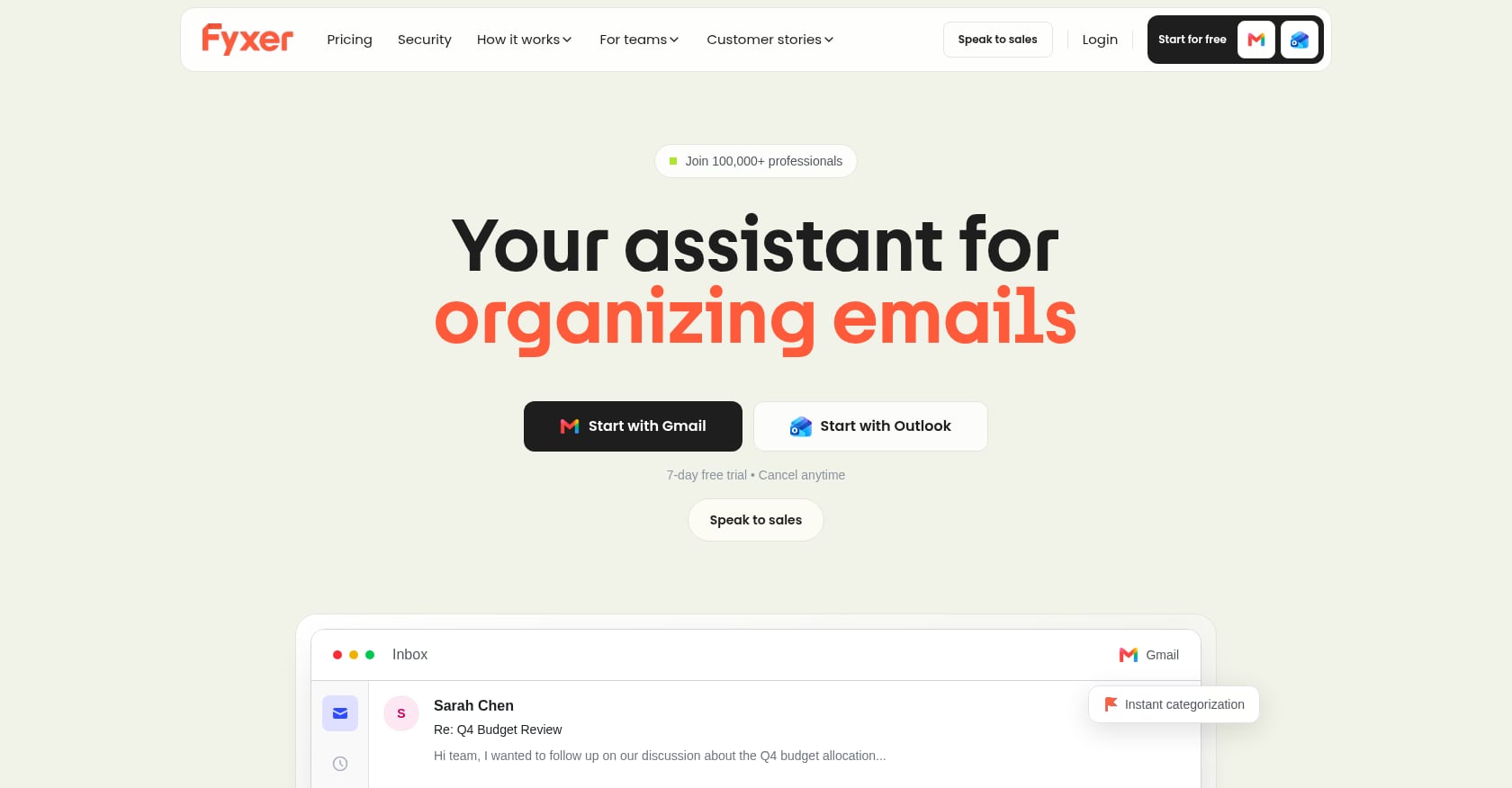
Best for: Outlook users who need AI inbox assistance without switching email clients
Pricing: Standard at $30/month. Pro at $50/month.
Key features:
- Inbox organization and prioritization
- AI-drafted replies matching your communication style
- Meeting notes integration
Why it stands out: Fyxer is one of the few AI inbox tools built specifically for Outlook. Fyxer users report saving an average of 1+ hour per day, with 81.2% of users hitting that threshold.
Tradeoffs:
- At $30/month for the entry plan, Fyxer costs more than Superhuman’s Pro plan while offering fewer features
- Smaller user base means less community feedback and slower feature iteration
- Integration depth is narrower than Superhuman’s ecosystem
The Gmail vs. Outlook Divide
Your email provider often dictates your tool choice more than any feature comparison. Superhuman and Shortwave are strongest on Gmail. Fyxer is built for Outlook. Before evaluating AI features, check compatibility with your existing setup.
The Missing Layer: When You Need Email as Part of a GTM System
Here’s the pattern that plays out for most growing startups: you buy Instantly for outbound, ActiveCampaign for nurture, and Superhuman for your inbox. Three separate subscriptions. Three separate dashboards. Zero coordination between them.
A solo founder on Medium captured the core problem well: the real challenge with email marketing isn’t writing. It’s deciding what to say next, again and again, without burning out. Tools that handle one slice of email create the illusion of progress while the strategic layer stays on the founder’s shoulders.
This is where the “tool vs. system” question becomes critical. Most founders don’t need another standalone AI email tool. They need email working as one channel inside a coordinated multi-channel system that includes paid ads, organic content, social, and outbound, all executing against the same growth plan.
AgentWeb takes this approach. Rather than selling another email tool, AgentWeb provides an AI + human execution service where its agentic AI marketer, Emma, orchestrates email alongside Meta, Google, LinkedIn, and organic content channels. A senior operator team handles strategy, and founders approve everything through Slack-based workflows. In practice, this has produced results like 4,000+ leads and 328 add-to-carts in 3 months for one client (Nailed It case study), and a 13.19% CTR peak on just $300/month in ad spend for another (Cora case study).
The point isn’t that standalone email tools are bad. They’re excellent at their specific jobs. The point is that email tools without a system around them produce isolated activity, not compounding growth.
How to Choose the Right AI Email Tool
Start with your biggest bottleneck. If your inbox is the problem, grab Superhuman or Shortwave and solve it this week. If you need to nurture existing contacts, evaluate ActiveCampaign or HubSpot. If pipeline generation is the constraint, start with Instantly or Smartlead. If you need email working as part of a full GTM motion, look at AgentWeb.
Be honest about total cost. Add up platform fees, per-seat charges, data subscriptions, and inbox infrastructure. The $25/month tool that becomes $100/month with add-ons isn’t a $25 tool.
Watch for tool sprawl. Buying standalone AI tools that don’t integrate with your CRM or project management system creates data silos. The best AI email tool connects to your wider workflow rather than isolating another channel in another dashboard.
Test with real campaigns, not feature lists. A tool’s demo environment tells you nothing about deliverability, reply rates, or how the AI performs with your specific audience. Run a small campaign before committing annually.
Consider whether you need a tool or a system. If you’re a startup validating channels before committing serious budget, a single tool might be the right starting point. If you’ve validated that email works and need it executing alongside other channels, you need an execution layer, not another subscription.
Book a free GTM evaluation to figure out where email fits in your growth priorities.
FAQ
What is the best free AI email tool?
For inbox management, Superhuman’s Go tier and Shortwave’s free plan are both solid options. For marketing automation, HubSpot’s free tier includes Breeze Copilot and basic email tools. For cold outreach, Apollo.io’s free tier gives you access to its database and limited outreach. None of the free tiers match paid capabilities, but they’re enough to validate whether a category fits your needs.
Can AI email tools replace a marketing team?
No. AI email tools automate execution (drafting, sending, optimizing) but don’t replace strategic thinking: who to target, what to say, when to pivot. Companies using AI solely to write copy see minimal returns, while those embedding AI deeply into dynamic personalization and send-time optimization experience compounding gains. The tools handle the how. A human (or a human-led service) still needs to handle the why.
How much do AI email tools actually cost in 2026?
Sticker prices range from free to $3,600/month. But the real cost includes add-ons most pricing pages hide. A cold email stack for a solo founder realistically runs $62 to $111/month. A marketing automation platform for a 10,000-contact list runs $79 to $200/month. HubSpot’s Professional tier jumps to $800/month. Always calculate total cost of ownership, not just the base plan price.
Do AI cold email tools still work with Google and Yahoo sending restrictions?
Yes, but the bar is higher. Google and Yahoo’s 2024 authentication requirements (SPF, DKIM, DMARC) mean you need proper DNS setup on every sending domain. Tools like Smartlead and Instantly include warmup infrastructure to help, but practitioners report inconsistent results. Inbox placement rates in independent testing range from 71% (Saleshandy) to 87% (Smartlead). Deliverability infrastructure is now the hidden differentiator most buyers undervalue.
What’s the difference between an AI email assistant and an AI email agent?
An AI email assistant is reactive: you ask it to draft a reply, suggest a subject line, or summarize a thread. It waits for your input. An AI email agent is proactive: it reads incoming messages, classifies intent, drafts responses, and takes actions (booking meetings, updating CRM records, sending follow-ups) with minimal supervision. In 2026, most tools are still assistants. Instantly’s AI Reply Agent and Smartlead’s intent detection are early examples of the agent model in email.
Is cold email or LinkedIn better for B2B outreach?
Data from a six-month study tracking 150+ B2B professionals showed cold email generating a 2.3% response rate with a 0.8% booking rate, while LinkedIn inbound generated 15 to 20 conversations per month with a 12% booking rate. Neither channel alone is optimal. The highest-performing teams combine both, which is why tools like Lemlist and Apollo with native LinkedIn integration are gaining share. For a deeper look at combining channels, explore strategies for predictable lead generation without expanding your team.
Or get a free AI Readiness Roadmap to see where your GTM has gaps.
Ex-Meta, Google, LinkedIn. 10+ years in ML & data science for GTM. Expert in customer acquisition and growth activation.
Get a free Stack Review.
30 min with Harsha and Matt.
We audit your last 30 days, pinpoint the highest-impact fixes, and hand you the exact playbook we'd run. No deck. No pitch unless there's a fit.