Best Mailshake Alternative: 9 Top Picks for 2026 Compared


TL;DR
Mailshake is a solid cold email sequencer, but its mailbox limits, per-tier pricing, and email-first focus push growing teams to look elsewhere. The best Mailshake alternative depends on your real bottleneck: Instantly or Smartlead for high-volume sending, Saleshandy for budget email outreach, Lemlist for personalization and LinkedIn, and AgentWeb for startups that need full GTM execution rather than another dashboard to manage. Before switching, check whether the actual problem is your sequencer or your domain setup, list quality, and follow-up process.
Quick Comparison: The Best Mailshake Alternatives
| Alternative | Best for | Starting price | Mailbox model | Channels | Main tradeoff |
|---|---|---|---|---|---|
| AgentWeb | Startups needing GTM execution | $199/mo (DIY); service tiers via sales | Platform + AI/human execution | Email, paid, organic, SEO, social, founder brand | Not a pure cold email tool; service pricing not fully public |
| Instantly | High-volume cold email | ~$37-47/mo | Unlimited email accounts | Email-first | No native LinkedIn/calling; add-ons raise cost |
| Smartlead | Agencies and inbox rotation | $39/mo | Unlimited email accounts | Email-first with deliverability controls | UI complexity; support complaints |
| Saleshandy | Budget email-first outreach | $25/mo (annual) | Unlimited email accounts | Email with lead finder | Warmup/data quality concerns; short trial |
| Lemlist | Personalization + LinkedIn | $55/mo (annual) | Unlimited senders (email plan) | Email, LinkedIn, SMS, calls | Per-user multichannel pricing adds up |
| Woodpecker | Simple cold email, small teams | $20/mo (annual) | Priced by contacted prospects | Email; LinkedIn via add-ons | Pricing complex at higher volume |
| Reply.io | Multichannel sales engagement | $49/user/mo | Per-user with add-ons | Email, LinkedIn, calls, SMS, WhatsApp | Add-ons make multichannel expensive |
| Apollo.io | Lead database + basic sequencing | Free plan; Basic $49/user/mo | Credit-based data access | Prospecting, email, calls | Data accuracy complaints; credit complexity |
| Snov.io | Email finding and verification | $39/mo | Credits for finding/verifying | Email, LinkedIn add-on, prospecting | UI clutter; data quality concerns |
Prices change often. Treat these as a snapshot and verify before purchase. Also budget for domains, inboxes, verification, enrichment, CRM, and the labor to run campaigns. For a broader view of outbound and growth tools, check our startup sales tools guide.
Why Teams Switch from Mailshake
Mailshake is not a bad tool. G2 reviewers consistently praise its ease of use, quick setup, and customer support. But the cold email market changed fast in 2024 and 2025, and four specific gaps now drive teams toward Mailshake alternatives.
Mailbox Limits and Scaling Costs
Mailshake ties the number of email addresses to your plan tier: 1 on Starter ($29/mo), 2 on Email Outreach ($49/mo), and 10 on Sales Engagement ($99/mo). For teams sending from 20, 50, or 100 inboxes to distribute volume and protect domain reputation, the math breaks quickly. Every major competitor on this list now advertises unlimited email accounts.
Deliverability Is Harder Than It Used to Be
Gmail now requires SPF, DKIM, and DMARC authentication for all senders and recommends keeping spam rates below 0.1%. Yahoo enforces similar standards. These changes made warmup, inbox rotation, sender reputation monitoring, and authentication alignment central to outbound operations. Teams that relied on Mailshake’s simpler sending model started noticing lower inbox placement.
Here is the contrarian point most listicles skip: switching tools does not automatically fix deliverability. Practitioners on Reddit report that after months of blaming Mailshake, the real culprits turned out to be domain reputation and list quality, not the sequencer itself.
Email-Only Outreach Is Not Enough for Every Buyer
Buyers increasingly expect touches across email, LinkedIn, and sometimes calls or SMS. Practitioners on Reddit note that email-only tools become less differentiated as the market matures, while multichannel only works when messaging stays coordinated across channels. Mailshake added some multichannel features, but purpose-built platforms like Lemlist and Reply.io go deeper.
Some Teams Need Execution, Not Another Tool
This is the insight most Mailshake alternative guides miss entirely. A Reddit practitioner working with small startup teams argued that comparing Apollo vs Instantly barely matters if the founder forgets CRM updates, follow-up tasks, and post-call actions. The “back half” of outbound, everything that happens after someone responds, is where lean teams break down.
A sequencer can get a reply. It will not build the follow-up system, produce proof assets, update the pipeline, or decide what to test next week. If that sounds familiar, the problem is not Mailshake. The problem is execution capacity.
How to Choose the Right Mailshake Alternative
Instead of comparing feature lists, start with four questions:
- Is your bottleneck sending capacity? You need cheaper mailbox economics. Look at Instantly, Smartlead, or Saleshandy.
- Is your bottleneck personalization or LinkedIn? You need multichannel sequencing. Look at Lemlist or Reply.io.
- Is your bottleneck lead data? You need a prospecting database. Look at Apollo or Snov.io.
- Is your bottleneck consistent GTM execution? You need a growth operating system, not another dashboard. Look at AgentWeb.
Here is a scoring rubric to pressure-test your choice:
| Criterion | What to check |
|---|---|
| Deliverability | SPF/DKIM/DMARC, inbox rotation, warmup, spam tests |
| Mailbox economics | Included inboxes, sender caps, extra mailbox cost |
| Data | Native database, verification, enrichment, credit model |
| Workflow | Unified inbox, CRM sync, reply handling, follow-up |
| Channels | Email only vs LinkedIn/call/SMS/paid/content |
| Human effort | DIY tool vs co-pilot vs done-for-you |
| Reporting | Replies, meetings, pipeline, iteration loops |
| Hidden costs | Domains, inboxes, verification, enrichment, labor time |
Most comparison articles stop at the first two criteria. The last three are where decisions go wrong.
1. AgentWeb
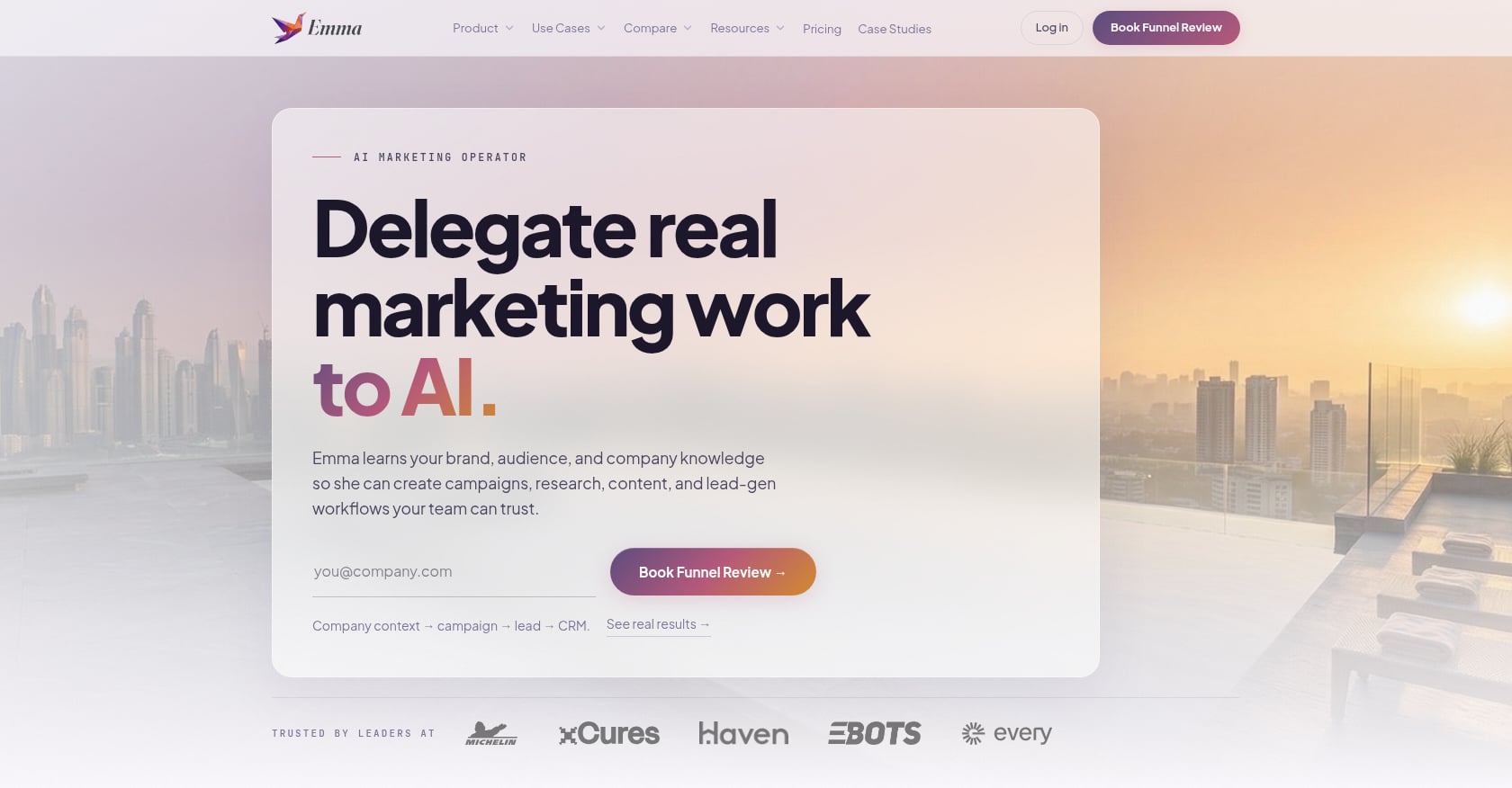
Best for: Startups that need GTM execution, not just another outreach tool.
AgentWeb is not a cold email sequencer. It is an AI plus human go-to-market execution service and platform. The company runs marketing for startups using its agentic AI marketer, Emma, combined with a senior operator team. It belongs on this list because for many founders searching for a Mailshake alternative, the real problem is not “which sequencer?” but “who is shipping growth every week?”
Key features:
- 90-day GTM diagnostic and plan
- Agentic execution with Emma across Meta, Google, LinkedIn/X, email, and outbound
- Slack/Teams approval workflows for creative and messaging
- AgentWeb Portal with calendar, dashboards, and optimization loops
- Founder-brand support including LinkedIn ghostwriting and executive comms
- SEO and content production (up to roughly 20 assets/month)
- Weekly performance reviews and iteration
- Self-serve AI campaign templates for market research, competitive analysis, and audience insights
- Integrations with existing ad platforms and CRMs
Pricing:
- Self-serve platform: 7-day free trial, then $199/month via Stripe
- Custom workflows (AI-led co-pilot): seasonal pricing, contact sales
- Done-for-you (human-led Growth Ops): seasonal pricing, contact sales
- Full-service engagements structured as 3-month sprints with the option to continue or transition to DIY
Proof points from case studies:
AgentWeb’s Nailed It case study (consumer beauty AI) showed 4,000+ leads and 328 add-to-carts in 3 months, with a 2.91% CTR at roughly $0.24 CPC. AgentWeb outperformed a competing agency running in parallel. In the Cora case study (digital health), the platform delivered a 13.19% CTR peak, $0.74 CPC, and 435+ qualified clicks in one month on just a $300/month ad budget.
Tradeoffs:
- Not the right fit if all you want is the cheapest email sequencer
- Service pricing is not fully public
- Public third-party review footprint is limited (newer entrant)
- Works best when founders engage in weekly reviews and approvals
Choose it if replacing Mailshake is only one part of a bigger problem. If your startup needs outbound, paid, content, founder brand, reporting, and weekly iteration shipped without hiring a full team, AgentWeb is closer to a growth operating system than a cold email tool.
Skip it if you only need a cheaper way to send cold email sequences from more inboxes.
2. Instantly
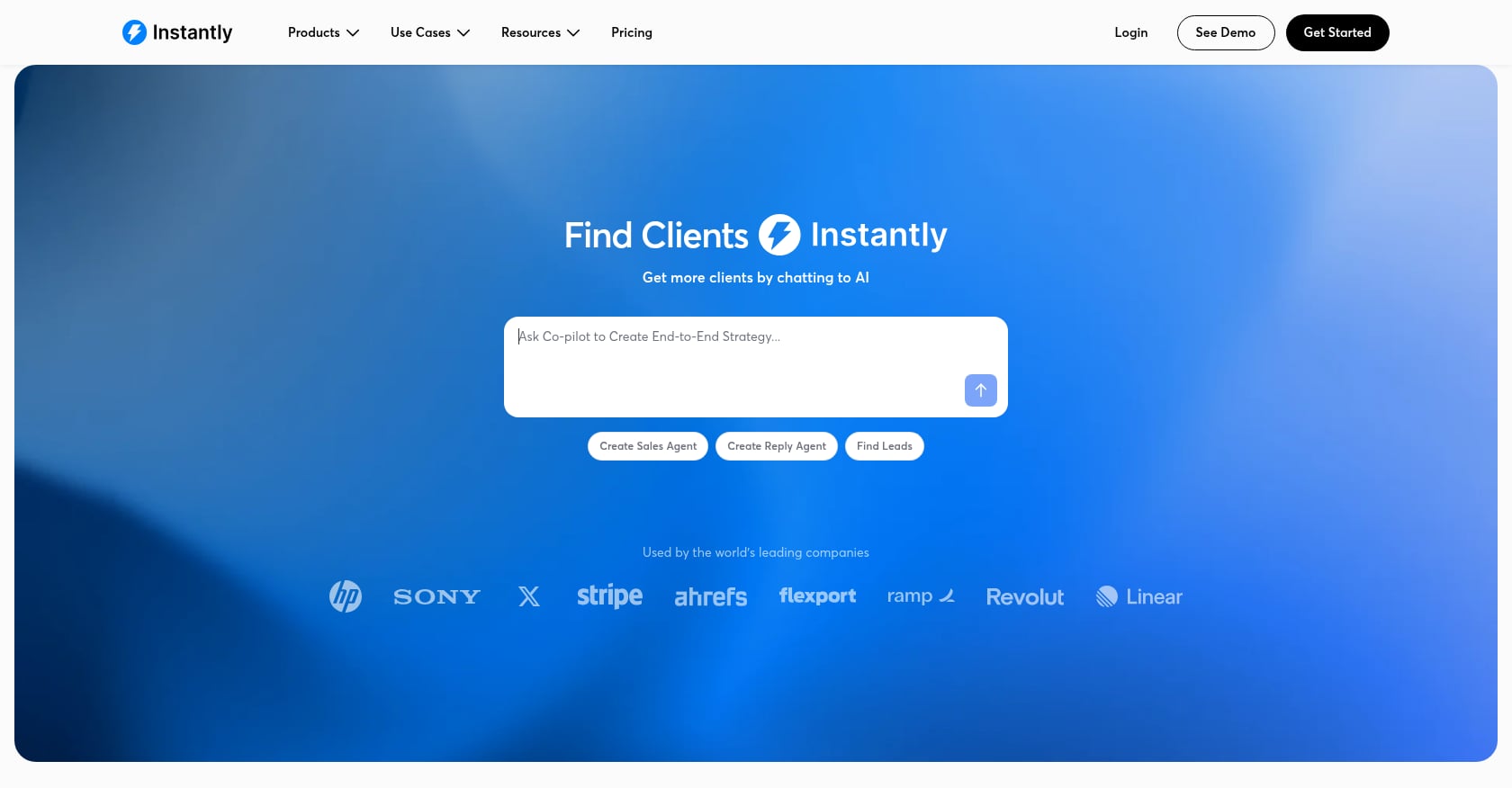
Best for: High-volume cold email with unlimited mailboxes.
Instantly is the most popular Mailshake alternative for teams whose primary pain is sender-account limits. Every outreach plan includes unlimited email accounts and unlimited warmup, which makes it a sharp contrast to Mailshake’s per-tier mailbox caps.
Key features:
- Unlimited email accounts and warmup on all outreach plans
- Cold email campaigns and sequencing
- Lead database with SuperSearch credits
- CRM add-ons
- Inbox placement testing add-ons
- Domain and email account purchasing through the platform
Pricing:
Instantly’s help center lists Growth at $47/month (1,000 uploaded contacts, 5,000 emails/month), Hyper Growth at $97/month (25,000 contacts, 125,000 emails), and Light Speed at $358/month (100,000 contacts, 500,000 emails). Annual billing typically reduces the effective monthly price by about 20%. A free trial with 250 uploaded contacts is available.
What users say:
G2 rates Instantly at 4.8/5 with over 4,000 reviews. Reddit sentiment is mixed but useful. One user who tested Instantly against Smartlead for four months said Instantly had a cleaner UI and was easier for beginners, but Smartlead’s deliverability held up better over time. Another operator running about 40,000 sends per month said Instantly handled volume better than Lemlist at their price point.
Tradeoffs:
- Email-first; no native LinkedIn or calling in the core outreach product
- Contact, email, CRM, data, and inbox placement add-ons can raise total cost significantly
- Some Reddit users report support frustrations and deliverability drops after scaling
Choose it if Mailshake’s sender-account limits are your core frustration and you primarily need email outreach at volume.
Skip it if you need coordinated multichannel sequences or someone to run the entire GTM motion.
3. Smartlead
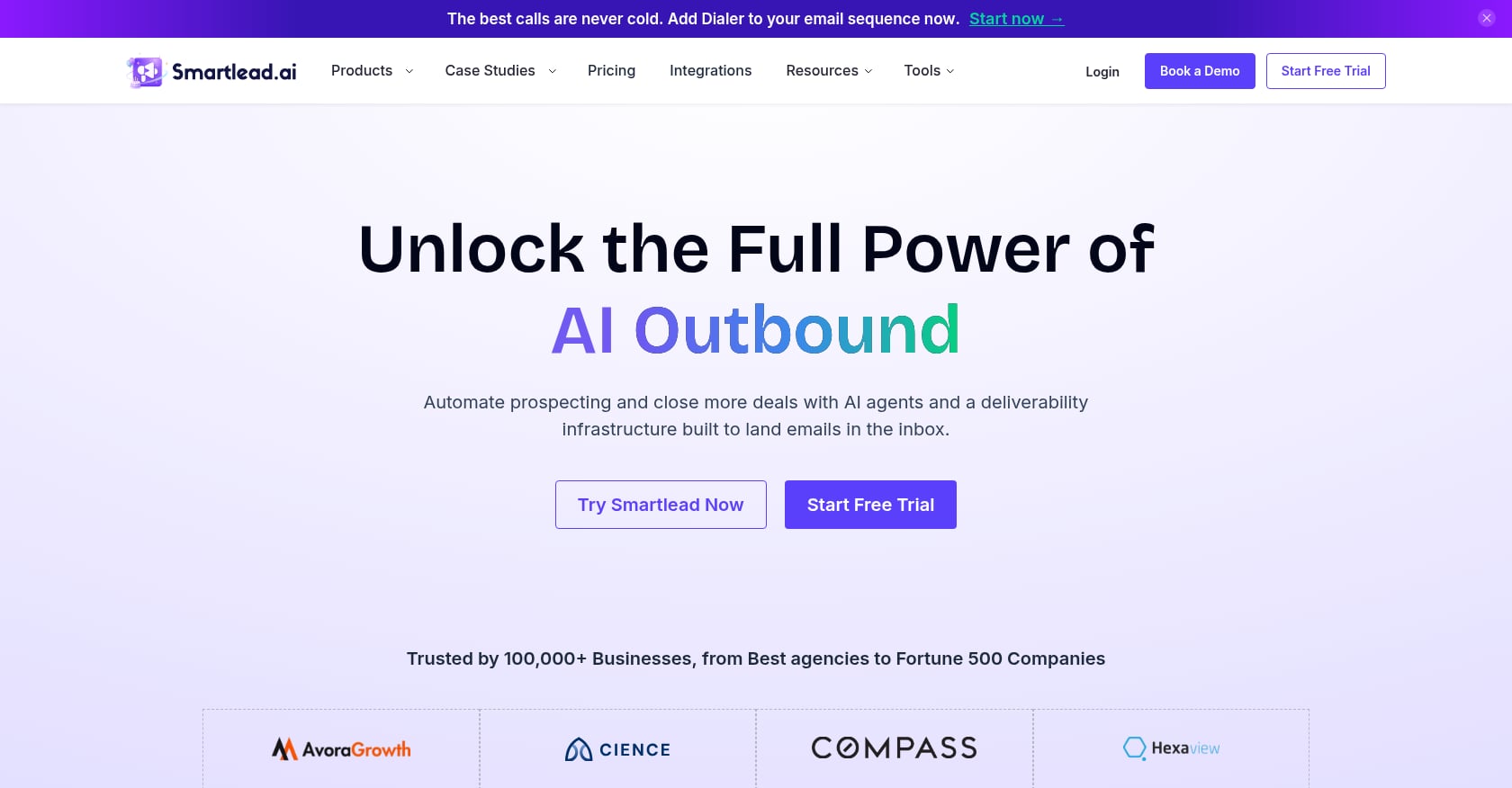
Best for: Agencies and scaling teams that want deliverability control.
Smartlead competes directly with Instantly for the “unlimited mailboxes” positioning but appeals to more technical operators who want granular control over inbox rotation, warmup pools, and sending infrastructure.
Key features:
- Unlimited email accounts on all plans
- Warmup pool and inbox rotation
- Unified inbox
- CRM access and integrations
- Agency and client management options
- Add-ons for private infrastructure, Slack channels, and dedicated CSM
Pricing:
Smartlead lists Base at $39/month (2,000 contacts, 6,000 emails), Pro at $94/month, Unlimited Smart at $174/month, and Unlimited Prime at $379/month. Annual billing saves 17%.
What users say:
G2 rates Smartlead at 4.5/5 with 325 reviews. Recurring praise covers ease of use, the AI inbox manager, and deliverability. Recurring complaints include slow support, bugs, pricing complexity, and warmup issues. On Reddit, operators often say Smartlead gives more control while Instantly is faster for beginners.
Tradeoffs:
- More complex than beginner-friendly tools
- Support sentiment is inconsistent across review sources
- Junior team members may struggle with onboarding
- Email-first, not truly multichannel
Choose it if you manage many inboxes or agency clients and want infrastructure-level control over deliverability.
Skip it if you want a simple setup or need more than cold email sequences.
4. Saleshandy
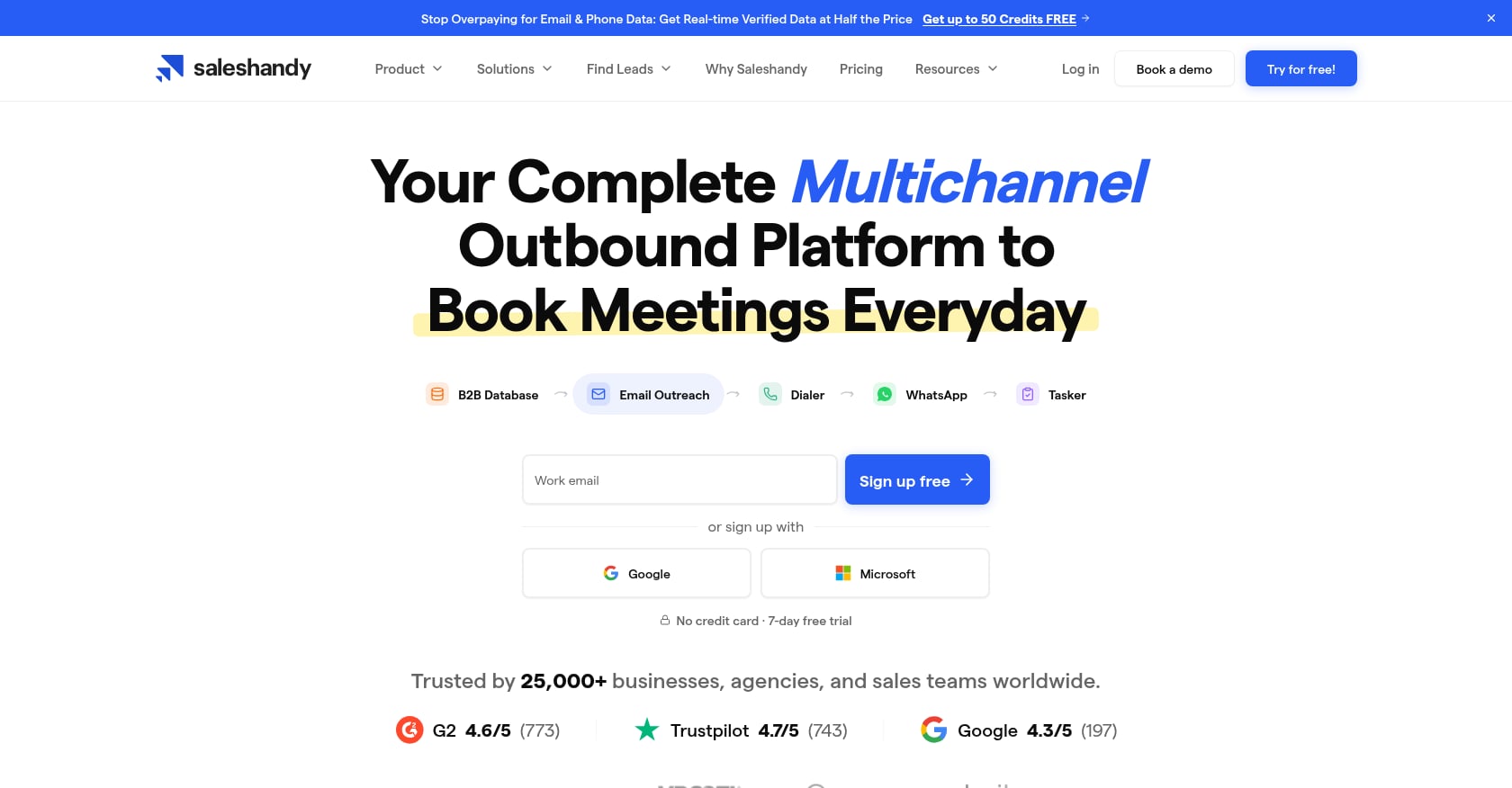
Best for: Budget-conscious teams wanting an email-first Mailshake replacement.
Saleshandy is the straightforward choice for teams that want Mailshake-like outreach with better pricing and unlimited email accounts. No radical rethinking of your workflow required.
Key features:
- Unlimited email accounts on all plans
- AI-powered sequences
- A-Z variant testing on Pro
- Unified inbox on Pro
- Lead Finder with email verification credits
- 7-day free trial
Pricing:
Saleshandy lists Outreach Starter at $36/month monthly or $25/month on annual billing. Pro is $99/month monthly ($69 annual), and Scale is $199/month monthly ($139 annual). Active prospect and monthly email caps vary by tier.
What users say:
G2 rates Saleshandy at 4.6/5 with 775 reviews. Users praise ease of use and email tracking. Sentiment is polarized, though. A Reddit thread from 2026 called Saleshandy’s lead-finding experience poor and claimed deliverability dropped after warmup. Another thread described it as decent for smaller scale and budget use.
Tradeoffs:
- More email-first than truly multichannel
- Trial is only 7 days with a 100-email limit
- Warmup and data quality concerns appear in reviews
- Not a replacement for GTM strategy or campaign planning
Choose it if you want a practical, lower-cost Mailshake replacement without enterprise complexity.
Skip it if you need multichannel outreach, high-confidence lead data, or execution beyond email sequences.
5. Lemlist
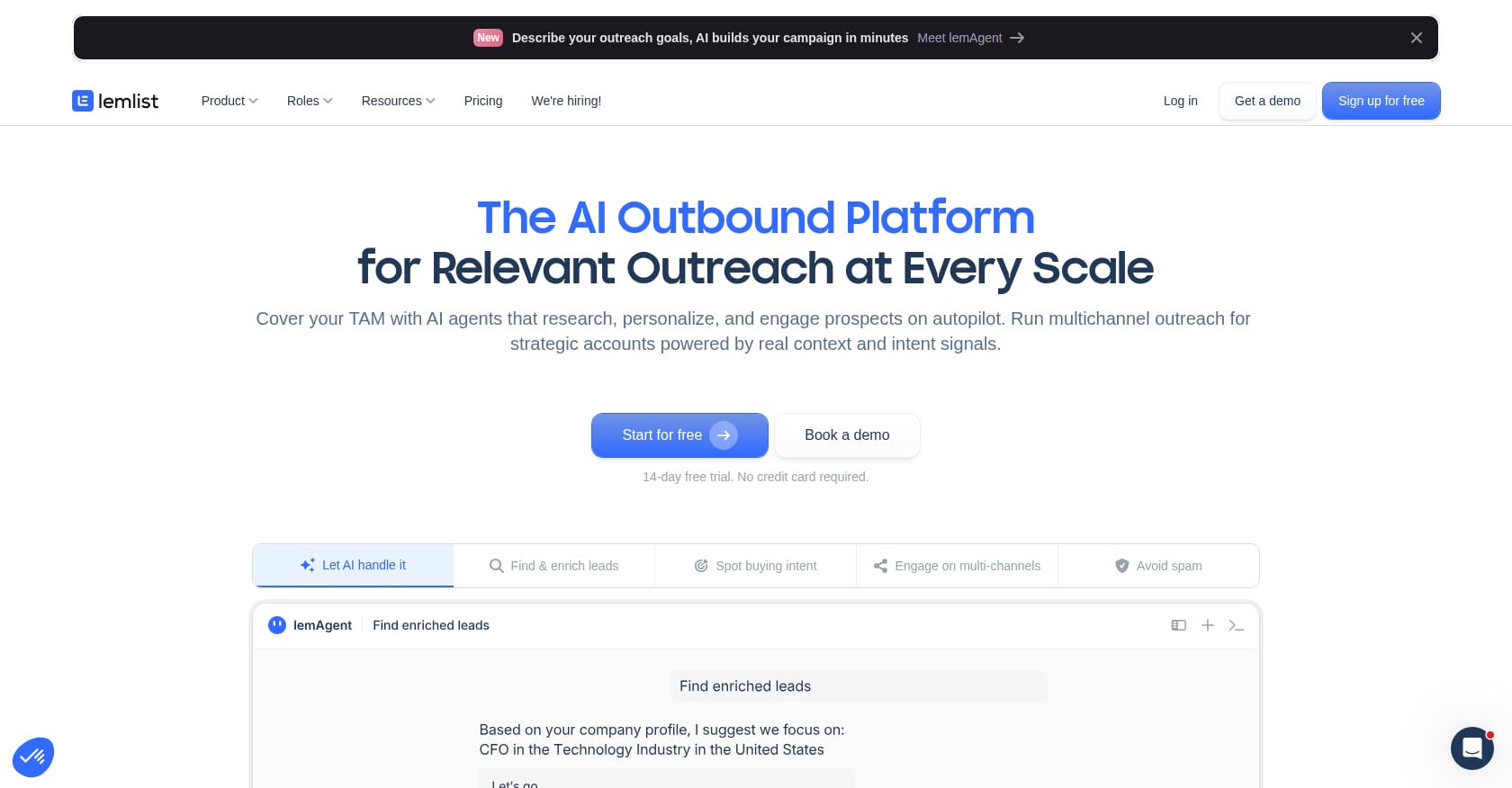
Best for: Creative personalization and email plus LinkedIn sequences.
Lemlist is the best Mailshake alternative when response quality and personalization matter more than raw volume. It is the strongest option here for teams combining email and LinkedIn outreach with highly personalized messaging.
Key features:
- 650M+ lead database
- Email finder, verifier, and phone number finder
- Multichannel sequences (email, LinkedIn, SMS, calls)
- WhatsApp add-on
- Unified inbox and deliverability hub with warmup
- AI agents (lemAgent)
- 14-day free trial
Pricing:
Lemlist shows Email at $69/month monthly ($55 annual) and Multichannel at $109/user/month monthly ($87 annual). Credits cost $0.01 each. Verified emails use 5 credits and phone numbers use 20.
What users say:
G2 rates Lemlist at 4.6/5 with roughly 1,500 reviews. Reddit sentiment is consistent: users like the multichannel features, UI, and personalization, but complain that pricing adds up with multiple seats and higher volume.
For guidance on writing messages that convert regardless of tool, read our guide on personalizing emails by ICP.
Tradeoffs:
- Multichannel plan is priced per user, which gets expensive for teams
- Credits add cost on top of the subscription
- Deliverability and scale sentiment is mixed in community discussions
- Learning curve is steeper than simpler email tools
Choose it if you care more about reply quality and creative outreach than lowest-cost volume.
Skip it if you need to scale volume across dozens of inboxes on a tight budget.
6. Woodpecker
Best for: Small teams that want simple cold email with deliverability guardrails.
Woodpecker is a safe, familiar Mailshake competitor for small teams running lower-volume campaigns. It does not try to be a multichannel platform or an AI SDR. It is a cold email tool that works.
Key features:
- Cold email sequences
- Warmup included on paid tiers
- Stored and contacted prospect limits by plan
- Email account add-ons
- Deliverability resources and checklists
- A/B testing
Pricing:
Woodpecker offers a 7-day free trial (50 contacted prospects, 600 emails/month). Starter runs about $29/month monthly or $20/month annual (6,000 emails, 2,000 stored prospects). Growth is about $188/month monthly or $126/month annual.
What users say:
Capterra reviewers call Woodpecker pricing reasonable and flexible, though some small companies find it steep at higher tiers. One Reddit user analyzing email headers found Woodpecker’s technical sending approach notable for making messages appear more natural, though this was a single practitioner test rather than a universal benchmark.
Tradeoffs:
- Pricing becomes less attractive at higher volume
- Not as broad as platforms with databases, AI SDR, or full multichannel
- Product segmentation across cold email, agency, and sales assistant products can create comparison confusion
Choose it if you want a traditional, reliable cold email tool for a small team.
Skip it if you need aggressive scale, LinkedIn integration, or broader GTM execution.
7. Reply.io
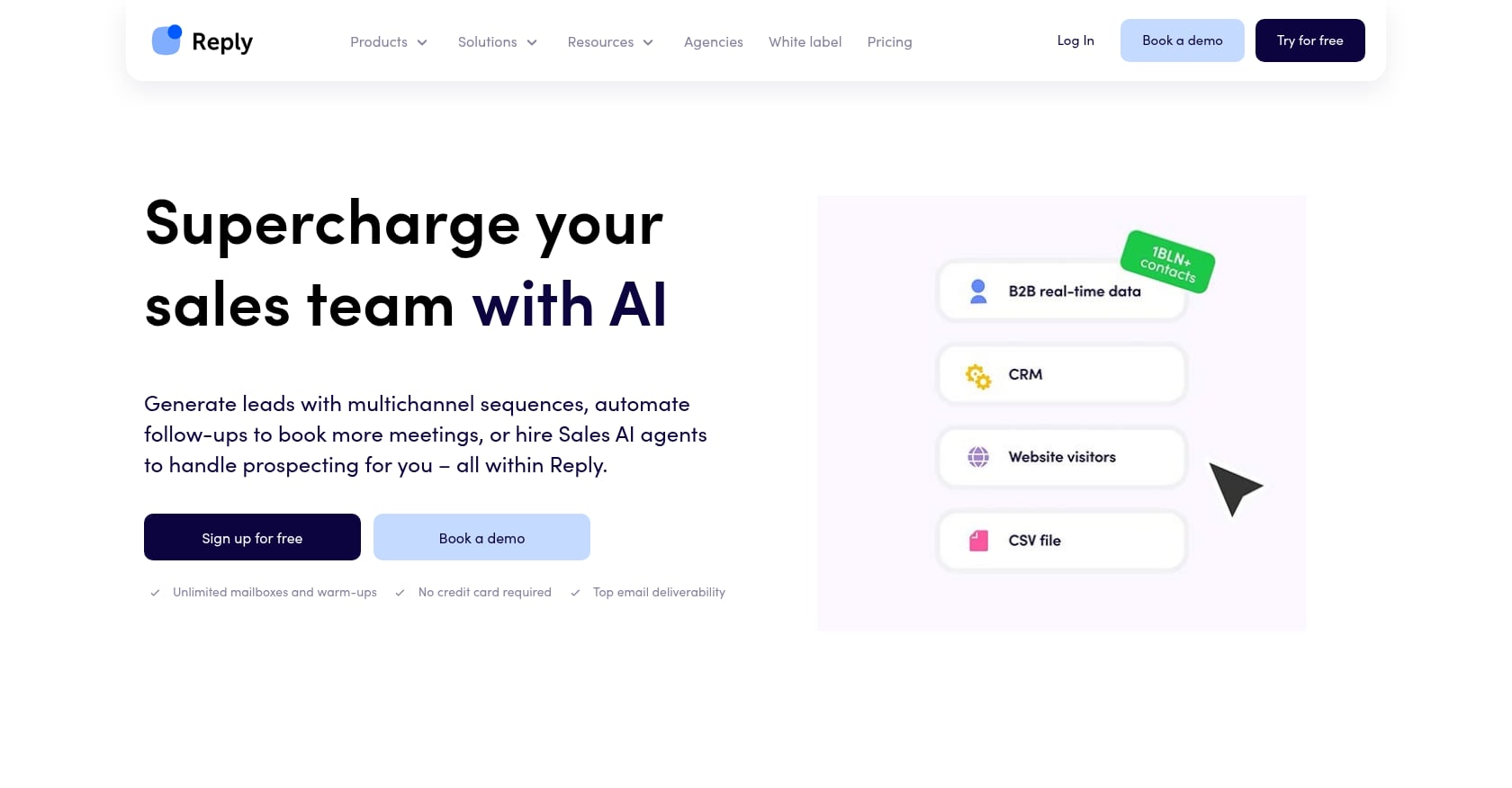
Best for: Sales teams wanting structured multichannel engagement.
Reply.io is a stronger sales engagement platform than Mailshake for teams with SDRs who actively manage sequences across email, LinkedIn, calls, and SMS. It sits between simple cold email tools and enterprise platforms like Outreach or Salesloft.
Key features:
- Email sequences with centralized inbox
- LinkedIn tasks and LinkedIn automation
- Calls and SMS
- WhatsApp tasks
- Conditional sequences and meeting scheduler
- AI email assistant and reply categorization
- AI SDR (Jason AI) on separate packages
Pricing:
G2 lists a free plan, Email Volume starting at $49/user/month, and Multichannel starting at $89/user/month. Add-ons include LinkedIn automation (~$69/month per account) and calls/SMS (~$29/month per user). True multichannel costs materially more than the base subscription suggests.
What users say:
G2 rates Reply.io at 4.6/5 with over 1,500 reviews. Reddit sentiment is mixed. One thread described the UI as feeling dated with basic analytics. Another said it is more affordable than Outreach/Salesloft and surprisingly powerful for multichannel sequences, though with less depth in reporting.
Tradeoffs:
- True multichannel gets expensive after add-ons stack up
- More complex than email-only tools
- Learning curve is steep because of feature breadth
- Less relevant for founders who need execution help, not more software to operate
Choose it if you have reps to run multichannel sequences and want a step up from Mailshake without jumping to enterprise pricing.
Skip it if you are a founder-led team without dedicated SDRs.
8. Apollo.io
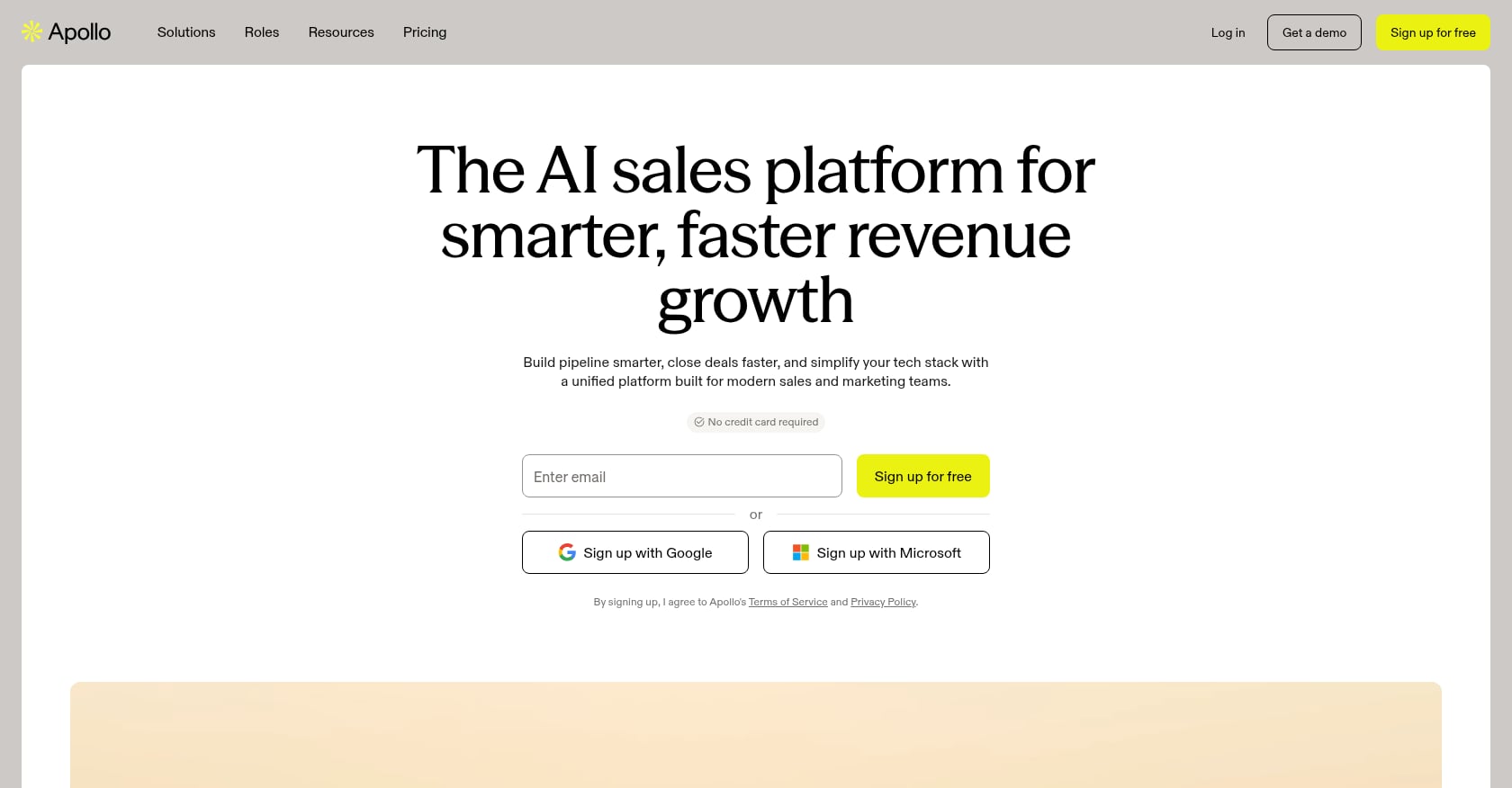
Best for: Teams that need a prospecting database plus basic sequencing in one place.
Apollo is not a direct “better Mailshake” for sending infrastructure. It is the better choice when the biggest problem is building contact lists, not sending from more inboxes.
Key features:
- Large B2B contact database with advanced search filters
- Email and phone credits
- Email sequencing and dialer
- CRM functionality and enrichment
- Integrations with Salesforce, HubSpot, and more
Pricing:
Apollo offers a free plan. Basic is $49/user/month and Professional is $79/user/month. Credits are consumed per action: 1 credit for an email, 8 for a phone number, and up to 9 for enrichment per record.
What users say:
G2 rates Apollo at 4.7/5 with over 9,600 reviews, making it one of the most-reviewed tools in this space. Recurring praise covers filters, lead generation, and the all-in-one workflow. Recurring complaints focus on data accuracy and credit-based pricing complexity. One Reddit discussion noted that credit burn varies by action, making cost comparisons across vendors difficult.
Tradeoffs:
- Data accuracy varies by segment and geography
- Credit-based pricing is hard to predict
- Sending features are less mature than specialized cold email tools
- Not a deliverability-first platform
Choose it if list building and contact data are your primary pain, and basic sequencing is a bonus.
Skip it if you need best-in-class sending infrastructure or someone to run the full GTM motion.
9. Snov.io
Best for: Email finding, verification, and drip campaigns on a budget.
Snov.io is a practical Mailshake alternative when contact discovery and verification matter as much as sending. It bundles prospecting, verification, and campaigns into one affordable platform.
Key features:
- Email finder and verifier
- Prospect database search
- Drip campaigns with email warmup
- Built-in CRM
- LinkedIn lead generation (automation add-on at $69/month per account)
- Done-for-you domains ($12/year) and Google mailboxes ($5/month)
- API and webhooks on higher plans
Pricing:
Snov.io lists a free Trial plan, Starter at $39/month, and Pro tiers from $99 to $738/month. Annual subscriptions get 25% off. Credits roll over on premium plans with autorenewal.
What users say:
G2 rates Snov.io at 4.5/5 with 488 reviews. Users praise email verification and the all-in-one capabilities. A Reddit thread from 2026 said drip campaigns still work and warmup is decent, but complained that data accuracy had declined and prices had increased.
Tradeoffs:
- Credit and recipient system requires careful planning
- LinkedIn automation costs extra
- UI can feel cluttered with multiple active campaigns
- Data accuracy should be verified before large sends
Choose it if email finding and verification are as important as sending, and you want everything in one affordable stack.
Skip it if you need high-volume agency infrastructure or broader GTM execution beyond email.
Hidden Costs Most Mailshake Alternative Lists Ignore
Most comparison articles focus on subscription price. The actual cost of running outbound is much higher.
True outbound cost = subscription + domains + mailboxes + verification + lead data and enrichment credits + LinkedIn and calling add-ons + deliverability monitoring + CRM and reporting + copywriting and personalization labor + reply handling and follow-up + strategy and iteration time
A Reddit operator running high-volume outbound shared their full stack: Smartlead plus Instantly for sending, separate tools for data, enrichment, verification, monitoring, CRM, reply management, and domain purchases. The $39/month entry price barely scratches the surface.
There is also the cost of founder time. A cheap tool that requires 10 or more hours a week in setup, monitoring, list building, writing, and troubleshooting is not actually cheap. For early-stage teams, that time carries enormous opportunity cost. For a deeper look at these tradeoffs, read our AI SDR vs agency comparison.
This is where a GTM execution model stands apart. It may not be the lowest monthly line item, but it can replace the need to hire or coordinate multiple freelancers, tools, and operators.
Try AgentWeb’s self-serve workflows free for 7 days.
Deliverability Checklist Before You Switch Tools
Before committing to a new Mailshake alternative, run this diagnostic. Tool switching without fixing fundamentals just moves the problem to a different dashboard.
- SPF, DKIM, DMARC configured and aligned on all sending domains
- Separate sending domains (never send cold email from your primary domain)
- Low send volume per inbox during warmup, ramping gradually over weeks
- Verified list with bounce rates kept below 3-5%
- No tracking pixels or spammy links in the first cold email
- Clear unsubscribe process where appropriate
- Spam complaint rate monitored and kept under 0.1% per Gmail’s sender guidelines
- Measure positive replies and meetings, not just opens
- Review ICP relevance before blaming copy or tools
That last point matters more than most teams realize. A Reddit operator who sent 2.6 million cold emails in a single month reported using “prospects contacted per lead” as the north-star metric and said open tracking is inaccurate. Apple Mail Privacy Protection further distorts open data by preloading tracking pixels.
For a complete breakdown, see our email deliverability guide. And if improving your messaging matters as much as fixing infrastructure, our guide on writing outbound emails covers what actually gets replies.
Which Mailshake Alternative Should You Choose?
The answer depends on what is actually broken.
- Choose AgentWeb if you need GTM execution: campaign planning, weekly shipping, outbound, paid, content, founder brand, reporting, and iteration, all without hiring a full team.
- Choose Instantly if you need affordable high-volume email with unlimited accounts.
- Choose Smartlead if you are an agency or operator who wants scale with deliverability controls.
- Choose Saleshandy if you want a budget-friendly email-first replacement.
- Choose Lemlist if creative personalization and LinkedIn outreach matter most.
- Choose Woodpecker if you want simple, reliable cold email for a small team.
- Choose Reply.io if you have SDRs running multichannel sequences.
- Choose Apollo.io if you need a data-first approach with basic sequencing built in.
- Choose Snov.io if email finding, verification, and drip campaigns are the main need.
Most cold email tools solve the sending problem. Fewer solve the execution problem. If your startup keeps stalling because nobody is shipping campaigns, reviewing results, and iterating weekly, the bottleneck is not Mailshake.
FAQs
What is the best Mailshake alternative?
It depends on the bottleneck. AgentWeb is best for startups that need full GTM execution, not just outreach software. Instantly and Smartlead are best for high-volume email with unlimited mailboxes. Saleshandy is the strongest budget email-first replacement.
Why are teams switching from Mailshake?
The most common reasons are mailbox limits tied to pricing tiers, lack of a free trial compared to competitors, limited deliverability controls for warmup and inbox rotation, and the shift toward multichannel outreach that Mailshake does not fully address.
Is Instantly better than Mailshake?
Instantly is better for high-volume email sending because it offers unlimited email accounts and warmup on all plans. It is not better if you need multichannel sequences, a prospecting database, or someone to run the entire GTM motion for you.
What should I check before replacing Mailshake?
Verify that SPF, DKIM, and DMARC are configured. Confirm you are using separate sending domains. Check list quality and bounce rates. Monitor spam complaint rates. Switching tools without fixing these fundamentals rarely improves results.
What is the cheapest Mailshake alternative?
Saleshandy starts at $25/month on annual billing, Woodpecker at $20/month annually, and Smartlead at $39/month. But subscription price does not capture the full cost. Domains, inboxes, verification, enrichment, and labor can push actual outbound expenses much higher.
Do I need a Mailshake alternative or a GTM execution service?
If your team can consistently plan, write, launch, optimize, and follow up on campaigns, use a tool. If campaigns stall because the founder is too busy to handle outbound, content, paid ads, and iteration, consider a GTM execution service like AgentWeb.
Is open rate a good metric for comparing cold email tools?
Not really. Open tracking is increasingly unreliable due to Apple Mail Privacy Protection and other privacy features that inflate open counts. Experienced cold email operators recommend measuring positive reply rate, booked meetings, and pipeline generated instead.
Or get a free AI Readiness Roadmap to see where your GTM has gaps.
Ex-Meta, Google, LinkedIn. 10+ years in ML & data science for GTM. Expert in customer acquisition and growth activation.
Get a free Stack Review.
30 min with Harsha and Matt.
We audit your last 30 days, pinpoint the highest-impact fixes, and hand you the exact playbook we'd run. No deck. No pitch unless there's a fit.