France’s AI-Powered Drone Swarms: Navigating Innovation, Ethics, and Governance

By Rui Wang, CTO, AgentWeb
France’s Leap into AI-Powered Drone Swarms
In December 2025, Defense News reported that France is preparing to deploy operational AI-powered drone swarms in its armed forces by 2027 (source). This is a clear signal: autonomous systems are moving from experimental labs to real-world military theaters. As CTO of AgentWeb, I see this as both a technological milestone and an urgent call for reflection on the ethical and governance frameworks needed to guide responsible innovation.
Let’s unpack what this means for military AI, practical innovation, and our collective responsibility.
What Are AI-Powered Drone Swarms?
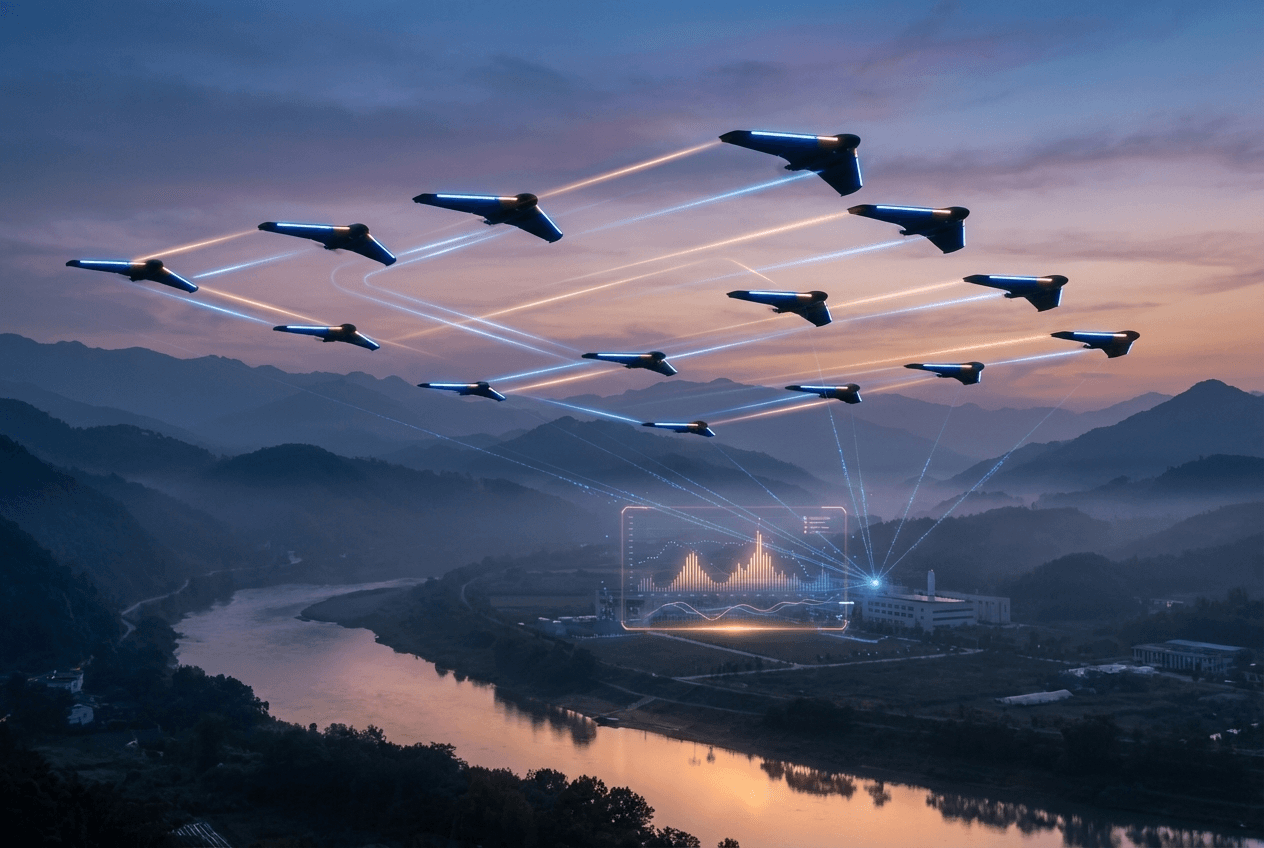
A drone swarm is a coordinated group of unmanned aerial vehicles (UAVs) operating together, leveraging advanced AI algorithms to share data, navigate, and complete complex missions autonomously. Unlike traditional single-drone operations, swarms can communicate, react to environmental changes, and collaborate—sometimes without human intervention.
Real-World Application
France’s envisioned drone swarms could autonomously scout enemy positions, conduct surveillance, or even execute coordinated electronic warfare. This isn’t science fiction: technologies like the US Navy’s LOCUST program and China’s wingman drones already demonstrate swarm tactics, but France’s push to operationalize AI-driven autonomy at scale sets a new benchmark.
The Innovation Edge: Why Drone Swarms Matter
Deploying autonomous drone swarms delivers three core advantages:
- Scalability: A single operator can command dozens—or hundreds—of drones, amplifying military reach without exponentially increasing personnel.
- Speed: AI-powered systems can make split-second decisions, adapting to threats in real time.
- Resilience: Swarm architectures are inherently redundant; if individual drones fail, others adapt and fill the gap.
These capabilities allow for missions that were previously impossible or prohibitively risky. That’s a breakthrough for military planners—and a wake-up call for anyone thinking about the dual-use implications of AI technology.
The Ethics of Autonomous Military AI
Here’s where things get complicated. At AgentWeb, our mission is responsible, accessible innovation—especially when it comes to privacy and the ethical use of AI. Let’s break down the core ethical challenges:
1. Human Control and Accountability
Who is responsible when a swarm acts autonomously? If a drone misidentifies a target, does the fault lie with the operator, the developer, or the AI itself? Ensuring humans stay "in the loop" isn’t just good practice—it’s essential to upholding international humanitarian law.
2. Algorithmic Bias and Unintended Consequences
Military AI systems are only as ethical as the data they’re trained on. If a drone swarm’s object recognition algorithms are biased or incomplete, civilian lives could be at risk. France’s commitment to transparency in training data and model evaluation will be a critical test case for the entire defense sector.
3. Escalation and Proliferation
Once one nation fields autonomous swarms, others will follow. The risk isn’t just technological—it’s geopolitical. Without robust international governance, we could see an arms race where ethical considerations take a back seat to military advantage.
Governance: The Need for Global Standards
Practical governance must keep pace with innovation. France’s Ministry of Defense claims to be working within the ethical guidelines set out by the European Union and NATO. But these frameworks are still in their infancy.
What Should Modern AI Governance Look Like?
- Transparency: Clear, public reporting on how AI models are developed, tested, and deployed.
- Auditable Systems: Building tools for external review and verification, so independent experts can inspect decision-making processes.
- International Collaboration: Aligning with other nations to avoid AI arms races and ensure interoperable ethical standards.
At AgentWeb, we advocate for accessible, privacy-preserving AI—values that must be extended to military innovation. Open dialogue between governments, civil society, and the private sector is non-negotiable.
Responsible Innovation in Practice
As AI systems become more autonomous, we need actionable safeguards:
- Design for Human Oversight: Even in battlefield scenarios, human operators should retain the ability to override or halt a swarm’s actions.
- Regular Ethics Audits: Integrate ongoing evaluation of AI behavior, bias, and unintended consequences into every deployment cycle.
- Privacy by Design: Even military drones collect vast data about environments and individuals. Privacy principles—data minimization, secure storage, and strict access controls—should be non-negotiable.
- Public Engagement: Invite independent researchers, ethicists, and civil society to critique and stress-test assumptions. Transparency builds trust.
The Road Ahead: Balancing Power and Principle
France’s ambition to field AI-powered drone swarms within two years is a defining moment for military AI. But it’s also a test of our collective commitment to responsible innovation.
Technological progress must not outpace ethical reflection. At AgentWeb, we believe AI should be both powerful and principled—serving not just strategic interests, but the public good. That means embracing accessibility, safeguarding privacy, and building governance frameworks that evolve as quickly as the technology itself.
Key Takeaways
- Military adoption of autonomous systems is accelerating; ethical and governance frameworks must catch up.
- Responsible innovation requires ongoing scrutiny, transparency, and public engagement.
- AgentWeb remains committed to building accessible, privacy-preserving, and ethically sound AI for all applications—including those at the frontier of technology.
The future of military AI will be written by the choices we make today. Let’s ensure they reflect not just what we can do—but what we should.
Book a call with Harsha if you would like to work with AgentWeb.